

Suspension Does Not Automatically Lapse If Charge-Sheet Served Within Prescribed Period Even If Extension Exceeds 90 Days: Chhattisgarh High Court
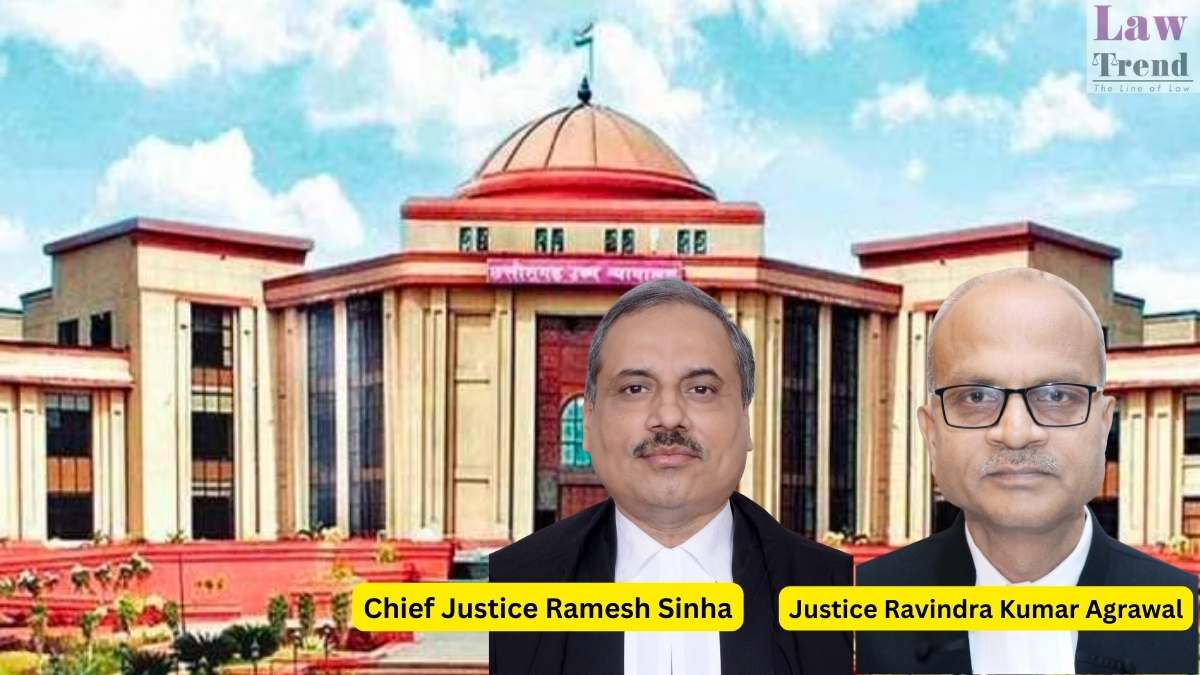
In an important ruling on service jurisprudence, a Division Bench of the High Court of Chhattisgarh, comprising Chief Justice Ramesh Sinha and Justice Ravindra Kumar Agrawal, held that an order of suspension does not automatically become invalid or non-est merely because an order of continuation was not passed within 90 days, provided the departmental charge-sheet had already been served within the prescribed period. Setting aside a Single Judge order that had quashed the employee’s suspension and directed immediate reinstatement, the Bench allowed the State’s intra-court writ appeal while directing the competent authority to undertake a fresh, objective review regarding the necessity of continuing the suspension.

Background of the Case

The respondent, Shivam Sahay Chouhan, was serving as an Assistant Grade-III in the office of the Collector, District Korba. Following his detention for more than 48 hours in connection with FIR No. 309/2022—registered under Section 509(B) of the Indian Penal Code and Section 67(A) of the Information Technology Act, 2000—he was placed under suspension on March 25, 2022, with effect from March 23, 2022.

Subsequently, a departmental charge-sheet was served on him on April 20, 2022. However, no order extending the suspension was passed within 90 days. After a lapse of more than one and a half years, the competent authority passed an order on August 28, 2023, extending the period of suspension.

The employee challenged the suspension before a Single Judge in Writ Petition (S) No. 8745 of 2023. On January 18, 2024, the Single Judge set aside the suspension order of March 25, 2022, and the continuation order of August 28, 2023, directing forthwith reinstatement by relying on the Supreme Court’s ruling in Ajay Kumar Choudhary v. Union of India through its Secretary and Another (2015) 7 SCC 291 and the High Court’s decision in Kishore Kumar @ K. Kumar v. State of Chhattisgarh & Others (WPS No. 9074/2023). Aggrieved by this, the State of Chhattisgarh and the Collector of Korba filed the present intra-court appeal along with an application for condonation of a 100-day delay, which the Bench allowed.

Arguments of the Parties

Appearing for the State appellants, Deputy Advocate General Prasun Kumar Bhaduri submitted that the Single Judge erred by disposing of the writ petition without affording adequate opportunity to the State to file its return. He argued that the reliance on Ajay Kumar Choudhary was misplaced because that judgment primarily addressed cases where the memorandum of charges was not served within three months. In this case, the charge-sheet had been served on April 20, 2022, well within the prescribed period under Rule 9 of the Chhattisgarh Civil Services (Classification, Control and Appeal) Rules, 1966.

READ ALSO  If the Dying Declaration Has Been Recorded in Presence of the Executive Magistrate After the Doctor Holding the Patient to Be Fit for Giving the Statement, Reliance Can Be Placed upon the Same: CG HC

Referring to Rule 9(2-b) and Rule 9(5-A) of the 1966 Rules, the State counsel pointed out that Rule 9(5-A) expressly mandates that a suspension continues until modified or revoked by the competent authority, and automatic revocation occurs only if the charge-sheet is not issued within the prescribed time. It was further submitted that the extension order of August 28, 2023, was a reasoned decision taking into account the gravity of the allegations involving the working environment of female employees, and that the employee had bypassed the statutory appeal available under Rule 23.

Opposing the appeal, counsel for the respondent, Anupam Dubey, submitted that the Single Judge’s decision strictly conformed to Ajay Kumar Choudhary and Kishore Kumar. He contended that serving a charge-sheet does not confer an unfettered or indefinite power to continue suspension without periodic review within the stipulated period. Counsel argued that suspension is an interim measure and cannot become punitive through indefinite continuance, maintaining that an order passed after an unexplained gap of one and a half years could not retrospectively revive an expired suspension.

The Court’s Analysis

Examining the statutory framework of Rule 9 of the 1966 Rules alongside judicial precedents, the Division Bench observed that the factual matrix was materially distinct from instances where the charge-sheet was withheld:

“Admittedly, the respondent was served with the departmental charge-sheet on 20.04.2022, whereas the suspension had commenced with effect from 23.03.2022. Thus, the charge-sheet was served within the period prescribed under the Rules. Consequently, the statutory consequence of automatic revocation on account of non-service of the memorandum of charges within the prescribed period was not attracted.”

Addressing the scope of the Supreme Court’s ruling in Ajay Kumar Choudhary, the Bench noted that the apex court was focused on preventing prolonged suspension where charges had not been framed, and clarified that the ruling cannot be divorced from statutory rules:

“The said decision cannot be understood as laying down an absolute proposition that, irrespective of the governing service rules and irrespective of the fact that the charge-sheet has already been served within the prescribed period, the original order of suspension would automatically stand extinguished merely upon expiry of 90 days unless a separate order of extension is passed within those very 90 days. Such an interpretation, in our considered opinion, would amount to reading into the statutory rule something which is not expressly provided therein.”

The Bench underscored that Rule 9(5-A) contains no express requirement to pass an extension within 90 days when a charge-sheet has already been served. Addressing the earlier coordinate bench ruling relied upon by the respondent, the Court observed:

“To the extent the said decision has been understood as laying down an absolute proposition that an order of suspension must, in every circumstance and irrespective of the language of the applicable statutory rules, be extended within 90 days, we are of the view that such interpretation requires reconsideration in the light of the statutory scheme of Rule 9 of the Rules of 1966.”

The Court explained that while failure to pass a timely continuation order invites judicial review regarding whether the suspension has become arbitrary or punitive, it does not automatically render the original suspension void:

“We are, therefore, unable to sustain the conclusion of the learned Single Judge that the original order of suspension automatically became non-est merely because an order of continuation was not passed within 90 days. The proposition that every order of suspension necessarily comes to an end upon expiry of 90 days, even where the charge-sheet has been duly served within the period prescribed by the Rules, cannot be accepted as an absolute proposition of law. Such an interpretation would render the substantive provision contained in Rule 9(5-A), which contemplates continuance of suspension until modification or revocation by the competent authority, substantially otiose.”

At the same time, the Bench cautioned that authorities do not possess unbridled power:

“Prolonged suspension cannot be permitted to become a substitute for punishment, nor can a Government servant be kept away from duty for an indefinite period without periodic consideration of the necessity of such continuation.”

Decision

Holding that the Single Judge erred in quashing the orders solely on the ground of the 90-day timeline without examining the statutory rules and reasons on record, the Division Bench set aside the order dated January 18, 2024, and dismissed the writ petition.

The Court directed the competent authority to undertake a fresh, independent, and objective review of the necessity of continuing the suspension, bearing in mind the principles in Ajay Kumar Choudhary and the possibility of posting the respondent to a suitable non-sensitive post. The Bench clarified that it expressed no opinion on the merits of the pending criminal or departmental proceedings.

READ ALSO  Repeated Use Of Humiliating and Deregotory Words By Wife Against Husband And In-Laws Amounts To Cruelty: Delhi HC

Case Title: State of Chhattisgarh and Another v. Shivam Sahay Chouhan

Case No.: WA No. 360 of 2024

Bench: Chief Justice Ramesh Sinha and Justice Ravindra Kumar Agrawal

Date: 03.09.2026

Law Trend
Law Trendhttps://lawtrend.in/
Legal News Website Providing Latest Judgments of Supreme Court and High Court

Related Articles

Latest Articles
