

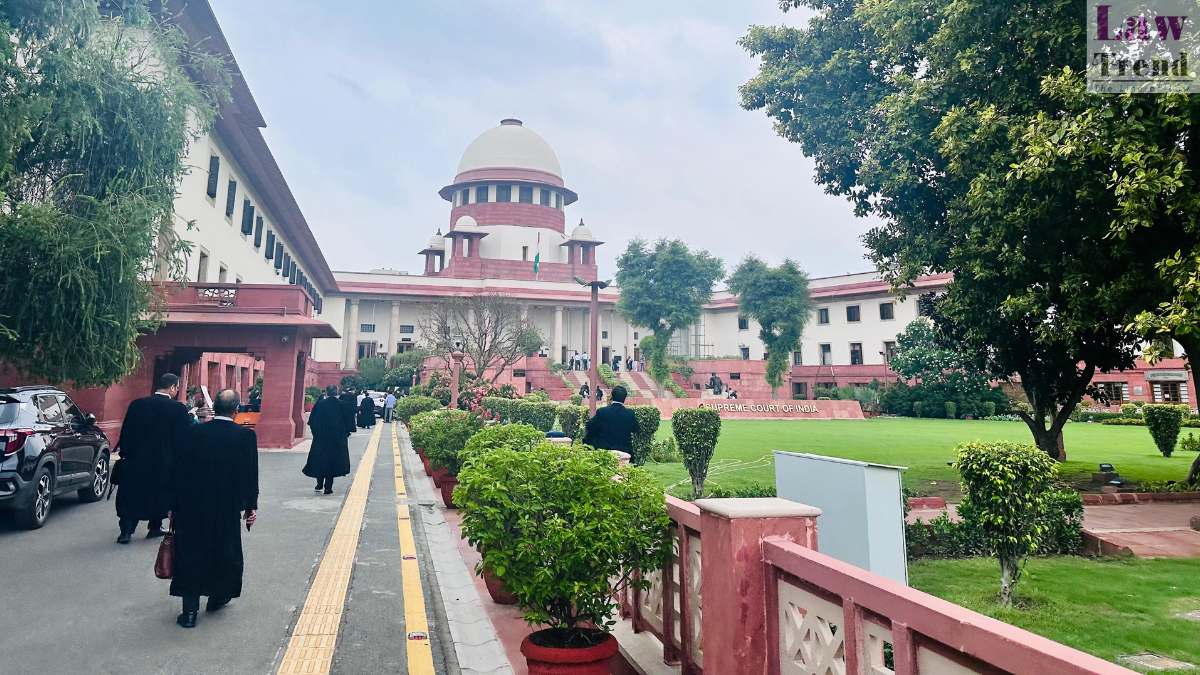
The Supreme Court has asked the National Highways Authority of India why it cannot establish automated camera surveillance networks and dedicated monitoring rooms at toll plazas to counter unauthorized parking and encroachments along high-speed corridors.
A bench comprising Justices Vikram Nath and Sandeep Mehta highlighted stationary vehicles and roadside encroachments as two primary hazards endangering motorists. The bench pressed the highway authority on technical solutions during proceedings in an ongoing suo motu matter concerning national highway safety.
NHAI Points to Patrolling as Court Pushes for Automated Monitoring
During the hearing, legal counsel representing the National Highways Authority of India informed the court that administrative circulars have already been issued directing regular patrolling and physical inspections to deter unauthorized parking along carriageways.
The bench questioned why the authority had not adopted technology-driven oversight instead, asking why camera-based monitoring systems and round-the-clock control rooms could not be stationed across toll plazas nationwide. Senior advocate ANS Nadkarni, who is assisting the proceedings as an amicus curiae, supported the court’s focus, stating that vehicles parked unlawfully on active traffic lanes remain a leading trigger for severe road collisions.
Two-Week Deadline Issued for Pending Government Responses
The court expressed dissatisfaction after observing that the Ministry of Road Transport and Highways, the Ministry of Home Affairs, and the Tamil Nadu state government had failed to submit their requisite compliance affidavits in the proceedings.
Granting a two-week window for both central ministries to formally enter their responses on record, the bench instructed the Tamil Nadu government to submit its documentation ahead of the next proceeding. The matter has been scheduled for its next hearing on October 6.
Proceedings Stem from Fatal Rajasthan Corridor Collision
The top court initiated the suo motu litigation in November last year following a fatal collision on November 2 in Rajasthan’s Phalodi district that left 15 people dead.
In that incident, a passenger tempo traveller carrying pilgrims from the Kolayat temple in Bikaner toward Jodhpur crashed into a stationary trailer truck near Matoda village on the Bharat Mala Highway.
Earlier Directives Targeted Shoulder Parking and Blackspots
The latest hearing follows comprehensive interim directives issued by the court on April 13, when it prohibited commercial and heavy motor vehicles from stopping or parking along carriageways or paved shoulders of any national highway. Under those instructions, heavy vehicles are permitted to halt exclusively at designated parking bays, lay-byes, or official wayside amenities.
The bench had also imposed an outright ban on building or operating new dhabas, commercial establishments, or informal eateries inside the designated right of way of national highways. Furthermore, the transport ministry and the highway authority were instructed to identify hazardous road stretches and publicly release an exhaustive registry of accident blackspots.
In issuing those earlier orders, the bench observed that while national highways constitute only about 2 percent of India’s total road network, they contribute to roughly 30 percent of the country’s overall traffic fatalities. The court warned at the time that administrative delays and infrastructural shortfalls must not be allowed to turn high-speed express corridors into deadly transit routes for the public.


