

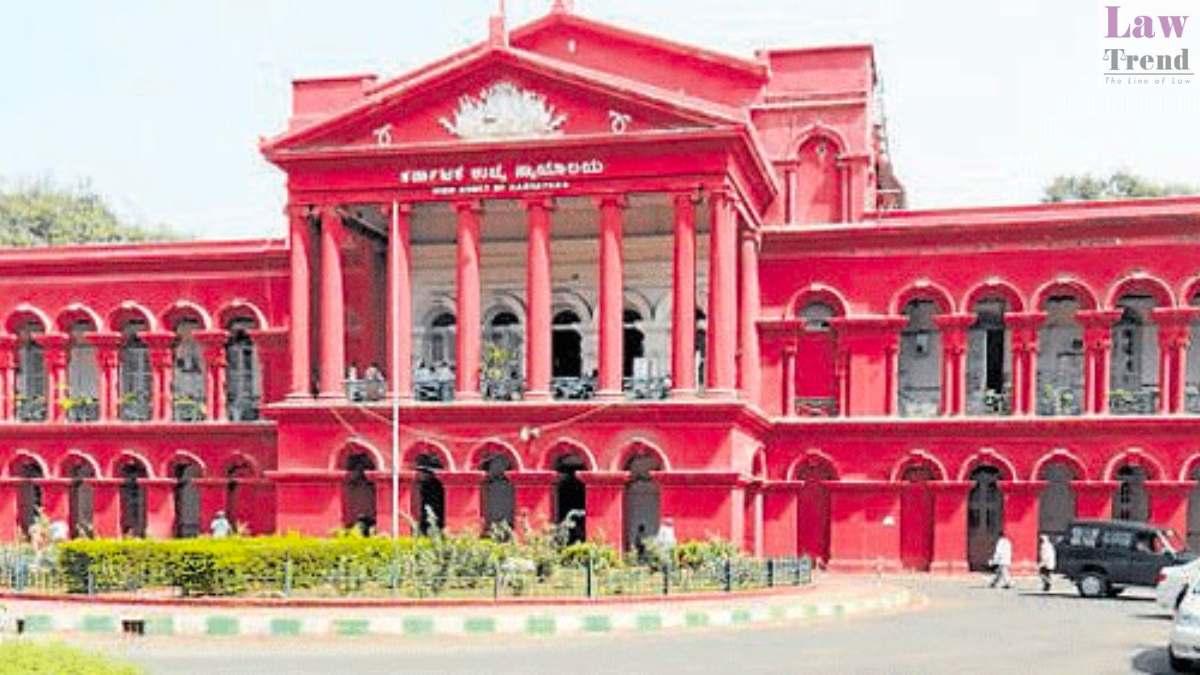
The Karnataka High Court has ruled that police officers must conduct a 14-day preliminary inquiry before making arrests in matrimonial dispute cases, barring routine or mechanical detentions in domestic conflict allegations. As part of the ruling, the court also ordered the Bengaluru Police Commissioner to pay a combined compensation of Rs 9 lakh to a UK-based consultant and his father for their unlawful arrest and detention by local police.
Delivering the judgment in a petition filed by 31-year-old Naveen Kumar and his 68-year-old father, P. Javara Shetty, Justice Suraj Govindaraj stated that criminal procedures must not be used to force parties into monetary settlements or property concessions. The court instructed the Director General of Police to initiate training and sensitisation programs to ensure law enforcement officers adhere to legal safeguards during detentions, particularly in cases involving matrimonial complaints.
Mandatory Preliminary Inquiry And Training
The High Court established that the mandatory 14-day inquiry period applies to complaints under Section 498-A of the Indian Penal Code, now Section 85 of the Bharatiya Nyaya Sanhita, as well as any offense carrying a maximum prison sentence of seven years or less. Investigating officers were directed to handle marital disputes with caution and circumspection to prevent unlawful arrests.
To address past abuses, the bench ordered the Bengaluru Police Commissioner to disburse Rs 5 lakh to Kumar and Rs 4 lakh to Shetty within a three-week timeframe.
Illegal Airport Arrest And Police Misconduct
The case originated from a complaint lodged by Kumar’s wife in March 2014. Kumar, who was working as a consultant in the United Kingdom, was taken into custody at an airport following the issuance of a lookout circular. His father, Shetty, was subsequently detained and allegedly assaulted while in custody, despite never being named as an accused person in the police chargesheet.
The petitioners demonstrated that Kumar had already secured anticipatory bail on June 10, 2014, but the inspector at Vidyaranyapura police station executed the arrest without a non-bailable warrant. Upon presentation of the accused, the jurisdictional magistrate noted the existence of the pre-arrest bail order and the warrantless detention, issuing a show-cause notice to the investigating inspector.
The High Court found that the lookout circular, the arrest, and the confiscation of Kumar’s passport were entirely illegal and violated the Code of Criminal Procedure, the Passports Act, and executive guidelines. The bench concluded that the police officer acted in collusion with the complainant and her father, deliberately abusing power and failing to honor the bail order under Section 438(3) of the Code of Criminal Procedure.
Adherence To Legal Safeguards
Justice Govindaraj emphasized that neither the registration of a First Information Report nor the presence of a prima facie case automatically justifies taking a suspect into custody. Investigating officers must independently verify and document the specific necessity for an arrest, while strictly abiding by the conditions established by the Supreme Court in Arnesh Kumar v. State of Bihar.
The court added that police personnel are required to verify whether a suspect has obtained pre-arrest protection from a court before executing any arrest.




