

GST Notice Under Section 74 Cannot Rely on Mechanical Allegations of Suppression to Avail Extended Limitation: Supreme Court
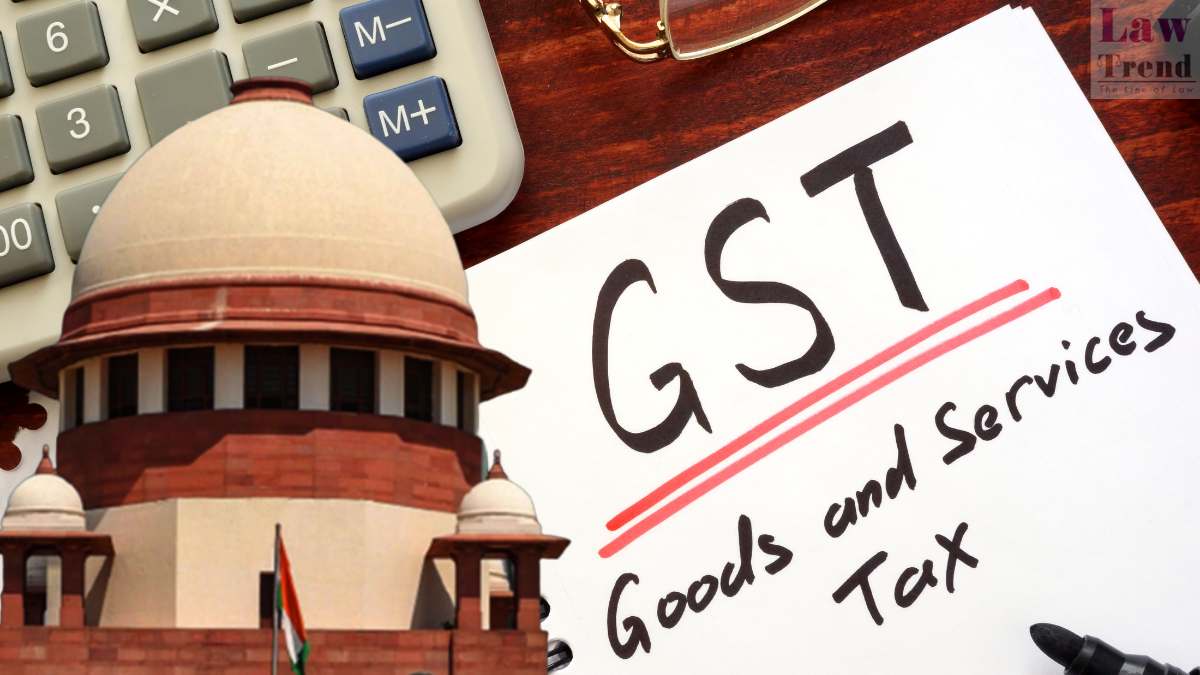

The Supreme Court of India has held that Goods and Services Tax (GST) authorities cannot invoke the extended five-year limitation period under Section 74 of the Central Goods and Services Tax Act, 2017 (CGST Act) through mechanical recitations of fraud, willful misrepresentation, or suppression of facts. A Division Bench comprising Justice J.B. Pardiwala and Justice K. Vinod Chandran set aside a Show Cause Notice (SCN) issued to M/s Tata Steel Limited, ruling that foundational facts establishing deliberate evasion must be explicitly evident from the face of the notice itself to justify invoking Section 74.

Background of the Case

The dispute pertained to a Show Cause Notice issued to M/s Tata Steel Limited covering three financial years: 2018–2019, 2019–2020, and 2020–2021. The notice was initiated following an audit objection by the office of the Comptroller and Auditor General of India regarding an alleged mismatch of Input Tax Credit (ITC) across the three financial years and short payment of tax for 2019–2020.

Audit proceedings commenced on May 27, 2024, followed by exchanges of replies and requests for supporting documents. Subsequently, an SCN under Section 74 of the CGST Act was issued on June 13, 2025. On June 27, 2025, the Additional Commissioner intimated that the SCN had been transferred to the “call book”—meaning kept in abeyance—because the department had contested the audit objection before the Public Accounts Committee. However, on July 1, 2025, the department issued a fresh notice reviving the earlier SCN and proposing a “protective demand” on the ground that GST proceedings are time-bound.

Arguments of the Parties

Appearing for Tata Steel Limited, Senior Counsel Dr. A.M. Singhvi and Mr. Kavin Gulati argued that Section 74 could not be invoked without specific allegations of fraud, willful misstatement, or suppression of facts. They submitted that the department improperly used Section 74 to claim an extended five-year limitation period when the normal three-year limitation under Section 73 had lapsed. They also pointed out that the Assessing Officer was not convinced of the audit objection, having placed it in the call book, and noted that the concept of a “protective assessment” is alien to the GST regime.

Additional Solicitor General Mr. S. Dwarakanath, appearing for the Revenue, contended that proceedings were initiated before the expiration of the limitation period under Section 73 and that the record demonstrated suppression of material facts and willful misrepresentation. The Revenue also relied on Explanation 2 to Section 74 to assert that non-declaration of mandatory information amounts to suppression.

READ ALSO  सुप्रीम कोर्ट ने मध्यस्थता आपत्तियों के लिए सीमा अवधि को परिभाषित किया

Court’s Analysis

The Supreme Court examined the statutory timeline for filing annual returns under Section 44 and Rule 80 of the CGST Rules, as well as the exclusions granted during the pandemic under Suo Motu Writ Petition (C) No. 3 of 2020 (IN RE Cognizance for Extension of Limitation). Accounting for notifications extending return dates and the period excluded by the Court (March 15, 2020, to February 28, 2022), the Bench determined that the three-year limitation period under Section 73 for all three financial years expired on February 28, 2025. Consequently, the SCN issued on June 13, 2025, was beyond the statutory period under Section 73.

The Bench rejected the Revenue’s reliance on Explanation 2 to Section 74, pointing out that the provision had been omitted with effect from November 1, 2024. The Court also dismissed the argument that proceedings began before limitation expired, clarifying that Section 73(10) sets the time limit for issuing the final order under Section 73(9), while Section 73(2) mandates issuing a notice at least three months prior to that order.

READ ALSO  Delhi Court Issues Warrant for Attachment of NHAI Headquarters in Dwarka in Execution of Arbitral Award

Addressing the requirement of independent satisfaction, the Court observed that Section 73 and 74 proceedings require the Assessing Officer to be personally satisfied of the underlying default and suppression. The fact that the department contested the audit objection before the Public Accounts Committee showed a lack of such satisfaction at the end of the Assessing Officer.

Critiquing the mechanical invocation of Section 74, the Supreme Court observed:

“It is not mere lip service to the provisions that is intended when an extended limitation period is provided for recovering an excess benefit availed, short payment or excess refund, from the assessee, especially when the allegation is of fraud/willful misrepresentation/suppression. The foundational facts which led to the inference arrived at of fraud/willful misrepresentation/suppression should be evident from the notice itself. The mere employment of such words will not indicate an application of mind, upon which alone the satisfaction can be arrived at. The words are not to be mechanically recited in the notice to enable recovery outside the normal limitation provided under the statute”

The Court further noted that apart from a bland statement alleging availing of ITC “without documentary evidence and suppress the facts”, the SCN lacked foundational facts establishing a deliberate device to evade tax:

READ ALSO  सुप्रीम कोर्ट का निर्णय- कदाचार के लिए डॉक्टरों को दंडित करने का अधिकार सिर्फ एनएमसी के पास है, अदालते नहीं कर सकती दंडित

“The bland statement made at some places of suppression of facts, merely to avail the extended period of limitation would barely suffice and puts to peril the notice under Section 74.”

Decision of the Court

The Supreme Court held that the Show Cause Notice dated June 13, 2025, and the consequential Order-in-Original dated December 26, 2025, could not be sustained and accordingly set them aside.

However, noting that the overall five-year extended period from the end of the three-year limitation (February 28, 2025) has not yet lapsed, the Court granted liberty to the department to initiate appropriate proceedings under Section 74, provided foundational facts are set out in the notice itself and an order is passed before February 28, 2027. The appeal was allowed.

Case Title: M/s Tata Steel Limited v. Union of India through the Secretary Ministry of Finance and Ors.
Case No.: SLP (C) No. 16859 of 2026
Bench: Justice J.B. Pardiwala and Justice K. Vinod Chandran
Date: August 25, 2026

Law Trend
Law Trendhttps://lawtrend.in/
Legal News Website Providing Latest Judgments of Supreme Court and High Court

Related Articles

Latest Articles

