

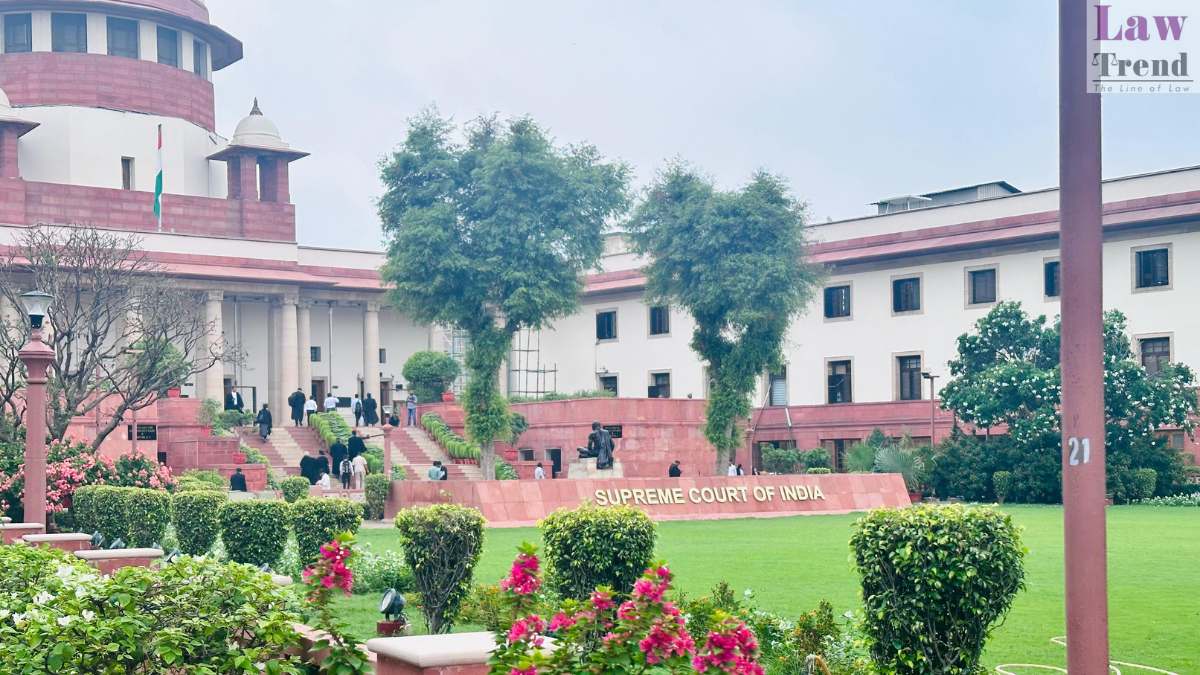
The Supreme Court has stayed a Calcutta High Court judgment that struck down two West Bengal government notifications establishing dedicated police stations and designated trial courts for the state’s Special Task Force.
A three-judge bench comprising Chief Justice Surya Kant, Justice Joymalya Bagchi, and Justice V. Mohana issued notice on an appeal filed by the West Bengal government against the High Court’s June 19 order. During the hearing, Chief Justice Kant questioned the High Court’s objection to expanding judicial facilities, noting that the rise of cybercrime and modern offenses mandates the creation of additional courts.
High Court Decision and Legal Challenge
The matter reaches the apex court following a petition filed by members of the Jalpaiguri Bar Association, who had challenged executive notifications issued by the state government on January 30, 2025, and February 10, 2025.
The initial notification created specialized police units, specifically the Salt Lake STF Headquarter Police Station and the Siliguri STF Headquarter Police Station. The subsequent notification assigned these specialized police stations to specific criminal courts for trial proceedings.
Jurisdictional Framework and STF Scope
Under the February 10 framework, cases registered at the Salt Lake STF station were placed under the jurisdiction of the Additional Chief Judicial Magistrate at Bidhannagar and the ADJ Special Court for MP and MLA cases in North 24 Parganas. For the Siliguri STF station, trials were assigned to the Additional Chief Judicial Magistrate and the ADJ-II court in Siliguri, Darjeeling.
While the High Court acknowledged that the Special Task Force was validly established in 2019 to tackle organized urban crime—including terrorism, firearms trafficking, illegal narcotics, and gang activity—it held that the state government lacked executive authority to alter the statutory criminal justice architecture by establishing exclusive police stations and separate court systems outside the existing legal framework.




