

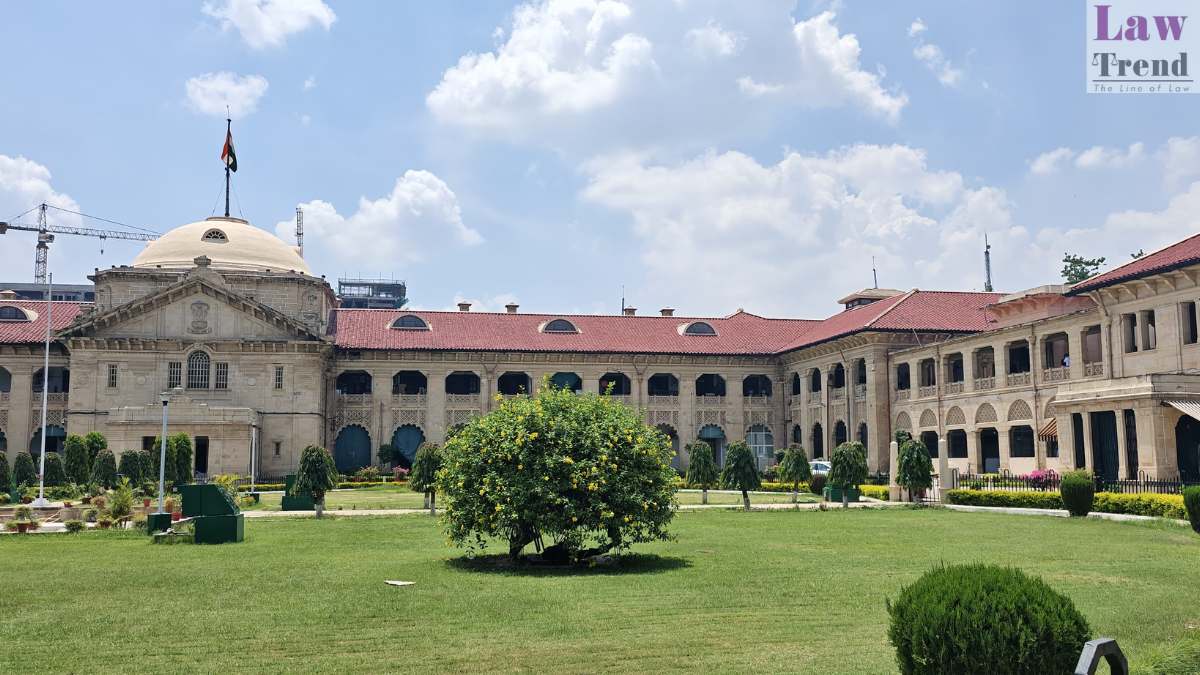
The Allahabad High Court has rejected the second bail application of a man accused of involvement in a major cyber fraud involving the theft of over Rs 16 crore from Nainital Bank, warning that digital crimes pose a widespread threat to societal security and public trust.
Justice Ashutosh Srivastava dismissed the plea filed by Mohammad Shahvez, ruling that no new grounds were presented to justify his release and pointing to the risk of prosecution evidence being compromised if the applicant were freed on bail.
Gravity of Cyber Offenses
Refusing relief in the order passed on August 19, the single bench noted that the fraudulent breach targeted a public sector banking institution. The court stated that permitting such crimes to go unchecked sets a dangerous precedent for society and highlighted the rising frequency of digital offenses across the country.
The court observed that while rapid technological advancement and national digital initiatives have accelerated connectivity, they have also created structural vulnerabilities that cybercriminals routinely exploit. Describing cybercrime as a disruptive menace that impacts individuals regardless of class, education, region, or religion, the bench stressed the necessity of firm judicial action against financial cyber frauds.
Prosecution Allegations and Suspect’s Role
Shahvez was arrested on April 21, 2025, in connection with a case registered in 2024 at the Cyber Crime police station in Gautam Budh Nagar. Investigators allege that he was part of an organized syndicate that hacked into Nainital Bank’s central server to illegally transfer funds exceeding Rs 16 crore.
According to the prosecution, Shahvez’s involvement was identified following statements made by co-accused Danish during the investigation. Police allege that Shahvez supplied mule accounts to another key suspect, Umealakei Emeka, also known as Alex, in exchange for a two percent commission on the siphoned money.
State counsel opposed the bail request on the grounds that Shahvez played an active role in the conspiracy and that his presence during the trial might be difficult to secure if he were released. Charges in the case include cheating, forgery, criminal conspiracy, and destruction of evidence under the Indian Penal Code, alongside computer-related crimes and identity theft under the Information Technology Act.
Rejection of Parity and Defense Arguments
Counsel for Shahvez argued that the accused was innocent, had been falsely implicated, and lacked any prior criminal record. The defense pointed out that the trial had not yet commenced framing of charges and was currently delayed due to summons issued to co-accused Harsh Bansal.
The defense also sought bail on the principle of parity, citing that co-accused Kuldeep Singh and Shubham Bansal had been granted bail by the High Court in August 2025. Shahvez had previously been denied bail by the High Court on November 27, 2025.
Addressing the plea for parity, the court cited the Supreme Court decision in Sagar v. State of U.P., ruling that parity cannot serve as the sole criterion for granting bail. The bench emphasized that courts must evaluate the individual role of the accused, the seriousness of the charges, the severity of potential punishment, and the overall context of the case before exercising judicial discretion.
Concluding that the allegations against Shahvez involved grave financial misconduct and an ongoing threat to trial proceedings, the court found no merit in the second bail application.




