

Delay In Public Procurement Challenges Assessed By Process Progression, Not Just Calendar: Supreme Court Dismisses Plea Against Delhi School Tender Rules
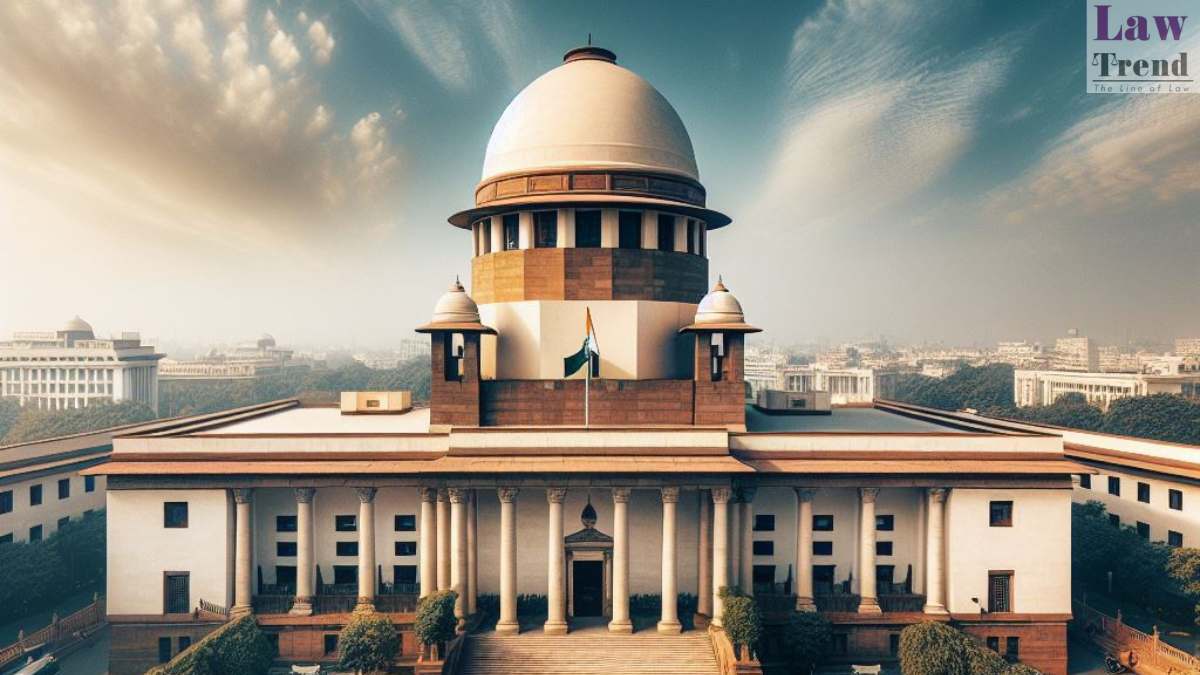

The Supreme Court of India, comprising a bench of Justice K.V. Viswanathan and Justice Arun Palli, has held that a legal challenge to eligibility conditions in public procurement tenders must be brought promptly upon publication, as delay in tender matters is measured against the progression of the process rather than merely by the calendar. Dismissing civil appeals filed by M/s. Utkarsh Enterprises and M/s. Philips International against a Delhi High Court judgment, the apex court declined to interfere with tenders floated by the Directorate of Education (DoE), Government of NCT of Delhi, for procuring sports equipment and outdoor gymnasium equipment for government schools and sports centres, highlighting the appellants’ substantial delay, non-participation, and the advanced stage of the procurement process.

Background of the Case

The Directorate of Education, GNCTD, floated seven tenders for procuring sports equipment and outdoor gym equipment across government schools, sports coaching centres, and event venues in Delhi NCR. Six Sports Equipment Tenders (SETs) were published on November 13, 2025, and December 22, 2025, valued at approximately Rs. 34 crores. A seventh tender for Outdoor Gym Equipment was floated on January 23, 2026.

Aggrieved by several eligibility criteria, four entities—including M/s. Utkarsh Enterprises—filed a Writ Petition before the High Court of Delhi on April 1, 2026. They challenged rules regarding past performance thresholds, average minimum turnover, non-grant of Micro and Small Enterprises (MSE) relaxations, mandatory earnest money deposits (EMD), and physical sample submissions prior to bid evaluation. Under the SETs, they specifically challenged Clause 2.17, which required bidders to have a fully functional office in Delhi and a warehouse in Delhi/NCR for the preceding three years. For the gym tender, challenges were also directed against mandates requiring functional service centres across five pin codes in the consignee state and physical inspections in Delhi.

The appellants contended that these conditions were onerous, arbitrary, exclusionary, and designed to bar meaningful participation. However, none of the lead appellants had participated in the six SETs, and only Utkarsh Enterprises had submitted an unsuccessful bid for the gym tender.

On April 29, 2026, the Delhi High Court dismissed the writ petition. Examining the gym tender on merits, the High Court held its conditions justifiable due to safety, installation, and maintenance needs. Regarding the SETs, the High Court refused to exercise writ jurisdiction due to a four-month delay in approaching the court—by which time one SET had been awarded and the remaining five had advanced to physical sample demonstrations—and left the larger legal questions regarding Clause 2.17 open. The decision was subsequently appealed to the Supreme Court.

READ ALSO  Before Dismissing an Employee surrounding factors along with records need to be considered by the disciplinary authority: Allahabad HC

Arguments of the Parties

During the Supreme Court hearing, Senior Counsel Raju Ramachandran, appearing for the appellants, submitted that the appellants were not pressing their challenge regarding the two tenders that had already been awarded (the Outdoor Gym tender awarded on April 30, 2026, and one SET awarded on April 1, 2026). The challenge was restricted to the remaining five SETs.

The appellants argued that denying MSE relaxations violated the Public Procurement Policy MSE Order (2012) and that demanding physical sample submissions at the tender stage contravened Government-e-Marketplace (GeM) disclaimer clauses. They highlighted that physical sample submission across five SETs imposed an onerous cost of approximately Rs. 94 lakhs. Regarding Clause 2.17, the appellants argued that requiring a Delhi office and warehouse lacked a rational nexus to the tender object, noting that a prior 2022 tender for identical goods required only GST registration in Delhi NCR. Reliance was placed on the Supreme Court judgment in Vinishma Technologies Pvt. Ltd. v. State of Chhattisgarh & Anr. (2025 INSC 1182). The appellants further contended that their petition was timely because technical evaluations were still underway when they filed the writ after exhausting administrative representations. Counsel Aanchal Basur adopted these submissions for M/s. Philips International.

Counsel Swati Ghildiyal, appearing for the respondent authorities, opposed the appeals, stating that the five remaining SET contracts had reached the financial evaluation stage, and interference would prejudice compliant bidders and harm public interest. Responding to the MSE relaxation issue, the respondents clarified that EMD requirements were permissible under General Terms & Conditions (GTC) and could be exempted upon submitting valid documents, noting that 10 to 12 MSEs had participated and one tender was awarded to a registered MSE.

Defending Clause 2.17, the respondents submitted that around 500 varieties of sports goods were needed in bulk, often at short notice. Having a functional office and warehouse in Delhi NCR ensured prompt installation, inspection, servicing, and safety for school children. They emphasized that the clause required operational availability rather than a Delhi headquarters, allowing outside bidders to establish necessary operational infrastructure to qualify. Lastly, physical samples were deemed necessary because product quality, durability, and safety could not be assessed purely through online descriptions.

READ ALSO  “Soldier Supposed to Protect the Dignity of Citizens”: Kerala High Court Denies Bail to the Soldier in POCSO Case

Court’s Analysis

Delivering the judgment for the bench, Justice Arun Palli emphasized the unique nature of judicial review in public procurement matters, observing:

“delay in public procurement, whether goods or services, is not just to be measured against the calendar for the purposes of limitation but as against the progression of the process.”

The Court explained that tender schedules run on compressed, purpose-bound timelines where time is crucial to public interest:

“Time is of extreme essence in such cases for they involve a larger public interest, and consist of multiple and complex stages of evaluation. Judicial discretion, therefore, must be exercised with extreme circumspection to ensure that fence-sitters, proxies, and unscrupulous litigants who bring a challenge at an advanced stage, are not allowed to disrupt an ongoing process.”

Evaluating the timeline, the Court noted that four months in the lifecycle of a tender represents a significant shift in status:

“Four months may appear modest when viewed merely as a measure of calendar time. In the life of a tender, however, it may mark the distance between invitation and evaluation, between evaluation and selection, and between an open field and the crystallization of competing interests.”

The Court clarified the precise moment a cause of action arises to challenge tender conditions, ruling:

“a challenge to a tender condition/eligibility criterion, as distinct from a challenge to the evaluation of a bid, or declaring a participatory tenderer as non-responsive, accrues on the very day the condition is published.”

Addressing the appellants’ failure to act promptly despite knowing the terms from publication, the Court applied the doctrine of delay and laches:

“The doctrine of delay and laches here reflects the equitable refusal of the Court to assist a litigant whose conscious inaction has allowed the legal and administrative landscape to change. The Appellants herein did not lack knowledge of the eligibility criteria. They lacked diligence in challenging it.”

The bench noted that compliant bidders who underwent technical evaluation had acquired vested rights, and stalling the process would be unjust. Additionally, the broader public interest involved supplying sports equipment worth around Rs. 34 crores to approximately 16,00,000 government school students.

Distinguishing the precedent cited by the appellants, Vinishma Technologies Pvt. Ltd. v. State of Chhattisgarh & Anr., the Supreme Court noted that the clause struck down in Vinishma required past supply experience specifically to State Government agencies of Chhattisgarh, creating an artificial local barrier against outside suppliers. Quoting Vinishma, the Court noted:

READ ALSO  Plaint Cannot Be Rejected on Limitation Grounds at Registration Stage if It Involves Mixed Questions of Law & Fact: Andhra Pradesh High Court

“The object of public procurement is to secure quality goods and services for the benefit of public exchequer.”

In contrast, Clause 2.17 in the present case required an operational office and warehouse in Delhi NCR to ensure short-notice delivery and maintenance for school children, making it an operational requirement rather than a geographic restriction based on past dealings with a specific state.

The Supreme Court also referred to the High Court’s reliance on precedent regarding delayed tender challenges:

“Where a party, being aware of the terms of a tender, stands by and approaches the Court only after the process has substantially advanced, it would not be right to intervene in an ongoing procurement, particularly where third-party rights may have intervened or where public interest in timely completion of procurement would be seriously affected.”

Decision of the Court

The Supreme Court concluded that the appeals lacked merit and that the appellants’ belated challenge showed a lack of bona fides. Concurring with the High Court, the bench declined to render definitive findings on the assailed clauses and explicitly left the question regarding the legal validity of Clause 2.17 open to be examined in an appropriate case.

Accordingly, the Supreme Court dismissed both Civil Appeals with no order as to costs.

Case Title: M/s. Utkarsh Enterprises & Ors. v. Union of India & Ors.
Case No.: Civil Appeal No. 10772 of 2026
Bench: Justice K.V. Viswanathan, Justice Arun Palli
Date: August 18, 2026

Law Trend
Law Trendhttps://lawtrend.in/
Legal News Website Providing Latest Judgments of Supreme Court and High Court

Related Articles

Latest Articles

