


The Supreme Court of India has issued a fresh public warning over a fraudulent website impersonating its official online portal, cautioning that cybercriminals may use the fake domain to obtain personal, financial and confidential information from unsuspecting users.
In a public notice dated August 13, 2026, the Supreme Court Registry identified sp-court-in.com as a fraudulent domain currently posing as the Court’s official website. The Registry clarified that sci.gov.in is the registered and official domain of the Supreme Court of India.
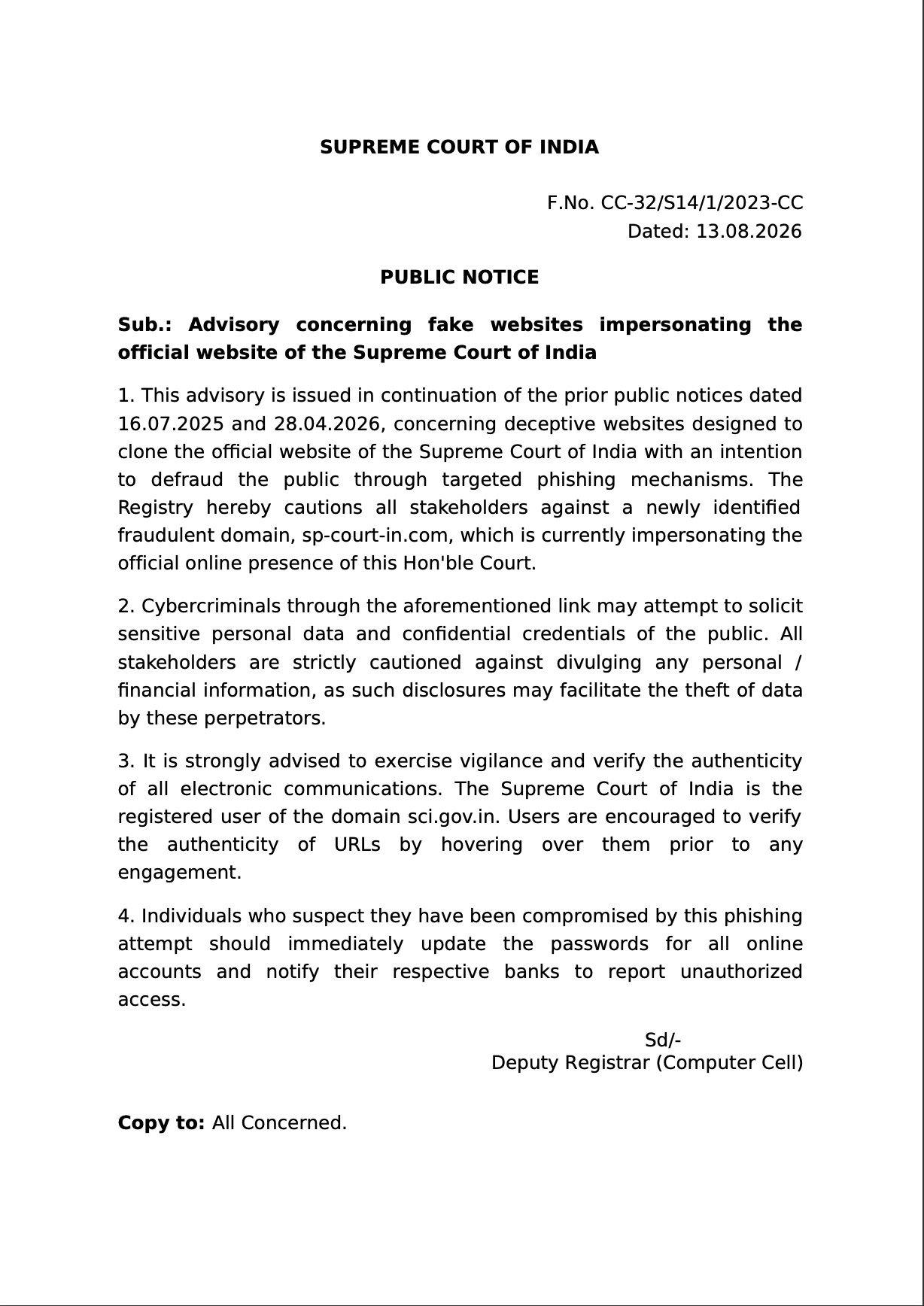
The latest advisory follows earlier public notices issued on July 16, 2025 and April 28, 2026 regarding deceptive websites designed to clone the Supreme Court’s official portal and target members of the public through phishing mechanisms.
Fake Website May Seek Personal and Financial Information
The Registry warned that cybercriminals operating through the identified domain may attempt to obtain sensitive personal data and confidential credentials.
It specifically cautioned users against disclosing personal or financial information through such links, noting that doing so could facilitate data theft.
The advisory comes amid continued attempts to create websites resembling the Supreme Court’s official online presence, potentially making it difficult for users to distinguish fraudulent pages from the genuine portal.
sci.gov.in Is Supreme Court’s Official Domain
The Supreme Court has asked users to remain vigilant while accessing electronic communications or links claiming to be associated with the Court.
It advised people to verify the authenticity of URLs before opening or interacting with them. One method suggested in the notice is to hover over a URL to check its actual destination before proceeding.
The Registry reiterated that sci.gov.in is the domain registered to the Supreme Court of India and users should verify that they are accessing the correct website before entering any information.
What To Do If You Have Already Shared Information
The Supreme Court has also issued instructions for people who suspect that their information may have been compromised through the phishing attempt.
Such users have been advised to immediately change the passwords of all their online accounts. They should also inform their respective banks and report any unauthorised access or suspicious banking activity.
The public notice was issued by the Deputy Registrar (Computer Cell) of the Supreme Court and circulated to all concerned.




