

Non-Consideration Of Bail Orders And Unexplained Delay Snaps Live Link: Andhra Pradesh High Court Quashes Preventive Detention Under PIT NDPS Act
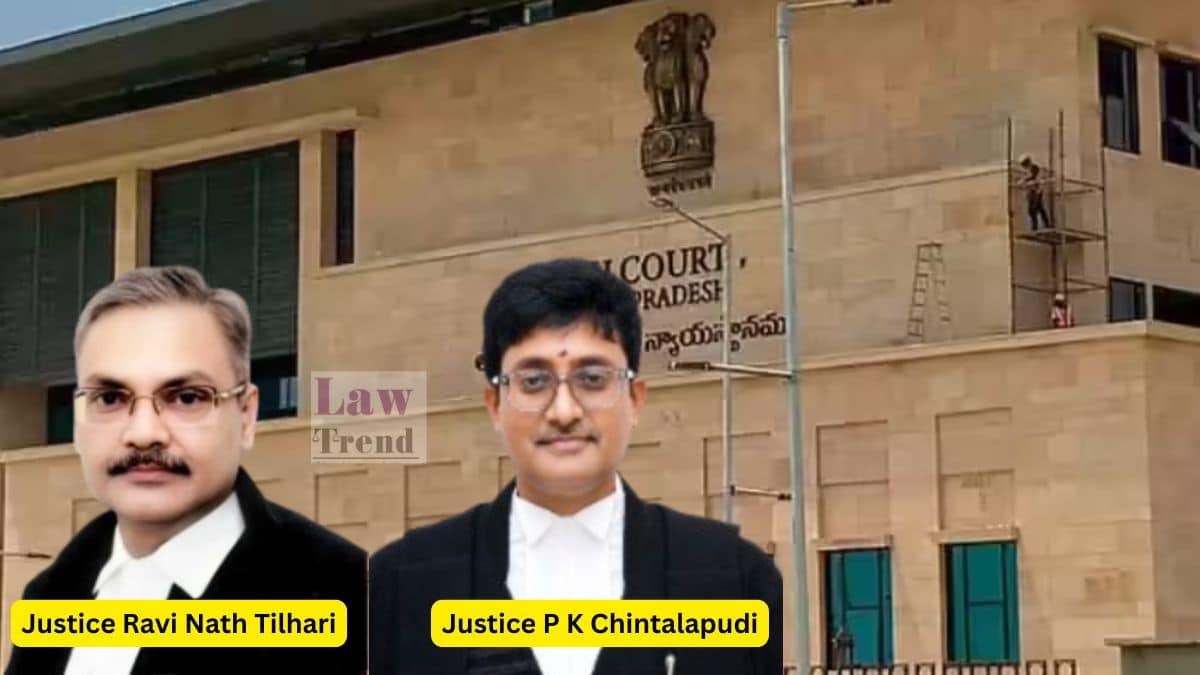

The High Court of Andhra Pradesh at Amaravati, comprising a Division Bench of Justice Ravi Nath Tilhari and Justice Purushottam Kumar Chintalapudi, has quashed a preventive detention order issued under Section 3(1) of the Prevention of Illicit Traffic in Narcotic Drugs and Psychotropic Substances Act, 1988 (PIT NDPS Act). The Court held that an unexplained delay of 139 days in issuing the detention order after receiving the proposal, coupled with the failure of the detaining authority to consider bail orders granted to the detenu, snapped the “live and proximate link” between the alleged prejudicial activities and the purpose of preventive detention. Consequently, the High Court directed the immediate release of the detenu.

Background of the Case

The petitioner, Ponna Roja, filed a Writ of Habeas Corpus challenging the preventive detention of her husband, Bikki Narendra Babu (alias Vicky Chowdary alias Pushpa). The State Government had issued the detention order vide G.O.Rt.No. 1314, Revenue (Excise.II) Department, dated October 29, 2025, under Section 3(1) of the PIT NDPS Act. The detention order was later confirmed vide G.O.Rt.No. 69, dated January 12, 2026, for a period of twelve months.

The detention order relied on seven criminal cases registered against the detenu between 2018 and 2025 under various provisions of the NDPS Act, Drugs and Cosmetics Act, Indian Penal Code, and Passport Act:

  1. Cr. No. 315/2018 (Hennur PS, Bengaluru) – 20 Kg Ganja (Pending Trial)
  2. Cr. No. 382/2019 (II Town PS, Visakhapatnam) – 2.4 Kg Ganja, MDMA, LSD, Alprazolam (Pending Trial)
  3. Cr. No. 64/2021 (Hukumpeta PS, Visakhapatnam) – 144 Kg Ganja (Pending Trial)
  4. Cr. No. 716/2021 (Penamaluru PS, Krishna) – 0.9 Kg Ganja (Pending Trial)
  5. Cr. No. 11/2023 (V. Sataram PS, SPS Nellore) – 93.15 Kg Ganja (Pending Trial)
  6. Cr. No. 107/2023 (Tenali Rural PS, Guntur) – 0.6 Kg Ganja (Pending Trial)
  7. Cr. No. 52/2025 (Governorpet PS, NTR District) – 41.58 Kg Ganja (Under Investigation)

The proposal for preventive detention was initiated on August 29, 2025, by the Inspector of Police, Governorpet PS (Respondent No. 3), and forwarded on August 30, 2025, by the Commissioner of Police, NTR District (Respondent No. 2), to the Principal Secretary to the State Government (Respondent No. 1), who ultimately issued the order on October 29, 2025.

Arguments of the Parties

Counsel for the petitioner, Ms. Nuthakki Saarasa Raga Varshini, contended that the proposal violated Circular No. 3 of 2018 dated March 28, 2018, issued by the Narcotics Control Bureau (NCB), Ministry of Home Affairs. The circular mandates that proposals should ideally be submitted within 15 days of the event to maintain a live nexus. It was pointed out that the criminal cases pertained to 2018–2023 and June 2025, whereas the proposal was sent long after, breaking the live and proximate link. Furthermore, the petitioner highlighted that the detenu had been granted bail in all seven cases, but the detaining authority failed to consider these bail orders while passing the detention order, thereby vitiating its subjective satisfaction. Counsel relied on the Supreme Court judgment in Sushanta Kumar Banik v. State of Tripura and Others.

Appearing for the respondents, Government Pleader Sri Kirthi Teja Kondaveeti argued that previous criminal cases can be considered alongside recent ones. He admitted that while bail orders were forwarded with the proposal, they were not reflected in the detention order except for Ground No. 4, where bail was granted after the detention proposal. Drawing support from Section 6(1) of the PIT NDPS Act and Dunga Kumari v. State of Andhra Pradesh, the Government Pleader submitted that grounds of detention are severable, and the order could be sustained independently on Ground No. 4.

Court’s Analysis and Precedents

The High Court conducted a detailed examination of the legal framework governing administrative circulars, timeline requirements, and the necessity of subjective satisfaction in preventive detention.

READ ALSO  Right to Keep Beard is Not a Fundamental Right Under Article 25: Allahabad HC

1. On Binding Nature of Circulars and the 15-Day Timeline

Addressing the NCB Circular of 2018, which states “The proposal should be sent as soon as possible-ideally within 15 days of the event,” the Court referred to Commissioner of Central Excise and Service Tax, Rohtak v. Merino Panel Product Limited, The Paper Products Ltd. v. CCE, Ranadey Micronutrients & Ors. v. Collector of Central Excise, Collector of Central Excise, Vadodara v. Dhiren Chemicals Industries, Kalyani Packaging Industry v. Union of India, and Commissioner of Central Excise, Bolpur v. Ratan Melting and Wire Industries.

The Bench noted that while executive circulars are binding on departmental authorities, they do not bind courts or tribunals when interpreting statutory law. Referring to General Insurance Council v. State of Andhra Pradesh, the Court observed that “The PIT NDPS Act does not lay down, any time limit for making proposal to the detaining authority.” Evaluating the circular’s 15-day timeline, the Bench held:

READ ALSO  Courts Must Scrutinize Allegations With Care and Avoid Over-Implication of Distant Relatives in Matrimonial Disputes: Supreme Court

“Though, 15 days time line has been prescribed, but the same appears to us not a mandatory time line, beyond which proposal cannot be made. It is only set up as an ideal period.”

2. On the Rule of Live and Proximate Link and Unexplained Delay

However, the Court clarified that non-rigidity of the 15-day timeline does not dilute the fundamental requirement of a live link. Citing Rajinder Arora v. Union of India, T.A. Abdul Rahman v. State of Kerala, Khaja Bilal Ahmed v. State of Telangana, Sama Aruna v. State of Telangana, Golam Hussain v. State of W.B., G. Reddeiah v. State of A.P., P.U. Iqbal v. Union of India, and Ashok Kumar v. Delhi Administration, the Court reiterated that preventive detention cannot be founded on stale incidents.

Quoting T.A. Abdul Rahman, the Bench reaffirmed: “The test of proximity is not a rigid or mechanical test by merely counting number of months between the offending acts and the order of detention.” Quoting Sama Aruna, the Court stressed: “The detention order must be based on a reasonable prognosis of the future behaviour of a person based on his past conduct in light of the surrounding circumstances.”

In the present case, the Bench observed a fatal delay of 139 days between the submission of the proposal (August 30, 2025) and the passing of the detention order (October 29, 2025). The Court highlighted:

“The detention order has been passed after 139 days of the proposal. There is no explanation of the delay for such a long period.”

The Court held that this unexplained delay demonstrated indifference on the part of the detaining authority, snapping the live and proximate link.

3. On Non-Consideration of Bail Orders and Severability of Grounds

Reviewing Sushanta Kumar Banik, Asha Devi v. Additional Chief Secretary to the Government of Gujarat, Sk. Nizamuddin v. State of West Bengal, and Rushikesh Tenaji Bhoite v. State of Maharashtra, the Court underlined that grant of bail under the stringent provisions of Section 37 of the NDPS Act is a vital fact. Withholding or ignoring bail orders vitiates the subjective satisfaction of the detaining authority.

The State had relied on Section 6 of the PIT NDPS Act (severability of grounds), citing Mortuza Hussain Choudhary v. State of Nagaland, Prakash Chandra Mehta v. Commissioner and Secretary, Government of Kerala, Vashisht Narain Karwaria v. State of U.P., and Dunga Kumari v. State of Andhra Pradesh, arguing that the detention could survive on Ground No. 4 alone.

READ ALSO  Every Entry in ACR Must Be Communicated to Public Servants, Grants Pensionary Benefits to Retired Medical Officer: Supreme Court 

However, the Bench analyzed each ground individually and found none sustainable:

  • Ground No. 4 (Cr. No. 716/2021): The incident occurred on August 8, 2021, and the proposal was sent four years later in 2025 after anticipatory bail was granted and procedure under Section 41-A CrPC / Section 35(b) BNSS was followed. The Court ruled that invoking preventive detention four years later violated the rule of live and proximate link.
  • Ground No. 7 (Cr. No. 52/2025): Bail was granted but not considered. Even if granted after the proposal, the detaining authority failed to apply the triple test laid down in Champion R. Sangma v. State of Meghalaya and Kamarunnissa v. Union of India (awareness of custody, belief based on reliable material of likelihood of release and indulgence in prejudicial activity, and necessity to detain).
  • Grounds 1 to 3, 5, and 6: The detention order failed to mention or consider the bail orders granted in these cases, breaching settled legal requirements.

Concluding its assessment, the Court stated: “The live and proximate link that must exist between the past conduct of a person and the imperative need to detain him must be taken to have been snapped in this case.” It emphasized that “A detention order which is founded on stale incidents, must be regarded as an order of punishment for a crime, passed without a trial, though purporting to be an order of preventive detention.”

Decision

Finding that the detention order could not be sustained on any of the grounds, the High Court allowed the writ petition.

“The continued detention of the detenu pursuant to those orders, is illegal, and he is entitled to be released,” the Bench observed.

The High Court set aside the detention order (G.O.Rt.No. 1314 dated October 29, 2025) and the confirmation order (G.O.Rt.No. 69 dated January 12, 2026), ordering that the detenu, Bikki Narendra Babu, be set free forthwith if not required in any other case. No order was made as to costs.

Case Details:

Case Title: Ponna Roja v. The State of Andhra Pradesh and others
Case No.: Writ Petition No. 5684 of 2026
Bench: Justice Ravi Nath Tilhari and Justice Purushottam Kumar Chintalapudi
Date: July 14, 2026

Law Trend
Law Trendhttps://lawtrend.in/
Legal News Website Providing Latest Judgments of Supreme Court and High Court

Related Articles

Latest Articles

