

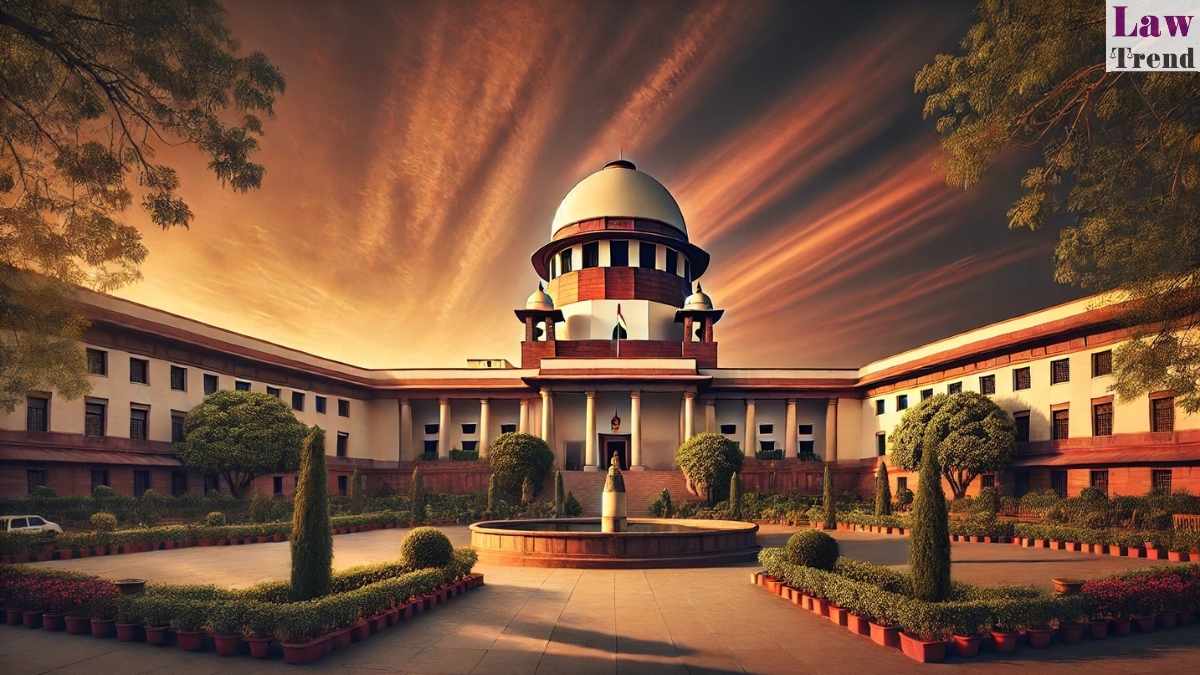
The Supreme Court of India on Tuesday ordered the Union Government to establish comprehensive national guidelines for assessing and collecting environmental compensation from individuals and entities that violate waste management regulations.
Hearing appeals involving the Amravati Municipal Corporation, a bench comprising Justice P S Narasimha and Justice Alok Aradhe instructed the Ministry of Environment, Forest and Climate Change to file an affidavit detailing its progress in formulating and issuing the regulatory framework under the Solid Waste Management Rules, 2026.
Key Principles for Compensation Assessment
Reiterating recent legal precedent, the apex court emphasized that environmental compensation must be grounded in rationality and proportionality, maintaining a direct connection to the harm caused. The bench clarified that compensation is restitutionary in nature and must be levied in addition to—not as a substitute for—statutory penalties or fines.
The justices noted that a polluter’s financial liability persists until the environmental damage is completely reversed, making it the responsibility of state authorities to quantify the damage and recover the funds necessary for environmental restoration.
The court outlined specific factors that authorities must consider when determining compensation amounts, including both tangible and intangible damage, as well as situations where harm is imminent or actions carry the potential for environmental damage. Assessments must also take into account the polluter’s financial capacity, the costs incurred during damage evaluation, the losses suffered by individuals and ecosystems, and the overall expenses required for remediation.
To ensure transparency, the court mandated that all judicial bodies and tribunals record explicit reasoning when fixing compensation, specifying the evaluated factors, valuation standards, and formulas applied.
Regulatory Oversight and Structural Steps
Highlighting broader governance issues, the bench stated that solid waste management requires strong laws backed by robust regulatory mechanisms and administrative accountability. The justices noted that constitutional courts and the National Green Tribunal hold a crucial responsibility in ensuring that statutory bodies created under environmental legislation are properly constituted, adequately staffed, and operational rather than existing merely on paper.
The court welcomed the Union Government’s formation of the Central Implementation Committee under Rule 18 of the Solid Waste Management Rules, 2026—a step taken pursuant to previous court directives—describing it as a positive measure toward enforcing waste rules effectively.




