

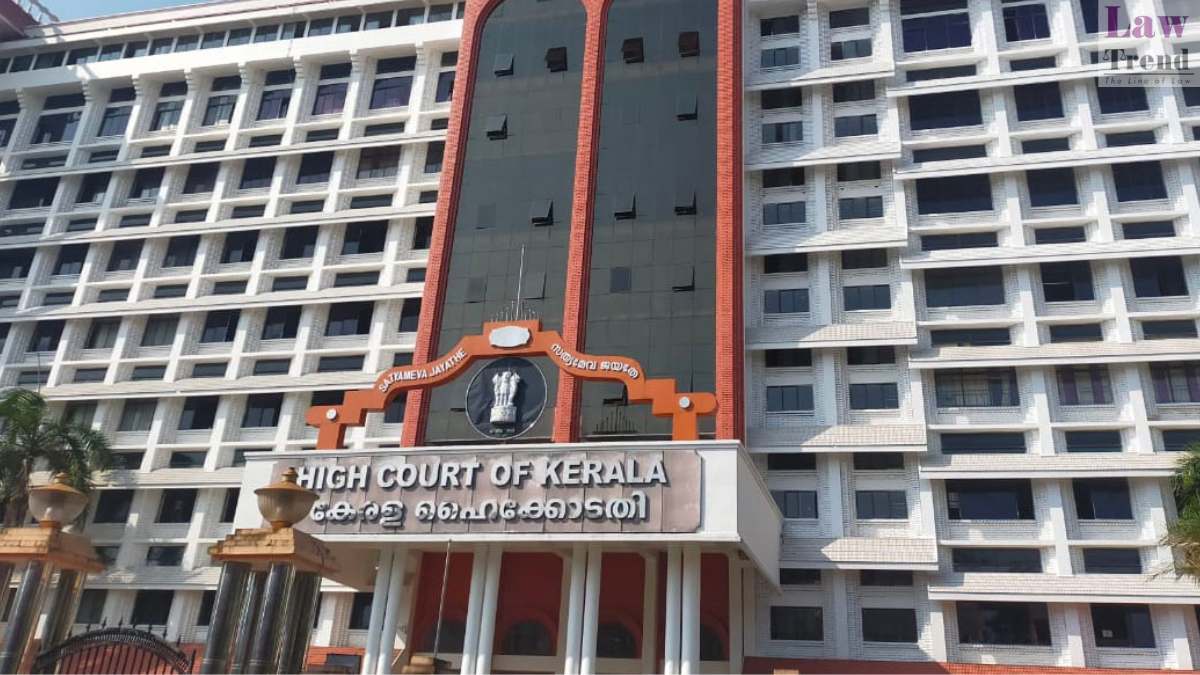
The Kerala High Court has dismissed petitions filed by two 17-year-old students seeking Non-Creamy Layer Other Backward Classes certificates for competitive entrance examinations, ruling that parents employed in the private sector with income and assets well above prescribed limits cannot qualify for reservation benefits.
Income And Wealth Limits Applied To Private Sector
In a decision delivered on July 29, Justice Bechu Kurian Thomas held that including parental salary income is necessary when evaluating Non-Creamy Layer (NCL) status for private sector employees. The court stated that allowing financially advanced families to access reservation benefits undermines the intended purpose of supporting disadvantaged candidates within the same social category.
The ruling affirmed that because the petitioners’ parents possessed income and wealth far exceeding statutory thresholds, they could not be categorized as Non-Creamy Layer candidates for admissions to the National Eligibility cum Entrance Test Undergraduate (NEET UG) 2026 and the Kerala Engineering Architectural Medical Entrance Examination (KEAM) 2026.
Details Of The Dismissed Petitions
The two teenage applicants had challenged the rejection of their NCL applications by state revenue authorities. One petitioner, an applicant belonging to the Ezhava community seeking KEAM admission, had a father whose total asset valuation significantly exceeded the Rs 30 lakh threshold under the wealth test.
The second applicant, who sought NCL status for NEET UG 2026 medical admissions, was the child of a non-resident Indian earning approximately Rs 33 lakh annually. Both applicants argued that their parents’ salary income should be excluded from gross income calculations for NCL certification, relying on the Supreme Court ruling in Union of India versus Rohith Nathan.
Legal Interpretation Of Creamy Layer Exclusions
State authorities contested the petitions, arguing that excluding private sector salary income would enable financially well-off individuals to capture reservation quotas intended for underprivileged groups.
Justice Thomas noted that government authorities have not notified posts in the private sector that are equivalent to government positions. Under the relevant January 1, 2015 government order, when equivalent posts are not designated, candidate eligibility must be evaluated using the income or wealth test. The court clarified that the Supreme Court’s decision in the Rohith Nathan case did not bar the application of income or wealth standards.
Precedent And Broader Judicial Context
The High Court ruling follows a separate Supreme Court judgment from March, in which a division bench comprising Justice P.S. Narasimha and Justice R. Mahadevan addressed the criteria for determining the creamy layer among Other Backward Classes.
The apex court had ruled that monetary income cannot serve as the sole criterion for identifying the creamy layer and addressed equivalence standards across public sector undertakings, private entities, and government service. The Supreme Court emphasized that excluding the creamy layer aims to prevent artificial divisions within social classes, adding that unequal treatment among similarly situated candidates is constitutionally impermissible.




