

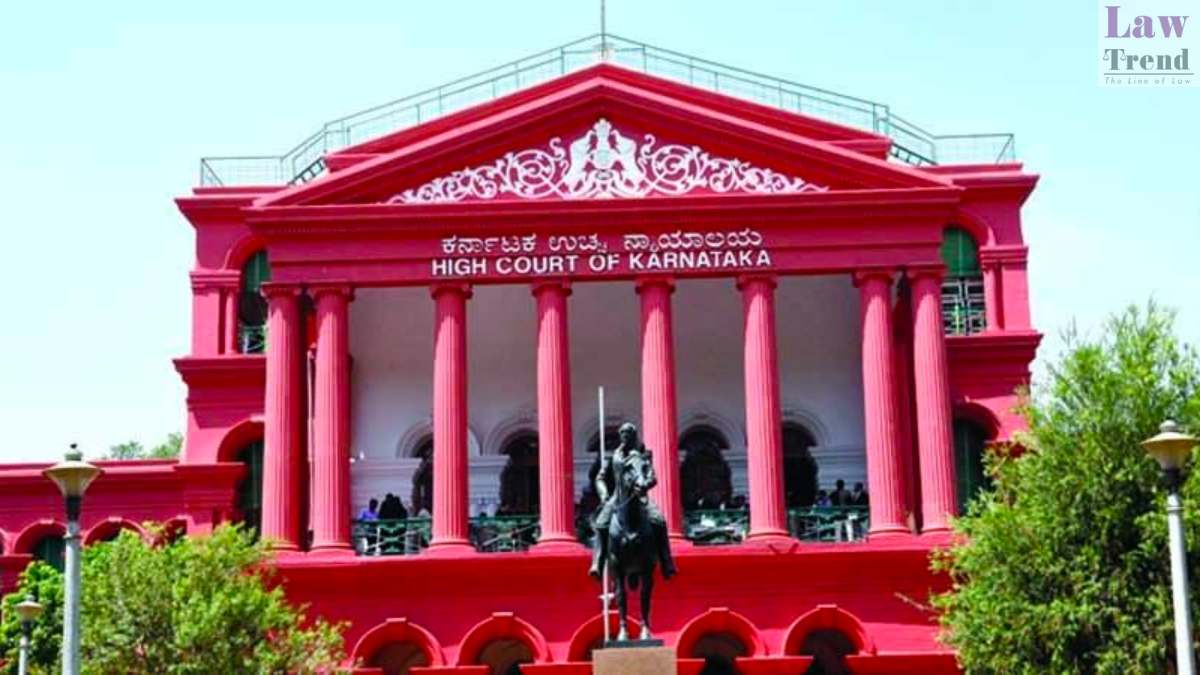
The Karnataka High Court is examining whether a woman can proceed with in vitro fertilization treatment using frozen sperm or a new donor after her estranged husband withdraws his consent during pending divorce proceedings.
Justice Suraj Govindaraj adjourned the hearing to August 18 while considering a petition filed by a 41-year-old Bengaluru woman. The petitioner requested the court to direct a Koramangala-based fertility clinic to proceed with her reproductive treatment despite her husband withholding his mandatory approval.
Bold Subheadings
Statutory Challenge Under Assisted Reproduction Law
The legal dispute centers on Section 22 of the Assisted Reproductive Technology (Regulation) Act, 2021, which prohibits clinics from performing procedures without written, informed consent from all participating parties. After marrying in 2022, the couple underwent six unsuccessful IVF treatments using the husband’s sperm. Following the breakdown of the marriage and unsuccessful mediation, the husband filed for divorce in family court on grounds of cruelty and subsequently revoked his consent for further medical procedures.
Representing the petitioner, counsel Mir Parveez Ahamed argued that the initial submission of sperm established implied consent for future treatments. Ahamed stated that denying the procedure infringes on the woman’s right to motherhood, noting that statutory restrictions currently prevent her from utilizing either the stored sperm or an alternative donor without her spouse’s consent.
Government and Defense Positions
Counsel Sadhana S. Desai, appearing for the Central Government, submitted that the current legal framework restricts eligibility for assisted reproductive technology to commissioning couples, widows, or divorcees. Desai stated that because the petitioner’s marriage remains legally active while the divorce petition is pending, granting permission for individual treatment or a donor would exceed the scope of the existing legislation.
Defense counsel Chinmay J. Mirji raised concerns regarding potential financial liabilities, child maintenance, and property succession rights if a child were born during the legal marriage. In response, the petitioner’s counsel stated that the woman would forego any claims to child maintenance or inheritance rights from the husband for a child born through the procedure. Mirji requested time to seek instructions on whether a formal legal undertaking from the wife would resolve the objection.
Judicial Observations and Next Steps
During the July 28 hearing, Justice Govindaraj noted that the situation represents a complex social and legal issue that may not have been anticipated when the ART Act was drafted. The court observed that given the length of time divorce litigation often takes in the judicial system, individuals should not be left without legal recourse or options regarding parenthood.
The High Court instructed the petitioner’s counsel to research provisions in other relevant statutes that could support her claim if the ART Act cannot provide relief. The court also directed the Additional Solicitor General to appear at the August 18 hearing to address the legislative issues raised by the petition.




