

Section 27 Recovery Alone Cannot Sustain Conviction Without a Complete Chain of Circumstances: Supreme Court
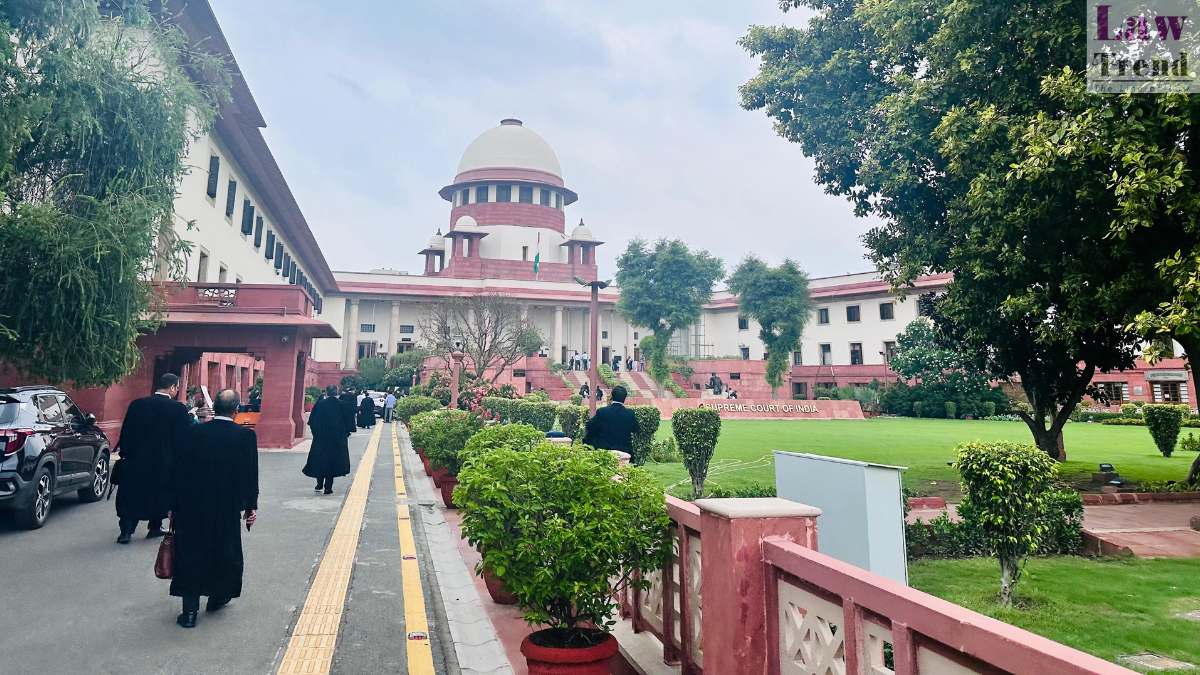

The Supreme Court has set aside a High Court order remitting a 1988 murder case back to the Trial Court, ruling that the recovery of a blood-stained weapon under Section 27 of the Indian Evidence Act, 1872 cannot by itself sustain a conviction without a complete chain of corroborating circumstances. A bench of Justice J. B. Pardiwala and Justice K. Vinod Chandran re-evaluated the evidence and restored the original Trial Court judgment acquitting the accused, holding that unreliable eyewitness testimonies and suspect dying declarations fail to satisfy the standard of proof beyond reasonable doubt.

Background of the Case

The case stems from an incident on February 14, 1988, involving the murder of an individual named Qavi. Following trial, the Additional Sessions Judge acquitted the accused persons. The deceased’s brother, Abdul Rasheed, challenged the verdict by filing a Criminal Revision Application before the High Court of Judicature at Bombay.

The High Court initially set aside the acquittal; however, in a subsequent appeal, the Supreme Court remanded the matter back to the High Court because the accused had not been heard under Section 401(2) of the Code of Criminal Procedure, 1973 (Cr.P.C.) following the death of their advocate. On remand, a Single Judge of the High Court again remitted the matter back to the Additional Sessions Judge to consider afresh the testimonies of the eyewitnesses, the recoveries made under Section 27 of the Evidence Act, and the Chemical Analysis Report, while agreeing with the Trial Court’s rejection of the alleged dying declarations. The accused then appealed this remit order to the Supreme Court.

Revisional Jurisdiction and Statutory Appeals

During proceedings, the Supreme Court considered procedural questions regarding whether a revision petition against an acquittal under Section 302 of the Indian Penal Code could be entertained by a Single Bench or required a Division Bench.

The Court noted that when the revision application was instituted in 1990, victims possessed no statutory right to appeal an acquittal. However, following the 2009 amendment introducing the proviso to Section 372 of the Cr.P.C., victims were granted a statutory right of appeal. Citing Mallikarjun Kodagali v. State of Karnataka, the Court reaffirmed that a victim is not required to apply for special leave to appeal under Section 378 when invoking Section 372. Referencing Joseph Stephen v. Santhanasamy, the Court observed that revision petitions should not be entertained when an efficacious appellate remedy is available.

READ ALSO  Supreme Court: Knowledge of Victim's Caste Essential for SC/ST Act Offence; Quashes Charges, Says "Process Itself Can Become Punishment"

Under Section 401(5) of the Cr.P.C. (analogous to Section 442 of the Bharatiya Nagarika Suraksha Sanhita, 2023), the High Court maintains the discretion to convert a revision petition into an appeal if filed under an erroneous belief. Considering that the crime occurred in 1988 and the legal proceedings had dragged on for decades, the Supreme Court decided to re-appreciate the evidence directly rather than prolonging the matter through another remand.

Evaluation of Evidence and Judicial Findings

Upon examining the trial record, the Supreme Court identified several fundamental flaws in the prosecution’s case:

  1. Motive: The prosecution asserted that the attack followed a dispute in which the deceased allegedly refused to whitewash a house. Cross-examination established that the deceased was engaged in selling apparel on installments and was not a whitewasher. Furthermore, a key witness to the alleged quarrel, Ajaz, was never examined by the prosecution.
  2. Eyewitness Testimony: The prosecution relied on PW3, PW4, and PW8 as eyewitnesses. The Court categorized them as chance witnesses whose testimonies lacked credibility. They failed to mention each other’s presence, made unexplained delays in giving statements to the police despite being close acquaintances of the deceased, and did not alert the police or transport the victim to the hospital despite a police station being minutes away.
  3. Medical Evidence and Dying Declarations: The initial attending doctor (PW1) testified that the victim was brought to the hospital at 9:30 PM by an auto-rickshaw driver unaccompanied by family, was unconscious, and remained unconscious throughout. Conversely, the surgeon (PW11), who examined the victim at 11:10 PM, claimed the victim was conscious to make a dying declaration while accompanied by his father. Given the severe internal injuries to the lungs and heart detailed in the post-mortem report, the Supreme Court found the dying declaration unconvincing and uncorroborated.
  4. Recovery of Weapon: While a weapon stained with human blood was recovered under Section 27 of the Evidence Act, the IO failed to collect blood samples from the scene of the occurrence, and the weapon was not confronted to the eyewitnesses. Evaluating the evidentiary value of the recovery, the Supreme Court observed:
READ ALSO  Important Cases Listed in the Supreme Court on Friday, April 28

“Section 27 recovery alone cannot lead to a conviction and here it fails to implicate A4 since there is no connection to the crime proved, but for the human blood found, not indicated to be that of the accused.”

Verdict of the Court

The Supreme Court concluded that the prosecution failed to establish a complete chain of circumstances pointing exclusively to the guilt of the accused. Addressing the standards required to overturn an acquittal, the Bench observed:

READ ALSO  Equal Liability on Both Drivers in Fatal Collision: Supreme Court Awards ₹36.38 Lakh Compensation

“A brutal murder definitely, and we understand the anguish of the brother who was the revision petitioner. The murder went unavenged, but it is not for the courts to convict the accused on mere assumptions when the evidence led by the prosecution fails to satisfy the judicial mind, of the guilt of the accused.”

The Court further stated:

“The principle not to overturn an acquittal if the view taken in the order of acquittal is plausible; even if another view is possible, is not one of mere caution but is a tenet of criminal jurisprudence which ensures no prejudice being caused to the accused and ensures the benefit of any reasonable doubt arising, being conferred on the accused.”

Holding that the matter was unfit for conversion or remand, the Supreme Court allowed the appeal, set aside the High Court’s remit order, and restored the Trial Court’s judgment of acquittal. The Court directed the immediate release of the accused if in custody, or the cancellation of their bail bonds if on bail.

Case Title: Khalil Pasha & Ors. v. Abdul Rasheed & Anr.
Case No.: Criminal Appeal No. of 2026 (@ Special Leave Petition (Crl.) No. 1115 of 2023)
Bench: Justice J. B. Pardiwala, Justice K. Vinod Chandran
Date: July 28, 2026

Law Trend
Law Trendhttps://lawtrend.in/
Legal News Website Providing Latest Judgments of Supreme Court and High Court

Related Articles

Latest Articles

