

National Commission For Scheduled Castes Has Recommendatory And Advisory Role, Not Adjudicatory Powers: Supreme Court
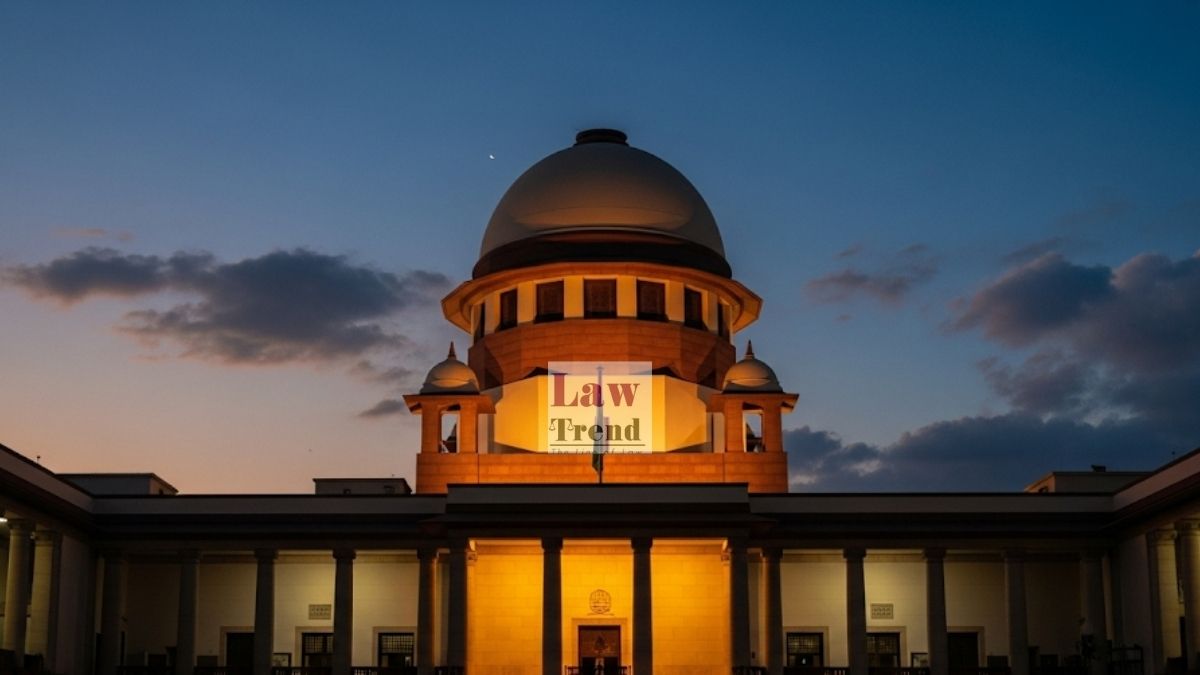

The Supreme Court, through a bench of Justice Sanjay Karol and Justice Augustine George Masih, has held that the National Commission for Scheduled Castes (NCSC) possesses a recommendatory and advisory role under Article 338 of the Constitution of India, but lacks adjudicatory powers to issue binding directions in service matters or order the payment of financial arrears. Setting aside a judgment of the Bombay High Court, the apex court declared that while the NCSC has specific civil court powers to facilitate investigations and inquiries, it cannot assume the functions of a court or tribunal to determine party rights or issue executable directions.

Background of the Case

The matter originated from a service dispute involving Respondent No. 3, Madhavi K. Chandorkar, a Scheduled Caste employee appointed by the Mumbai Port Authority (appellant) as a typist-cum-computer clerk on July 9, 1997. She was subsequently promoted to Stenographer Grade-I under an Office Memorandum (OM) dated January 21, 2002. This 2002 OM had negated an earlier OM dated January 30, 1997, allowing SC/ST employees to retain consequential seniority upon promotion by virtue of reservation rules.

However, the 2002 OM was challenged before the High Court of Judicature at Bombay in Writ Petition No. 1164 of 2012 by the Mumbai Port Trust Non-SC/ST Employees Association. By an order dated November 30, 2016 / December 1, 2016, the High Court quashed the 2002 OM. Following this, the Mumbai Port Authority issued a circular on December 27, 2018, to reset employee seniority, stating that promotions would be granted only in accordance with the 1997 OM and that promotions not aligned with the decision in M. Nagaraj v. Union of India would be revisited. A challenge to this circular by the Mumbai Port Trust SC, ST and OBC Welfare Association was dismissed by the Bombay High Court on August 27, 2019.

Pursuant to the circular, a show cause notice was issued to Respondent No. 3 on March 9, 2020. After providing an opportunity of hearing, the appellant demoted her vide an order dated September 11, 2020, notionally with effect from April 19, 2007, to November 30, 2016, from Stenographer Grade-I to Grade-II.

Aggrieved by the demotion, Respondent No. 3 filed a representation before the NCSC. After hearing both sides, the NCSC issued an order dated October 23, 2024 (containing minutes of its meeting held on October 1, 2024), directing the Mumbai Port Authority to strictly adhere to Department of Personnel and Training (DoPT) guidelines, prepare proper reservation rosters, grant promotions in accordance with reservation rules, implement the order and pay financial arrears within 30 days, and forward the roster for verification to the Ministry of Shipping with an Action Taken Report within 45 days.

READ ALSO  High Court Praises Dedication of a Lawyer who put his Doli Ceremony on the hold due to his case

The Mumbai Port Authority challenged the NCSC order before the Bombay High Court in Writ Petition (L) No. 1449 of 2025. A Division Bench of the High Court dismissed the writ petition on August 19, 2025, concluding that the directions issued by the NCSC did not exceed its constitutional scope and noting that the direction regarding arrears was a restatement of an earlier NCSC order dated June 1, 2023. The Mumbai Port Authority then appealed to the Supreme Court.

Arguments of the Parties

The appellant argued that the NCSC did not possess the legal or constitutional authority to issue binding directions or adjudicate service disputes beyond the specific functions defined under Clause 5 of Article 338 of the Constitution of India.

READ ALSO  Compliance is Not Optional, Says Allahabad High Court in Contempt Against Indian Overseas Bank

In response, the NCSC submitted through its written submissions that Clause 5(b) of Article 338—which mandates the Commission to inquire into specific complaints regarding the deprivation of rights and safeguards of Scheduled Castes—comprises two parts: inquiry and safeguarding, with the latter operating as an enforcement mechanism.

The Court’s Analysis

The Supreme Court examined the scope and powers of the NCSC under Article 338 of the Constitution, tracing its constitutional history from draft Article 299 to amendments made in 1990 (65th Amendment), 2003 (89th Amendment), and 2018 (102nd Amendment).

The apex court held that the Bombay High Court erred in its conclusion, observing that “the directions issued by NCSC in its order dated 23.10.2024 were within the scope of powers provided under the Constitution.”

Analyzing Article 338(8), which confers powers of a civil court upon the NCSC, the Court highlighted the limited nature of these powers:

“while it has powers to requisition documents and receive evidence it does not have the power to make an order in furtherance of that evidence. In other words, NCSC can record a factual finding and then ask the concerned Government, either the Centre or the State to act thereupon.”

Addressing the NCSC’s argument that “safeguards” represented an enforcement mechanism, the Court stated that such a submission “is difficult to accept in view of the explicit language of the Article. It certainly does not confer adjudicatory power, at best recommendatory in nature.” The Court added that the use of the word “and” in “rights and safeguards” indicates that they are to be read together as a single bundle.

The Court referred to prior binding precedents to support its reasoning:

  1. All India Indian Overseas Bank SC and ST Employees’ Welfare Assn. v. Union of India (1996): The Supreme Court noted that procedural powers of a civil court granted under Article 338(8) are strictly for investigation and inquiry, and do not convert the Commission into a civil court or grant it powers to issue temporary or permanent injunctions.
  2. Collector v. Ajit Jogi (2011): The Court reiterated that the Commission’s power to inquire into the deprivation of rights and safeguards does not extend to determining, issuing, or cancelling caste status certificates, but is meant for submitting reports to the Central or State Government.
  3. Bhabani Prasad Jena v. Orissa State Commission for Women (2010): The Court noted that statutory and constitutional commissions are not entrusted with powers to take up the role of a court or adjudicatory tribunal to determine party rights.
READ ALSO  Govt Sets Up Panel Led by Former Law Secretary T K Vishwanathan to Recommend Reforms in Arbitration Law

Reaffirming the statutory scheme, the Supreme Court observed:

“the Legislature has prescribed a role that is recommendatory and advisory, but certainly not adjudicatory. They are not meant to be bodies taking over adjudicatory functions.”

Decision of the Court

The Supreme Court allowed the appeal and set aside the judgment of the Bombay High Court. The Court declared that the directions issued by the NCSC regarding the payment of arrears were contrary to the provisions of the Constitution of India and non-est in law.

Case Details:
Case Title: Mumbai Port Authority v. National Commission for Scheduled Caste & Ors.
Case No.: Civil Appeal No. ___ of 2026 (Arising out of SLP(C) No. 33359 of 2025)
Bench: Justice Sanjay Karol and Justice Augustine George Masih
Date: July 28, 2026

Law Trend
Law Trendhttps://lawtrend.in/
Legal News Website Providing Latest Judgments of Supreme Court and High Court

Related Articles

Latest Articles

