

Retail Liquor Licensee Cannot Be Penalised For Monthly MGQ Shortfall If Annual Minimum Guaranteed Quota Is Fulfilled: Supreme Court
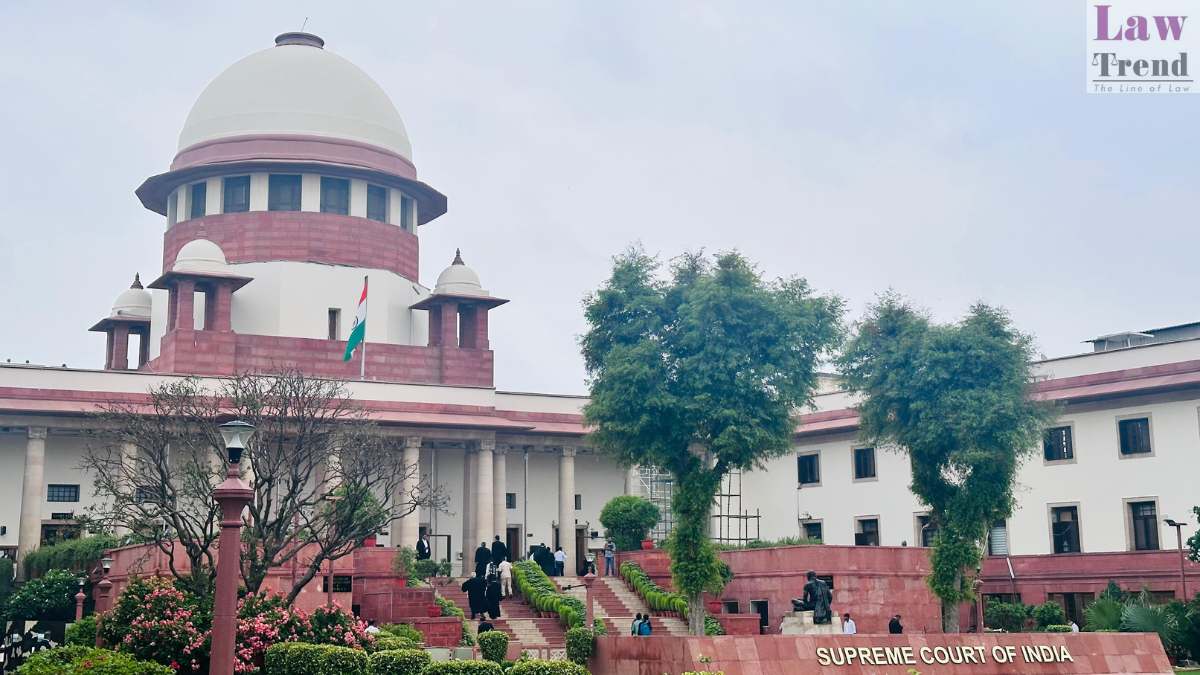

In a significant ruling on excise law, a Supreme Court bench comprising Justice S.V.N. Bhatti and Justice N.V. Anjaria held that a retail country liquor licensee who has fulfilled and lifted the entire annual minimum guaranteed quantity fixed for an excise year cannot be subjected to deficit licence fees, penalties, and interest for an isolated monthly shortfall. Dismissing the civil appeals filed by the State of Uttar Pradesh against retail liquor licensees, the apex court upheld an Allahabad High Court judgment that quashed demand notices and ordered the refund of withheld security deposits.

Background of the Case

The dispute pertained to excise licences granted and renewed under Form C.L. 5-C under the Uttar Pradesh Excise (Settlement of Licences for Retail Sale of Country Liquor) Rules, 2002 for the excise years 2006–07 and 2007–08 in District Bijnor. The licensees deposited the required annual licence fees and security money.

While the licensees lifted the full annual Minimum Guaranteed Quota (MGQ) fixed for their respective shops across both excise years, the Excise Commissioner issued a circular on March 9, 2009, directing strict enforcement of monthly MGQ lifting to achieve revenue targets. Under this circular, adjustments for excess lifting were restricted to 20% in subsequent months, and shortfalls were to be deducted from security deposits.

Following the circular, the District Excise Officer issued demand notices in March 2009 imposing duty as a penalty and interest for shortfalls in lifting monthly quotas in March 2008, retroactively deducting these amounts from the licensees’ security deposits. After the State rejected a legal notice seeking a full refund on August 17, 2010, the licensees approached the Allahabad High Court in Writ (Tax) No. 507 of 2011. The High Court quashed the demand notices and ordered the refund of security amounts, leading the State of U.P. to file civil appeals before the Supreme Court.

Arguments of the Parties

The Appellants (State of Uttar Pradesh) argued that the licensees had an alternative statutory remedy of appeal under Section 11(1) of the U.P. Excise Act, 1910, making the writ petition non-maintainable. They contended that trade in country liquor is res extra commercium and that the State holds exclusive privilege under Section 24B. The State asserted that under Rule 15(c) of the 2002 Rules, credit balances earned from excess lifting could not be adjusted beyond 20% of that month’s licence fee, and short-lifting in March constituted a direct breach of Rule 15(c) and licence conditions. Additionally, the State submitted that accepting partial refunds barred the licensees under the principles of estoppel and acquiescence, and that paying a compounding fee under Section 74 did not discharge contractual liabilities.

READ ALSO  Important Cases Listed in the Supreme Court on Tuesday, March 28

The Respondents (Licensees) argued that they had fulfilled the entire annual MGQ for both excise years and were not in default. They contended that the annual MGQ is divided into monthly installments and that levying penalties and interest by isolating a single month while ignoring full annual compliance was impermissible under the Rules and licence terms. They further stated that receiving partial refunds was necessary to maintain business operations and did not constitute a waiver of their right to claim a full refund.

The Court’s Analysis

The Supreme Court examined the relevant statutory framework, including Rules 13, 14, and 15 of the 2002 Rules, as well as the definition of “licence fee” under Clause (m) of Rule 2, which defines it as equal to the excise duty leviable on the annual minimum guaranteed quantity fixed for the shop.

READ ALSO  Whether in the Case of Domestic Arbitration, the Powers Under Sections 29A(4), 29A(5), and 29A(6) of the Act Can Be Exercised by the Commercial Court? Answers Allahabad HC

Testing the State’s interpretation hypothetically, the Court pointed out the flaw in demanding monthly underperformance penalties when the annual quota is satisfied. The Court observed:

In such an event, the licensee will continue to pay 1/12th of the monthly licence fee and the underperformance penalty without proper credit for the already performed minimum annual guaranteed quantity.

The Court further emphasized that the licensees had fully paid the annual licence fee and met the total annual MGQ before the end of the excise year. Highlighting the legal boundary on levying penalties, the Court stated:

Non-performance of MGQ at the time of completion of the licence period is not a ground for levying and demanding a penalty, both under the Rules 2002, and as per the terms of the Form 5-C licence.

The bench also faulted the timing and manner of the State’s action, holding:

The mode and manner of performance insisted upon by the Appellants through the impugned Demand Notice do not conform to the plain meaning of the statutory rules. The Demand Notice was not issued contemporaneously, but after the lapse of a reasonable time.

Final Decision

Finding that the High Court had correctly interpreted the 2002 Rules and licence conditions, the Supreme Court held that the impugned demand notices suffered from fundamental infirmities. Consequently, the Supreme Court dismissed the civil appeals filed by the State of Uttar Pradesh and affirmed the High Court’s judgment directing the refund of security deposits to the licensees.

Case Details

Case Title: State of U.P. & Ors. v. Zafar Ali & Ors.

READ ALSO  NSA Detention of Sonam Wangchuk: Supreme Court to Watch Speech Videos During Holi Vacation, Hearing on March 10

Case No.: Civil Appeal No. 3954 of 2018 (with Civil Appeal Nos. 3956 of 2018, 3955 of 2018, and 8137 of 2012)

Bench: Justice S.V.N. Bhatti and Justice N.V. Anjaria

Date: July 28, 2026

Law Trend
Law Trendhttps://lawtrend.in/
Legal News Website Providing Latest Judgments of Supreme Court and High Court

Related Articles

Latest Articles

