

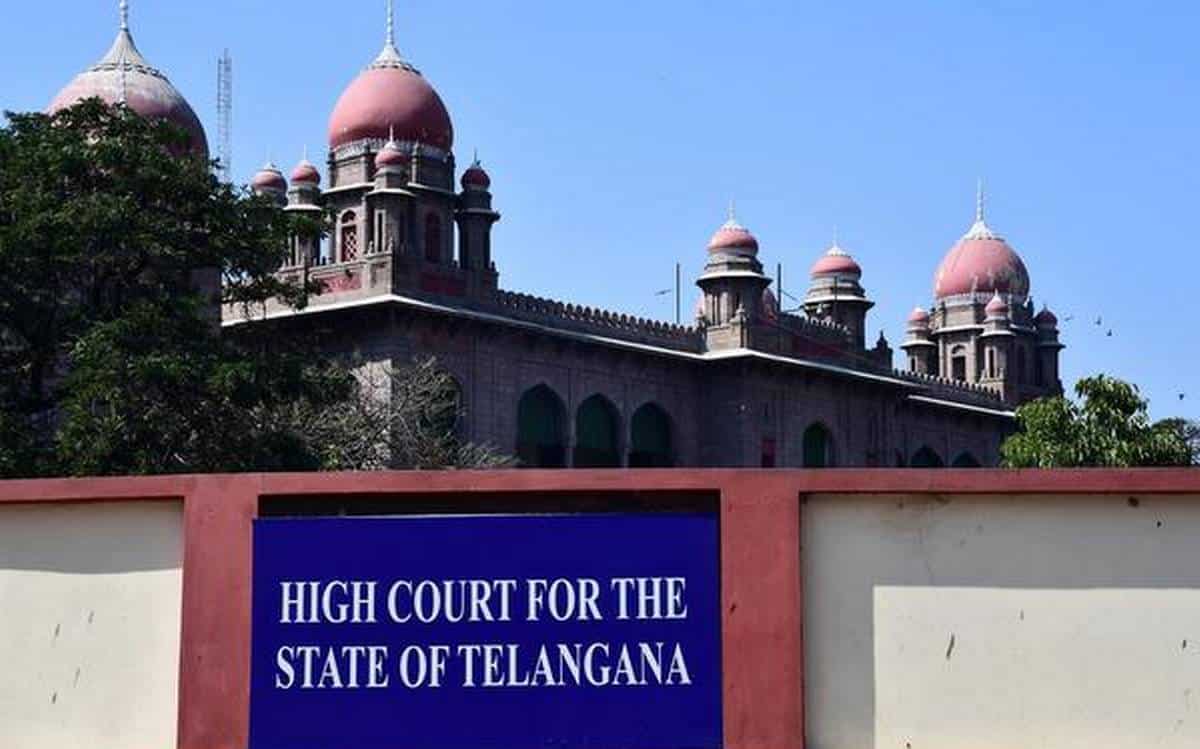
Women government employees cannot be deprived of maternity benefits for a second pregnancy simply because their first delivery resulted in twins, the Telangana High Court has ruled. Holding that multiple births during an initial pregnancy are an uncontrollable biological event, the court declared that denying leave under such circumstances infringes upon fundamental rights guaranteed under Article 21 of the Constitution.
Court Directs Paid Leave For Government Lecturer
Justice K Sarath delivered the judgment on July 15 while granting a writ petition filed by Jadi Swarupa Rani, a junior English lecturer with the Telangana Social Welfare Residential Educational Institutions Society (TGSWREIS). The court directed state authorities to grant Rani 180 days of maternity leave with full pay and allowances for the period spanning April 14, 2026, to October 11, 2026.
Rani, who joined government service on September 27, 2019, gave birth to twins during her first delivery on November 9, 2023, receiving 180 days of sanctioned leave that was recorded in her service book. Upon conceiving again, she submitted an application on February 19, 2026, requesting maternity leave for her second pregnancy. She delivered her third child while the legal proceedings were pending before the court.
Mechanical Reading Of Service Rules Rejected
State educational authorities rejected Rani’s request by invoking Rule 101(a) of the Telangana Fundamental Rules alongside Government Order Ms. No. 50, dated May 17, 2014. These regulations limit maternity leave eligibility exclusively to married female employees with fewer than two surviving children. Defending their decision, state officials argued that sanctioning leave to an employee who already had two surviving children would breach fundamental rules and trigger audit objections regarding unauthorized salary disbursements.
Representing the petitioner, Advocate Gattu Vinay Kumar argued that authorities had mechanically treated the birth of twins as two separate pregnancies rather than recognizing the initial delivery as a single biological event. Rejecting the state’s literal reading, Justice Sarath noted that rigid enforcement defeats the primary objective of maternity legislation, which aims to protect maternal health and support continued employment following childbirth. The judge emphasized that the biological outcome of a pregnancy remains beyond the worker’s control and cannot serve as a ground to withhold welfare benefits.
Constitutional Precedents And Sister State Standards
In reaching its conclusion, the High Court relied on Supreme Court precedents in Deepika Singh v Central Administrative Tribunal and K Umadevi v Government of Tamil Nadu, which affirmed maternity benefits as essential components of reproductive autonomy, privacy, and personal dignity under Article 21.
The bench also cited a Madras High Court judgment in the J Sharmila case, which held that maternity entitlements should correspond to the number of deliveries rather than the headcount of surviving children. That ruling prompted Tamil Nadu to amend its Fundamental Rules in 2018 to grant leave for a second delivery following a twin birth. Furthermore, the court noted that neighboring Andhra Pradesh completely removed the two-child cap through a government order issued on May 5, 2025. Justice Sarath observed that Telangana authorities continued to enforce the two-child restriction mechanically despite established legal precedents and statutory updates in neighboring states.


