

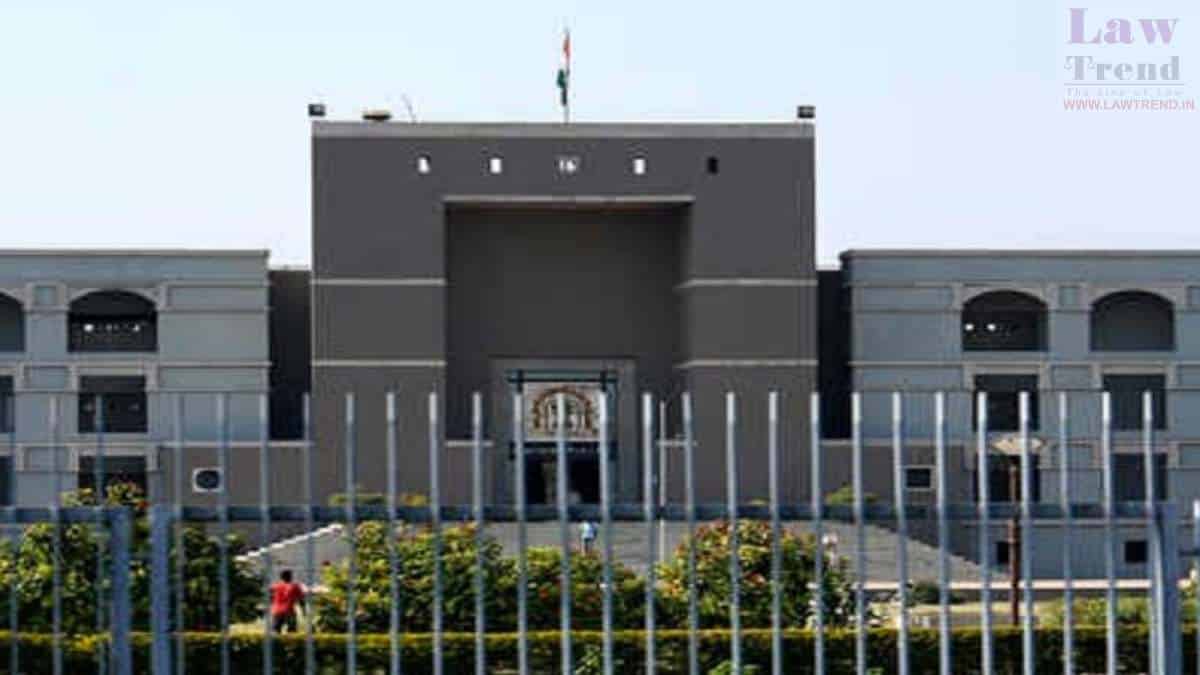
The Gujarat High Court on Monday questioned why the Surat Municipal Commissioner remains in office despite allegations linking him to the unauthorized demolition of over 100 residences in Nasir Nagar, warning that the state government’s handling of the situation risks creating an impression of official complicity.
Court Questions Leadership and Inquiry Structure
During the hearing on petitions challenging the May 30 demolition drive in Surat, the court questioned Advocate General Kamal Trivedi on why subordinate personnel faced administrative action while no preliminary or disciplinary inquiry was initiated against the Municipal Commissioner. The bench noted that maintaining the civic chief at the head of the administration while allegations are investigated conflicts with fundamental principles of natural justice and public accountability.
The court examined an affidavit from suspended municipal officer Sujal Prajapati, which included WhatsApp records indicating that the Municipal Commissioner instructed officials to complete the demolition as quickly as possible. While the commissioner acknowledged the phone number and messages in his own affidavit, state representatives described the communications as routine administrative forwards rather than formal demolition directives. The bench rejected this characterization, questioning why the civic chief showed direct personal involvement in an action concerning land that the corporation itself identified as private property.
Addressing the state’s investigative framework, the court observed that the committee formed by the government functions merely as a fact-finding body rather than a formal disciplinary proceeding. The bench noted that the committee’s founding resolution lacks clear terms of reference and contains no mechanism to fix individual responsibility.
State Commitments and Legal Arguments
In response to the bench’s observations, Advocate General Kamal Trivedi stated that senior officials have conducted high-level meetings and assured the court that the state will revise the investigative committee’s mandate.
The court also scrutinized the Surat Municipal Corporation’s argument that the demolished properties stood on land surrendered for Floor Space Index benefits, questioning the statutory authority of the civic body to clear structures under such circumstances. Furthermore, the bench stated that funding for the rehabilitation of displaced families should not fall on taxpayers, taking the position that financial liability should be borne by the individuals responsible for the action.
Background of the Displacement
The proceedings follow a May 30 civic drive in the Ved Road area of Surat, where municipal authorities demolished approximately 100 shanties in Nasir Nagar, displacing as many families. Twenty-six affected residents subsequently petitioned the High Court for rehabilitation and official accountability, while Prajapati filed a separate petition challenging his suspension.
Prajapati is one of five municipal officials suspended following an internal preliminary inquiry into the incident. In earlier affidavits submitted to the High Court, the Municipal Corporation acknowledged that the demolition occurred during a routine physical demarcation exercise without an underlying decision authorizing structural removal, leading the court to observe that the civic body had acknowledged the action was unlawful.


