

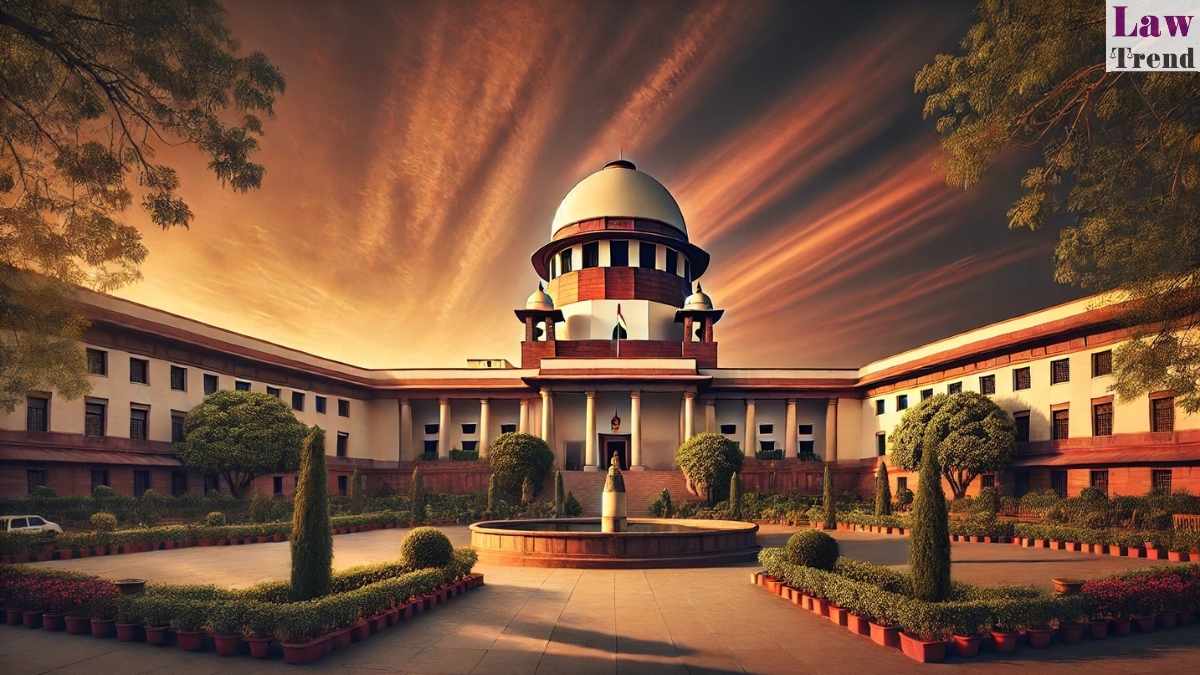
The Supreme Court on Monday directed the central government to submit the rules formulated under the Bharatiya Vayuyan Adhiniyam, 2024, in a sealed cover within two weeks.
A two-judge bench comprising Justices Vikram Nath and Sandeep Mehta ordered that the rules be presented to the court, irrespective of whether they have already been tabled in Parliament. The directive was issued during the hearing of a petition seeking an independent regulator and structured guidelines to control fluctuating airfares and protect passenger rights across India’s civil aviation sector.
During the hearing, the counsel representing the Centre informed the bench that the draft rules are ready and are currently undergoing translation before being placed before Parliament. Senior advocate Ravindra Srivastava, representing the petitioner, noted that existing aviation rules continue to govern the sector until the new regulations come into effect. The court has scheduled the next hearing for August 3.
Court Scrutiny Of Airfare Fluctuations
The order stems from a public interest plea filed by social activist S Laxminarayanan, who has sought a transparent and autonomous regulatory framework to protect consumers from erratic pricing and additional fees charged by private carriers.
The top court has previously expressed concern regarding high air travel costs. On May 15, the court emphasized the need for airfare rationalization and urged the government to provide relief to travelers. At that hearing, Solicitor General Tushar Mehta, appearing for the Centre, stated that the Bharatiya Vayuyan Adhiniyam, 2024, had come into effect in January 2025, and that the corresponding rules were being prepared.
Earlier, in January, the bench flagged sharp price hikes during festivals as exploitative, stating that it would address unpredictable fluctuations. The court subsequently asked the Centre and the Directorate General of Civil Aviation to submit their responses. This followed an initial notice issued by the Supreme Court on November 17 last year, after which the Centre informed the court on February 23 that the Ministry of Civil Aviation was actively considering the issues.
Passenger Grievances And Regulatory Gaps
The petition highlights several controversial measures introduced by private airlines, such as reducing the free check-in baggage limit for economy class from 25 kilograms to 15 kilograms. The plea describes this reduction as an unjustified policy change aimed at generating an additional revenue stream.
Additionally, the petition criticizes the single-bag check-in restriction, highlighting that passengers who travel without check-in luggage receive no rebates or compensatory benefits.
According to the plea, no active authority currently has the power to review or cap airfares or ancillary charges. The petitioner argues that this regulatory gap allows airlines to exploit flyers through hidden costs, dynamic pricing algorithms, and sudden fare hikes during holidays or bad weather. The plea asserts that the lack of oversight violates citizens’ constitutional rights to equality, freedom of movement, and dignity, calling for urgent judicial intervention to address the government’s inaction on fare structures and grievance redressal.




