

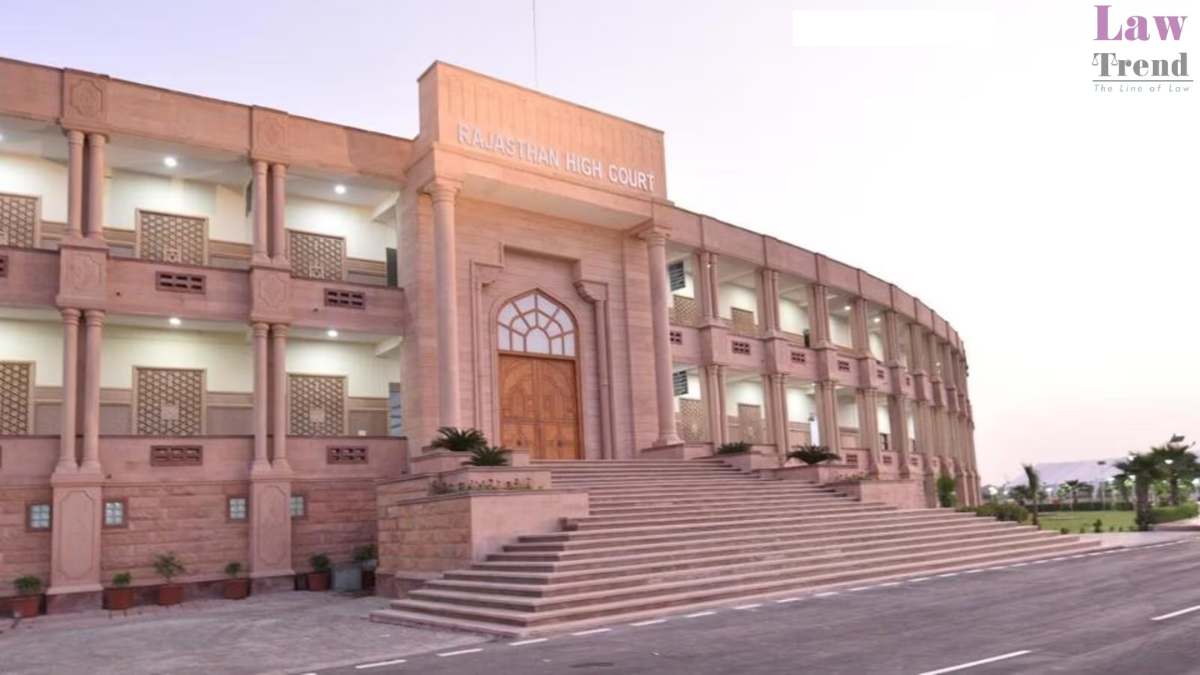
The Rajasthan High Court has granted bail to a man accused of uploading a morphed photograph of a minor girl on social media, attaching an unusual condition that completely bars him from using any social networking platforms for three years.
Justice Ashok Kumar Jain issued the order on July 6, stating that the strict restriction was necessary to ensure the accused learned not to misuse online platforms. The court determined that bail was appropriate because the police investigation is complete and the trial court has already recorded the statements of the primary prosecution witnesses, including the victim and her mother. This prior testimony, the court noted, significantly reduces the likelihood of the accused influencing key witnesses upon his release.
Strict Conditions Imposed By The Court
To secure his release, the accused must submit a personal bond of Rs 50,000 along with two matching sureties. He is also required to file a formal affidavit before the trial court undertaking that he will not access any social media platforms, specifically including Facebook, Instagram, Threads, and Snapchat, for a duration of three years.
Under the court order, if the accused is found using any social media platform under his own name or an assumed identity, the trial court has the authority to immediately revoke his bail. Additionally, the accused is strictly prohibited from directly or indirectly contacting the victim or her family members until the criminal proceedings are resolved. He has also been ordered not to tamper with evidence or engage in further criminal activity.
Case Background And Prosecution Charges
The case originated from a complaint filed by the minor’s mother on February 11, 2026, which led to the registration of an FIR the following day. The prosecution alleges that the accused morphed the girl’s photo and uploaded it online to defame her, with the incident occurring between September 18, 2025, and October 16, 2025.
Following their investigation, the police filed a chargesheet containing multiple charges. These include Section 77 (voyeurism) of the Bharatiya Nyaya Sanhita (BNS), Sections 11 (sexual harassment) and 12 (punishment) of the Protection of Children from Sexual Offences (POCSO) Act, and Section 67A (sexually explicit material) of the Information Technology Act.
Arguments Presented By Counsel
During the hearing, both the public prosecutor and the complainant’s legal representative opposed the bail plea, emphasizing that the victim had already given her statement.
Conversely, the defence counsel argued that the accused had been falsely implicated in the case and was no longer needed for custodial interrogation since the investigation had concluded. The defence emphasized that the accused, described as a young man who had a prior friendship with the victim, had been in custody since April 2, 2026. Arguing that he was unlikely to abscond or interfere with the trial, his counsel requested the court to grant him a single opportunity to reform and cooperate with the legal proceedings, noting that the accused was fully willing to comply with a social media ban.
In granting the bail, Justice Jain took into account the length of time the accused had already spent in custody and the likelihood that the trial would take a considerable period to conclude. The high court clarified that its decision to grant bail did not constitute an expression of opinion on the actual merits of the allegations.




