

Same Act of Penetrative Sexual Assault Cannot Attract Separate Sentences Under IPC and POCSO Act: Allahabad High Court
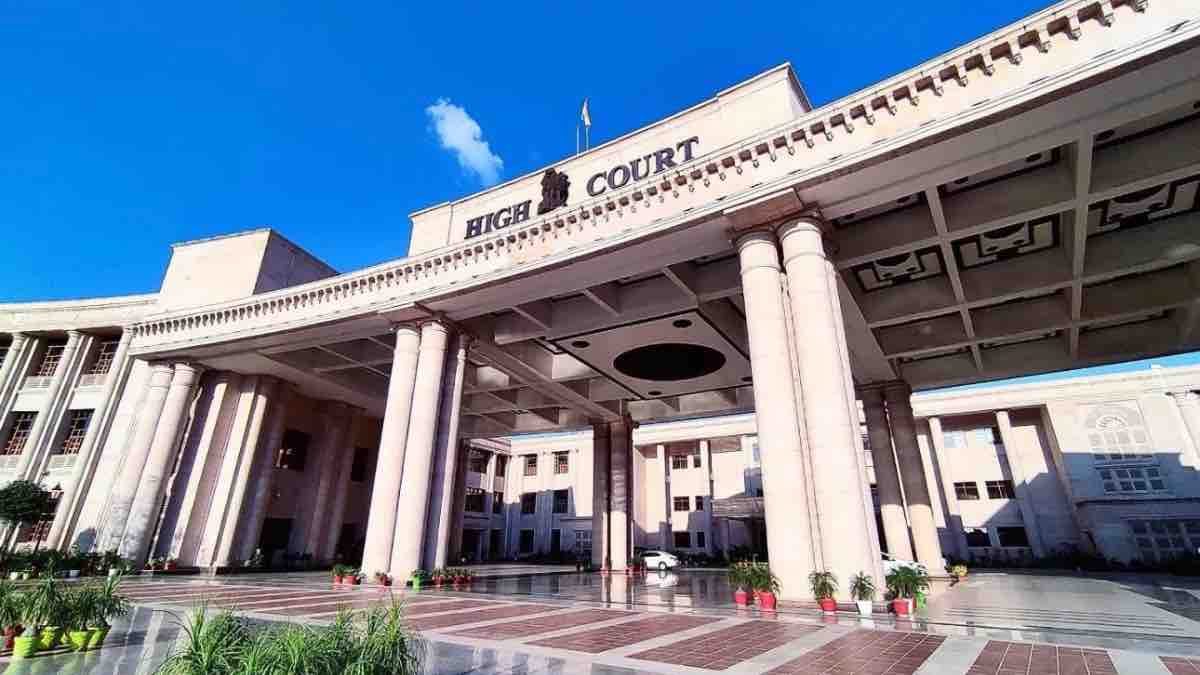

In a significant judgment clarifying the statutory limits of sentencing under special penal laws, the High Court of Judicature at Allahabad, Lucknow Bench, has ruled that an offender cannot be subjected to double punishment under both the Protection of Children from Sexual Offences (POCSO) Act and the Indian Penal Code (IPC) for the same criminal act. The division bench, comprising Justice Rajan Roy and Justice Rajeev Bharti, held that under Section 42 of the POCSO Act, when an act is punishable under both laws, punishment can only be awarded under the provision that prescribes a greater degree of punishment.

The court partially allowed the appeal of the primary convict, modifying his life sentence to 14 years of rigorous imprisonment based on mitigating circumstances. Concurrently, the court acquitted two co-accused after finding that they were falsely implicated by the victim’s family to prevent them from pursuing the defense of the main accused.

Background of the Case

The case originated from a written complaint filed on October 22, 2014, at Police Station Deva, District Barabanki, by Santram, the father of a 14-year-old girl. He alleged that on October 13, 2014, his daughter was enticed away by the accused, Anku alias Parshuram, who fled with her in a Maruti car. It was further alleged that Anku’s friends, Pintu alias Dinesh and Santosh Kumar Gautam, were also involved in the abduction.

Following an extensive search, the victim was recovered about a month and a half later near the Bhayara road crossing. The police subsequently filed a charge sheet against Anku under Sections 363, 366, and 376 of the IPC, alongside Section 6 of the POCSO Act. Charges were also framed against Santosh Kumar Gautam and Pintu alias Dinesh under Sections 363 and 366 of the IPC for kidnapping, while another co-accused, Harishchandra alias Harvinder, was charged under Section 368 of the IPC and Section 6 of the POCSO Act.

On November 4, 2016, the Special Judge (POCSO Act)/Additional Sessions Judge, Barabanki, convicted Anku, sentencing him to separate life sentences under both Section 376 IPC and Section 6 of the POCSO Act. Additionally, Anku, Santosh, and Pintu were sentenced to five years of rigorous imprisonment under Sections 363 and 366 of the IPC. The trial court acquitted Harishchandra due to a lack of evidence. All three convicted individuals subsequently appealed their convictions before the High Court.

Arguments of the Parties

The learned counsel representing the primary appellant, Anku, argued that there was an unexplained delay in lodging the FIR, which cast serious doubts on the prosecution’s case. They contended that there were no independent public witnesses during the recovery or investigation, and that the medical evidence failed to conclusively prove rape since no external injuries or spermatozoa were found. They also challenged the determination of the victim’s age and argued that the possibility of a consensual relationship could not be ruled out.

Counsel for the co-appellants, Pintu and Santosh, argued that they lived in the same village as Anku and were falsely implicated due to local village politics. They emphasized that there was no motive for them to kidnap the victim, and pointed out critical admissions made during cross-examination by the prosecution witnesses that pointed directly toward their innocence.

READ ALSO  इलाहाबाद हाईकोर्ट  ने POCSO अधिनियम के तहत आरोपी व्यक्ति को जमानत दी, सहमति से बने संबंधों में सूक्ष्म दृष्टिकोण पर जोर दिया

Opposing the appeals, the learned Additional Government Advocate (AGA) for the State argued that the victim’s testimony was completely reliable and consistent across all stages of the case. The State contended that since the victim’s age was medically established to be around 14 years, her consent was legally irrelevant under the POCSO Act. The State also submitted that the absence of physical injuries or semen did not disprove sexual assault.

The Court’s Analysis and Interpretation of Law

The High Court systematically addressed several key legal issues in its analysis:

1. Delay in Lodging the FIR and Lack of Cross-Examination

The court observed that the delay in lodging the FIR was naturally explained because family members of minor victims in sexual assault cases typically search for the victim before approaching authorities due to social stigma. Citing the Supreme Court decisions in State of U.P. Vs. Manoj Kumar Pandey and Santosh Moolya Vs. State of Karnataka, the bench reiterated that delay in lodging an FIR is not fatal in cases of sexual offences.

Regarding the defense’s complaint that they could not cross-examine the informant (the victim’s father) because of his death during the trial, the court held that no prejudice was caused as he had already been cross-examined by the counsel of the co-accused, and the case was heavily supported by the victim’s direct testimony.

2. The Legal Insignificance of a Minor’s Consent

The bench emphasized that under the POCSO Act, a minor is legally incapable of giving valid consent. Highlighting the landmark Supreme Court decision in Satish Kumar Jayanti Lal Dabgar Vs. State of Gujarat, the court cited:

“The Legislature has introduced the aforesaid provision with sound rationale and there is an important objective behind such a provision. It is considered that a minor is incapable of thinking rationally and giving any consent. For this reason, whether it is civil law or criminal law, the consent of a minor is not treated as valid consent. Here the provision is concerning a girl child who is not only minor but less than 16 years of age. A minor girl can be easily lured into giving consent for such an act without understanding the implications thereof… Therefore, as a necessary corollary, duty is cast on the other person in not taking advantage of the so-called consent given by a girl who is less than 16 years of age.”

Based on radiological examinations, the court affirmed the victim’s age as approximately 14 years at the time of the incident, thereby invalidating any defense of consent.

3. Value of Statements Under Section 164 Cr.P.C.

Addressing the inconsistencies alleged by the appellants, the court detailed that statements recorded under Section 164 Cr.P.C. are not substantive evidence on their own but are vital for corroboration or contradiction under the Indian Evidence Act, as established in Ram Kishan Singh vs. Harmit Kaur and George vs. State of Kerala. The court found that the victim’s broad consistency across her statements lent complete credibility to the prosecution’s case.

READ ALSO  लखनऊ विश्वविद्यालय के शिक्षकों को इलाहाबाद हाईकोर्ट से मिली बड़ी राहत- सेवानिवृत्ति की आयु 62 से बढ़ाकर 65 करने आदेश

4. Credibility of the Prosecutrix and the Maxim “Falsus in Uno, Falsus in Omnibus”

The court pointed out that the legal maxim “falsus in uno, falsus in omnibus” (false in one thing, false in everything) is not applicable in India, citing Edakkandi Vs. State of Kerala and Ilangovan Vs State of TN. The bench ruled that in cases of sexual assault, the testimony of the victim stands on a higher pedestal, akin to that of an injured witness, as supported by Lok Mal Vs. State of UP and Santosh Prasad Vs. State of Bihar.

5. Acquittal of Co-Accused Pintu and Santosh

Upon scrutinizing the testimony of the victim’s brother (PW-2), the court uncovered a critical admission that undermined the prosecution’s charges against Pintu and Santosh. PW-2 had admitted during cross-examination:

“Anku ke rishtedaro ko bhi phasaya gaya aur Anku ke mitro ko bhi is case me phasaya gaya” (Anku’s relatives were also implicated and Anku’s friends were also implicated in this case) and “Anku ke rishtedaro wa mitro ko isliye likha diya ki we pairvi na kar sake” (Anku’s relatives and friends were named so that they would not be able to pursue the defense).

Referring to the landmark ruling in Sharad Virdhi Chand Sarda vs. State of Maharashtra, the court asserted that suspicion, no matter how strong, cannot substitute legal proof. Consequently, the court acquitted Pintu and Santosh of all charges.

READ ALSO  Pradhanpatis Undermine Women Empowerment: Allahabad High Court

6. Double Punishment and Sentencing Under Section 42 of the POCSO Act

The court observed that the trial court had erred in law by awarding separate life sentences to Anku under both Section 376 IPC and Section 6 of the POCSO Act. Under Section 42 of the POCSO Act, when an act is punishable under both the IPC and the POCSO Act, the offender shall only be liable to punishment under the provision that provides for a punishment greater in degree to prevent duplicate punishment.

The court noted that at the relevant time, Section 376(2)(i) of the IPC dealt with rape on a girl under sixteen years of age, which carried a punishment of up to life imprisonment (meaning natural life), whereas Section 6 of the POCSO Act carried a minimum of ten years extending to life.

Taking into account that Anku was a first-time offender, was 24 years old at the time of conviction, had no prior criminal record, and had a dependent child, the bench ruled that the case did not present exceptional aggravating circumstances of extreme brutality to justify a sentence of life imprisonment for his natural life.

The Decision

The High Court modified the trial court’s order as follows:

  1. Anku @ Parshuram: His conviction was affirmed, but his sentence was modified to 14 years of rigorous imprisonment under Section 376(2)(i) of the IPC with a fine of ₹10,000 (with an additional one-year default sentence). His sentences of 5 years of rigorous imprisonment under Sections 363 and 366 IPC were upheld, with all sentences directed to run concurrently. Since jail records showed he had already spent over 14 years in custody (including the remission period), he was entitled to be released upon completing the formalities.
  2. Santosh Kumar Gautam and Pintu @ Dinesh: Their convictions and sentences were entirely set aside, and they were ordered to be released forthwith.

Case Title: Anku @ Parshuram Vs. State of U.P.
Case No.: Criminal Appeal No. 1989 of 2016
Bench: Justice Rajan Roy and Justice Rajeev Bharti
Date: July 2, 2026

Law Trend
Law Trendhttps://lawtrend.in/
Legal News Website Providing Latest Judgments of Supreme Court and High Court

Related Articles

Latest Articles

