

Functional Disability Must Be Assessed With Reference to Occupation; Medical Disability and Loss of Earning Capacity Are Distinct: Supreme Court
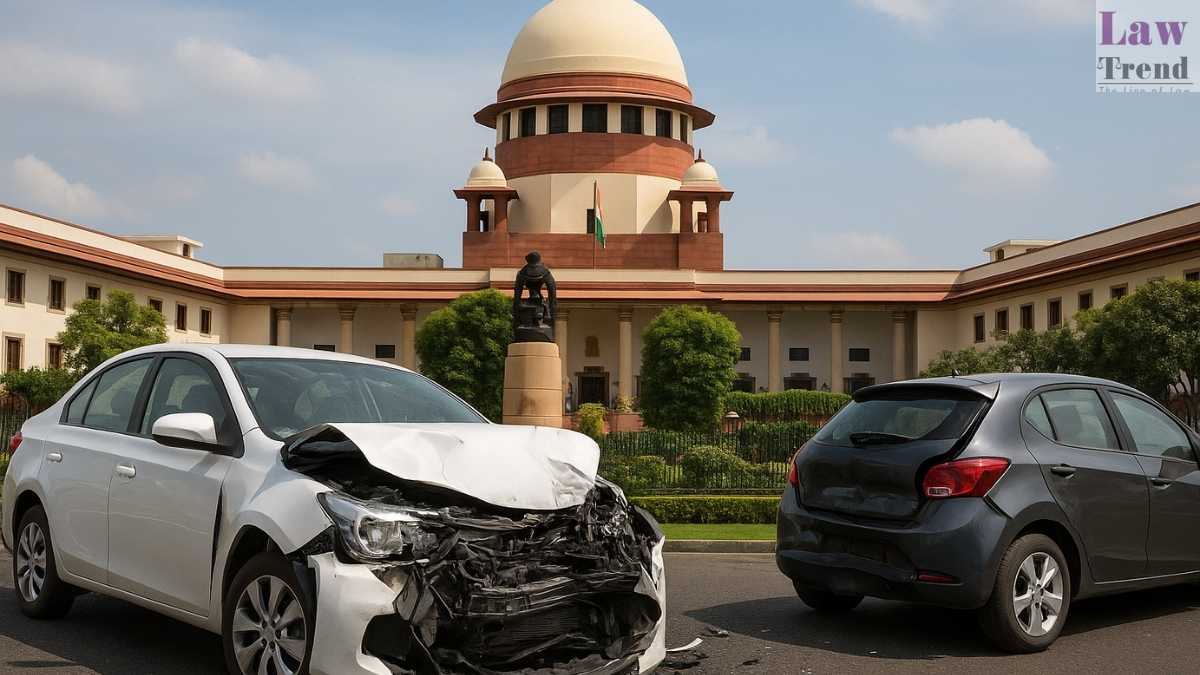

The Supreme Court of India has significantly enhanced the motor accident compensation awarded to a carpenter whose leg was amputated, ruling that his functional disability must be treated as 100 percent despite a medical certificate citing 70 percent disability. A bench comprising Justice Ujjal Bhuyan and Justice N.V. Anjaria held that the amputation completely incapacitated the appellant from performing his skilled trade, directing the insurance company to pay the revised compensation amount of Rs. 35,95,923.

Background of the Case

The legal battle stems from a vehicular accident on November 9, 2004. Shankar Dutt, then a 38-year-old carpenter, was travelling on his motorcycle when he was hit by a rashly driven Jeep on the wrong side of the road. The severity of the collision resulted in the amputation of his right leg above the knee. Initially, the Motor Accident Claims Tribunal awarded Rs. 4,77,823 with 4 percent annual interest. Upon appeal, the High Court of Uttarakhand enhanced this figure to Rs. 11,51,423 with 6 percent interest. Dissatisfied with the assessment of his disability and notional income, the claimant appealed to the Supreme Court seeking further enhancement.

Arguments of the Parties

During the proceedings, the appellant’s counsel argued that the High Court erred in assessing his notional income at a mere Rs. 5,000 per month and taking his functional disability at 70 percent. The appellant contended that losing a leg resulted in a 100 percent loss of earning capacity for a carpenter and sought additional compensation for an artificial limb, transportation, and attendant charges.

Conversely, United India Insurance Co. Ltd. defended the High Court’s order, arguing that the Rs. 5,000 income was correctly based on minimum wage standards cited in the Chameli Devi case. The insurer further submitted that a 70 percent functional disability was justified, asserting that the appellant was not completely handicapped from performing carpentry work.

The Court’s Analysis

The Supreme Court rejected the insurer’s arguments regarding the income assessment. Evaluating the nature of the appellant’s profession, the Court cited precedents to classify carpentry not as unskilled labour, but as skilled work requiring precision and manual dexterity. Striking a balance, the Court assessed the appellant’s notional income at Rs. 9,000 per month, rather than the Rs. 5,000 fixed by the High Court.

READ ALSO  Strong Suspicion Sufficient to Frame Charge Under Section 306 IPC; Detailed Reasoning Not Required at Section 228 CrPC Stage: Allahabad High Court

Addressing the core issue of disability, the Court drew a conceptual distinction between medical impairment and functional disability. Relying on judgments such as Raj Kumar vs. Ajay Kumar and S. Ettiappan vs. D. Kumar, the bench noted that a carpenter must sit, squat, or stand to work—actions rendered impossible without the support of both legs. The Court made a crucial observation: “When it comes to assessing the compensation in the context of the injury suffered, what matters is the extent by which the functions of an injured person suffers, and not what the doctor may have judged in terms of medical standards.” Consequently, the Court determined the functional disability of the appellant to be 100 percent.

Furthermore, the Court emphasized the necessity of restoring the injured person to his pre-accident position as closely as possible, referencing the principles laid down in Mohd. Sabeer vs. Regional Manager and Anant vs. Pratap. Acknowledging that a prosthetic leg requires periodic replacement and maintenance over the appellant’s expected lifespan, the Court stated: “While the loss of leg cannot be compensated, the appellant could be paid pecuniary compensation towards the purchase of the prosthetic leg and its repairs. It would tend to do justice.” The Court therefore awarded Rs. 10,00,000 specifically for the cost and maintenance of the artificial limb.

READ ALSO  पदोन्नति में आरक्षण का मामला फिर उठा- जाने क्या कहा सुप्रीम कोर्ट ने

The Final Decision

Factoring in the revised income, 100 percent functional disability, future prospects, and additional heads like pain, suffering, and loss of amenities, the Supreme Court recalculated the total compensation to Rs. 35,95,923. The Court directed United India Insurance Co. Ltd. to deposit the balance additional amount of Rs. 24,44,500, along with 6 percent interest per annum from the date of the claim petition, with the Claims Tribunal within six weeks.

Case Title: Shankar Dutt vs. United India Insurance Co. Ltd. and Others
Case No.: Civil Appeal No. 8714 of 2026
Bench: Justice Ujjal Bhuyan, Justice N.V. Anjaria
Date: June 24, 2026

READ ALSO  सुप्रीम कोर्ट ने गुरुग्राम ट्रायल कोर्ट की कार्रवाई पर जताई चिंता, बिल्डर-बैंक गठजोड़ की सीबीआई जांच को दी मंजूरी
Ad 20- WhatsApp Banner

Law Trend
Law Trendhttps://lawtrend.in/
Legal News Website Providing Latest Judgments of Supreme Court and High Court

Related Articles

Latest Articles

