

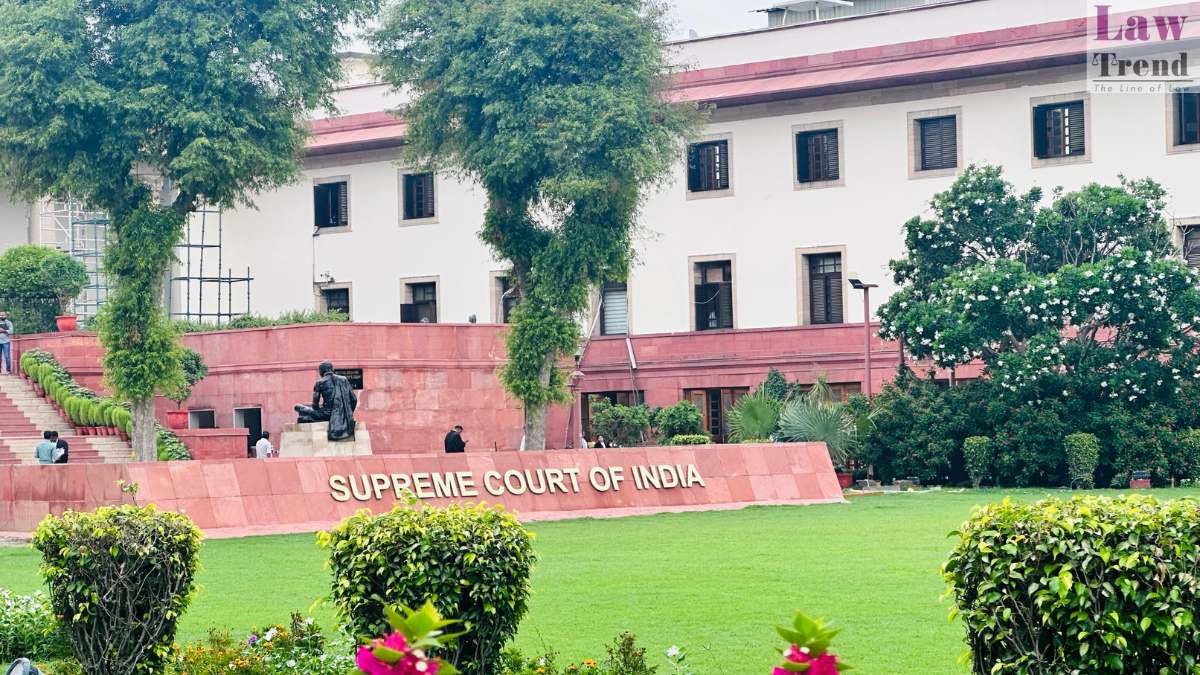
The Supreme Court has reduced a five-year prison sentence to the two-plus years already served by a man convicted of submitting a forged revenue document as surety in court. While the court emphasized that document forgery in legal proceedings remains a highly serious offense, it ruled that criminal sentencing must remain proportional to the offender’s specific circumstances.
A two-judge bench comprising Justices Prashant Kumar Mishra and N V Anjaria delivered the ruling on Tuesday. The bench decided to modify the original sentence after determining that a purely retributive approach to punishment, divorced from the facts of the case and the offender’s background, is inappropriate.
Principle Of Proportionate Sentencing
The court explained that judicial sentencing requires a careful balance between the severity of the crime and individual circumstances. According to the bench, judges must evaluate factors such as the specific role of the accused, the duration of incarceration already completed, the passage of time, and any mitigating circumstances. The justices noted that the core of the sentencing process rests on the principle of proportionality, rather than serving as an isolated retributive action.
Mitigating Circumstances And History
In applying this principle to the current case, the court highlighted several mitigating factors. The offence took place in 2014, meaning the offender has faced active criminal proceedings for more than ten years. Additionally, the court found no evidence indicating that the man is a habitual offender or has been involved in any other criminal activities before or after this incident.
The bench also noted that the case did not involve organized crime, large-scale financial fraud, recurring acts of deception, or systematic forgery targeting public institutions. Based on these factors, the court concluded that the offender’s criminality did not warrant further imprisonment beyond the two years and some months he had already served.
Sanctity Of Legal Documents
Despite lowering the penalty in this specific instance, the Supreme Court warned that acts of forgery within judicial processes are serious and will not be treated lightly. The bench pointed out that Sections 467, 468, and 471 of the Indian Penal Code specifically address forgery and the use of forged documents to preserve the authenticity and sanctity of public and legal paperwork. Presenting falsified records to a court of law, the justices reiterated, directly undermines these legal standards.




