

Termination of Probationer Cannot Be Disguised as Unsatisfactory Performance to Avoid Disciplinary Proceedings: Supreme Court
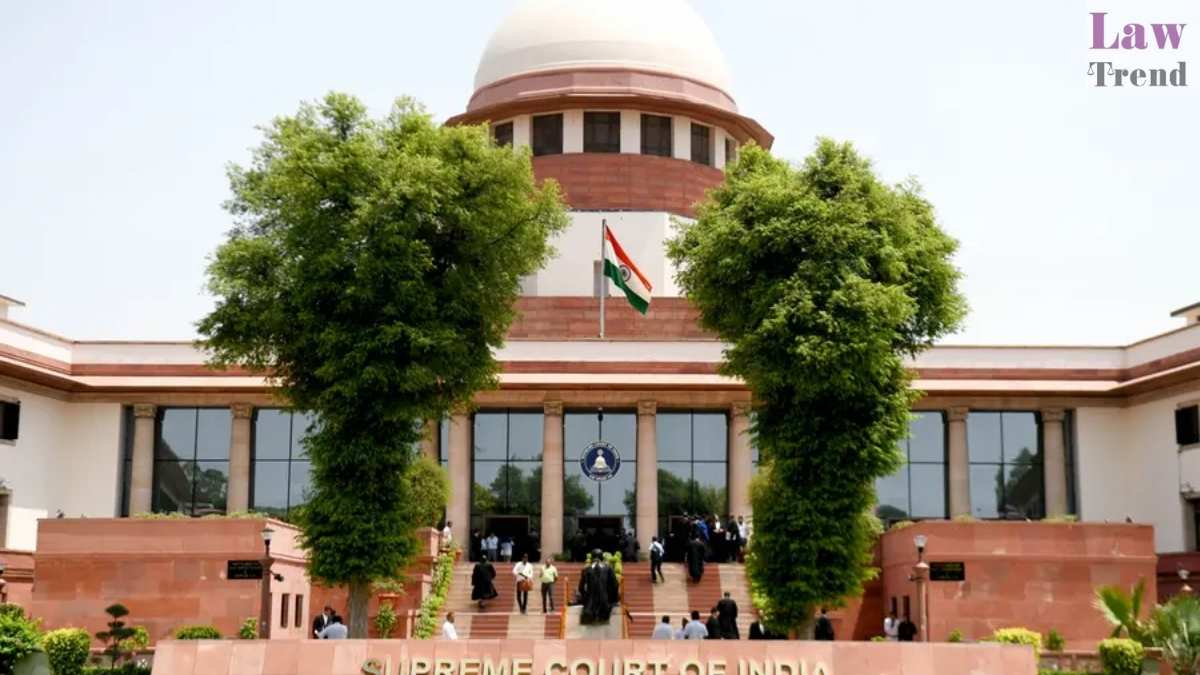

In a significant ruling on service jurisprudence, the Supreme Court of India has held that an employer cannot use “unsatisfactory performance” as a facade to terminate a probationary employee’s services when the actual foundation of the termination is alleged misconduct. A division bench comprising Justice J.K. Maheshwari and Justice Atul S. Chandurkar dismissed an appeal filed by Bank of Baroda (which substituted Vijaya Bank following their amalgamation) challenging a Calcutta High Court judgment. The High Court had quashed the termination of an Assistant General Manager (Networking) whose services were terminated during his probationary period without a formal departmental inquiry despite being suspended earlier on allegations of misconduct.

Background of the Case

The respondent, Ashok Kumar Singh, was appointed as the Assistant General Manager (AGM), Networking, on probation for a period of one year starting January 5, 2004, subject to extension up to a maximum of one more year based on his performance and conduct. Upon the expiry of his initial year, he was not confirmed.

On January 15, 2005, the Bank placed Singh under suspension on the allegation that he attempted to unauthorizedly take away four boxes of highly confidential tender documents related to a “Manageable Switch Tender” from his office cabin through his driver. His probation was subsequently extended by six months on February 16, 2005, on the ground that his work was not satisfactory.

The Bank later reviewed the matter and revoked Singh’s suspension on April 12, 2005, without prejudice to its right to initiate a disciplinary enquiry. He re-joined duty and was transferred to the Regional Office in Kolkata. His probation was extended for another six months on July 4, 2005. Finally, on November 5, 2005, the Bank terminated his services under Regulation 16(3)(a) of the Vijaya Bank (Officers’) Regulations, 1982, citing unsatisfactory performance.

Singh challenged the termination before the Calcutta High Court. A Single Judge quashed the termination, holding it was based on irrelevant considerations. This decision was subsequently upheld by the Division Bench of the High Court, prompting the Bank to appeal before the Supreme Court.

READ ALSO  Stem Cell Therapy for Autism Spectrum Disorder Cannot Be Offered as Routine Clinical Service; Must Be Restricted to Clinical Trials: Supreme Court

Arguments of the Parties

Appearing for the Bank of Baroda, the learned Additional Solicitor General, Mr. Vikramjit Banerjee, argued that an employer is entitled to terminate a probationer’s services simpliciter without assigning any reason to ascertain suitability. He contended that any misconduct committed during probation could be the “motive” but was not the “foundation” of the termination. He further argued that a probationer has no right to hold the post and cannot claim a right to be heard before termination. He asserted that multiple opportunities were given to Singh to improve, and there was sufficient material, including confidential reports and memos, to conclude his performance was unsatisfactory.

Conversely, the learned Senior Counsel representing the respondent, Mr. P.S. Patwalia, submitted that there was no genuine material on record to demonstrate any deficiency in Singh’s work. He pointed out that the Bank relied primarily on three memos dated July 23, 2005, September 14, 2005, and October 31, 2005.

Mr. Patwalia argued that the July memo criticized the implementation of the Online Tax Accounting System (OLTAS) when, in fact, the Government of India had commended Singh’s work on OLTAS as “praiseworthy” a week prior. The September memo blamed Singh for a transaction delay that the State Bank of India later admitted was due to its own technical error. Finally, the October memo was never communicated to Singh. He argued that the Bank’s actions were a counter-blast to the suspension incident of January 2005, designed to orchestrate a pretextual termination.

The Court’s Analysis

The Supreme Court examined Regulation 16(3)(a) of the 1982 Regulations, noting that while the competent authority has the discretion to assess a probationer’s suitability, this discretion is not “absolute and unqualified.” The Court emphasized that subjective satisfaction must be rooted in objective facts and must not be arbitrary or malicious.

READ ALSO  SC Asks UP Congress to Deposit Rs 1cr for Hiring Buses, Taxis for Rallies, PMS’ Visits Between 1981–1989

Drawing a distinction between a routine non-stigmatic termination and a disguised punitive termination, the Court referenced its recent ruling in Sarita Choudhary v. High Court of M.P. (2025), observing:

“assessment of remarks pertaining to the discharge of duties during the probationary period even without a finding of misconduct and termination on the basis of such remarks or assessment will be by way of punishment because such remarks or assessment would be stigmatic.”

Upon analyzing the three performance memos, the Court found they lacked evidentiary value:

  • The July 23, 2005 Memo: The Court noted a glaring contradiction between the Bank’s internal memo and a letter of appreciation from the Central Board of Direct Taxes, Ministry of Finance, which had advised other banks to consult Singh for OLTAS implementation. The Court found this memo was issued on “extraneous considerations.”
  • The September 14, 2005 Memo: The Court observed that the transaction delay was entirely due to SBI’s technical issues, as admitted by SBI in writing, and Singh had diligently followed up to seek interest for the delay.
  • The October 31, 2005 Memo: The Court held that since this memo was never communicated to the employee, relying on it violated the principles of natural justice.

The Court then scrutinized the Bank’s internal office note dated November 5, 2005. The note revealed that the Central Vigilance Commission (CVC) had initially advised the Bank to initiate major penalty proceedings against Singh for the alleged tender files incident. However, because Singh was on probation, the Bank explicitly chose to bypass a formal departmental inquiry and instead requested CVC’s permission to terminate him administratively under Regulation 16(3)(a) for unsatisfactory performance.

READ ALSO  Supreme Court Orders Release of 17 Foreign Nationals from Assam Detention Center

Referring to established precedents in Dipti Prakash Banerjee v. Satyendra Nath Bose National Centre for Basic Sciences (1999) and Mathew P. Thomas v. Kerala State Civil Supply Corpn. Ltd. (2003), the Court concluded that the alleged misconduct was both the motive and the foundation for the termination.

Supreme Court’s Decision

The Supreme Court held that the Bank had discharged the respondent under the guise of a termination simpliciter to bypass the mandatory departmental inquiry required for misconduct.

Upholding the High Court’s orders, the Supreme Court held:

“While an employer undoubtedly retains the right to terminate services for genuine inefficiency, the law does not permit the use of ‘unsatisfactory performance’ as a disguise to bypass formal disciplinary proceeding. It is a settled proposition of law that what cannot be directly cannot be done indirectly.”

The Court concluded that by consciously choosing to forego the inquiry and terminating the officer on unsubstantiated grounds of poor performance, the Bank rendered its termination order legally unsustainable.

In light of these findings, the Court directed that the respondent shall be entitled to 50% backwages from the date of his termination up to the date of his superannuation, including all consequential benefits notionally. The Court ordered the substituted appellant, Bank of Baroda, to comply with these directions and settle the benefits within three months.

Case Details

Case Title: General Manager, Bank of Baroda and Others versus Ashok Kumar Singh and Others
Case No.: Civil Appeal No. 4814 of 2017
Bench: Justice J.K. Maheshwari, Justice Atul S. Chandurkar
Date: May 29, 2026

Law Trend
Law Trendhttps://lawtrend.in/
Legal News Website Providing Latest Judgments of Supreme Court and High Court

Related Articles

Latest Articles

