

Judicial Orders Must Be Obeyed Promptly, Not at the Leisure of Public Officials; Supreme Court Accepts Apology in Contempt Case
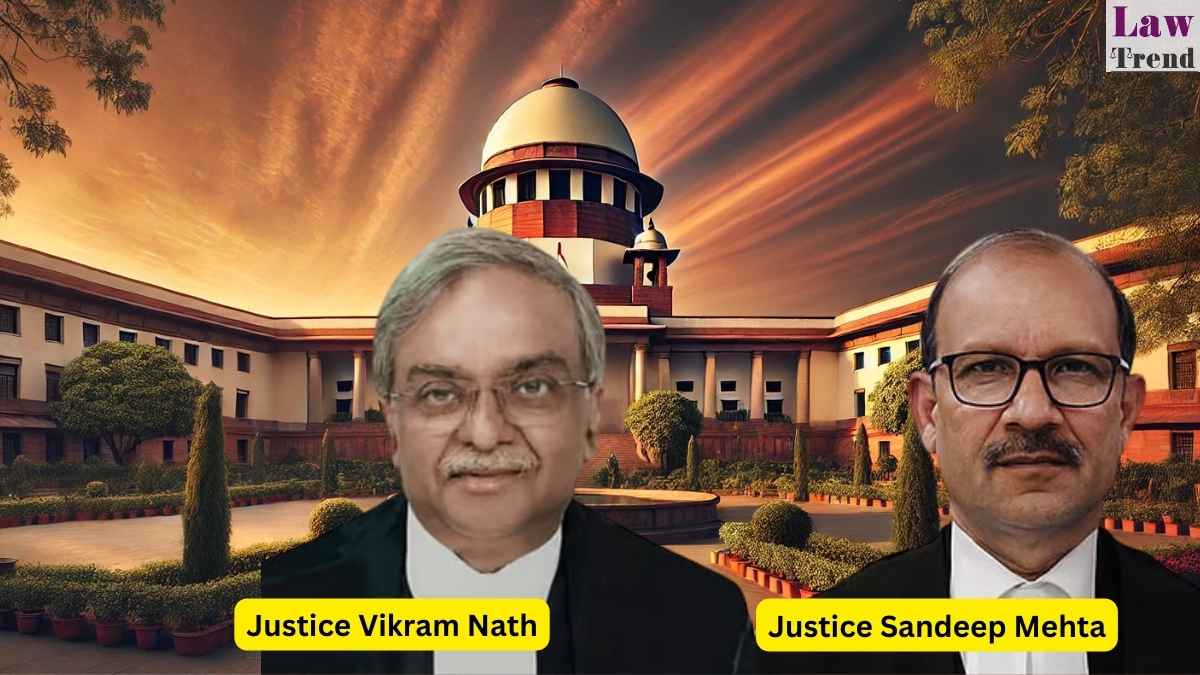

The Supreme Court of India, comprising a bench of Justice Vikram Nath and Justice Sandeep Mehta, has discharged the contempt notices issued against municipal and state officials in Jaipur, Rajasthan, after accepting their unconditional apologies. The contempt proceedings were initiated over the wilful disobedience and delayed compliance of an interim order of the Court directing the de-sealing of a private property. While accepting the apologies and noting that compliance had finally been achieved, the Court expressed grave displeasure at the conduct of the authorities and warned against any future negligence.

Background of the Case

The contempt petition arose from an interim order passed by the Supreme Court on January 30, 2026, in an application (I.A. No. 14401 of 2026) within a pending batch of Special Leave Petitions (SLP(C) No. 30588 of 2025). This batch of petitions originated from a Public Interest Litigation (PIL) filed before the High Court of Rajasthan, Jaipur Bench, regarding unauthorized construction in the Walled City area of Jaipur. The High Court had issued orders directing the demolition and permanent sealing of several private properties, including that of the petitioner, Bharat Kumar Badlani, without impleading or granting an opportunity of a hearing to the affected property owners.

Several affected parties subsequently filed Special Leave Petitions before the Supreme Court. The Supreme Court issued notices and stayed the operation of the directions in the High Court’s orders, subsequently passing specific orders for the de-sealing of certain properties. On January 30, 2026, the Supreme Court directed the concerned authorities to open and de-seal the petitioner’s premises—bearing House No. 74, Rajamal Ka Talab, Janta Market Road, Chowkdi Sarhad, Jaipur—and to restore its possession to the petitioner.

Course of Events and Submissions

The petitioner, Bharat Kumar Badlani, submitted a written representation on February 6, 2026, to the Deputy Commissioner, Hawa Mahal-Amer Zone, Nagar Nigam Heritage, Jaipur, enclosing the Court’s order and requesting compliance. This was followed by an email sent to all concerned authorities on February 11, 2026. Despite these communications, the respondent-authorities kept the premises sealed. On March 12, 2026, the petitioner served a legal notice through both post and email, calling for immediate compliance.

Confronted with persistent inaction, the petitioner initiated the present contempt petition. On April 23, 2026, the Supreme Court granted 24 hours to the Additional Advocate General (AAG) for the State of Rajasthan to obtain instructions. On April 24, 2026, Mr. Padmesh Mishra, the learned AAG representing the State, placed a communication from the Deputy Commissioner before the Court. The Court then directed the officer to remain present in person on April 27, 2026, to explain the non-compliance.

READ ALSO  SC Seeks CBI Status Report in Manipur Violence Cases; Moots High Court Monitoring of Trials

On April 27, 2026, Ms. Seema Choudhary, Deputy Commissioner, Hawa Mahal-Amer Zone, Municipal Corporation, Jaipur Part-II, was present in court. The AAG informed the bench that the property was de-sealed and possession handed over to the petitioner on Saturday, April 25, 2026. Since no affidavit had been filed by Ms. Choudhary, the Court directed her to file an affidavit of compliance, an explanation for the delay, and an optional apology, listing the matter for May 6, 2026.

Simultaneously, the Court noted that on April 24, 2026, the Director, Directorate of Local Bodies, had issued a demand of Rs. 10,52,832/- from the petitioner as a purported premium or security deposit. The Court observed:

“This Court views such a demand, made at the very moment of compliance with a judicial order directing restoration of possession, as wholly improper and bearing the character of a coercive and retaliatory act against the petitioner.”

On May 6, 2026, the Court perused the Deputy Commissioner’s affidavit. The reason offered for the delay was that the matter had been taken up with the Director and the Municipal Commissioner, but the communications were not placed on record. The Court directed her to file the entire trail of communications and remain present on May 18, 2026. After examining the subsequent compliance affidavit on May 18, the Court was prima facie satisfied that charges should be framed and listed the matter for May 21, 2026, for the framing of charges in the presence of the opposite parties.

READ ALSO  Merely Because Her Husband Presided Over Meetings Cannot Be Ground to Unseat First Woman VC of AMU: Allahabad High Court

On May 21, 2026, the respondent-contemnors appeared in-person, represented by Ms. Aishwarya Bhati, learned Additional Solicitor General (ASG), and Mr. Padmesh Mishra, AAG. The contemnors tendered an unconditional apology and presented a communication dated May 19, 2026, by which the Director withdrew the demand of Rs. 10,52,832/- and expressed regret.

The Court’s Analysis of Delay and Contempt

The Supreme Court placed on record its grave displeasure regarding the administrative delays and evasion. The Court observed:

“The record reveals a disturbing pattern of evasion, inaction, and deliberate disregard for clear and unambiguous orders of this Court. It is a matter of deep concern that officials entrusted with the discharge of public duties under the law found it permissible to treat the orders of the highest Court of this land as something to be addressed at their leisure, rather than with the promptitude and urgency that such directions imperatively demand.”

The Court highlighted that the de-sealing of the property occurred nearly three months after its direction was issued, and post-facto approval was accorded by the Director-cum-Special Secretary only on April 26, 2026, describing it as:

“The property was de-sealed on 25th April 2026, which is nearly three months after the direction was issued. The Director-cum-Special Secretary accorded post-facto approval only on 26th April 2026, which itself a telling commentary on the administrative approach adopted throughout these proceedings.”

On the nature of contempt and the rule of law, the Court emphasized:

“Contempt of the orders of this Court strikes at the very foundation of the rule of law and the authority of the judiciary. When public functionaries, who are the custodians and executors of the law, defy judicial orders with impunity, it casts a deep and lasting shadow over the administration of justice and erodes the confidence of the citizens in the legal system.”

At the same time, the Court noted the boundaries of its contempt power:

READ ALSO  Supplying Multiple Case-Laws Without Connecting It to the Facts of the Case Wastes Precious Time of the Court: Allahabad HC

“However, this Court is also mindful that the power to punish for contempt, though wide, must be exercised with restraint, discretion, and a regard for the ends of justice. Punishment in contempt proceedings is not an end in itself; it is a means to secure compliance, to uphold the dignity of the Court, and to serve as a deterrent to those who may seek to treat judicial orders with levity.”

Decision of the Court

In light of the unconditional apologies tendered via affidavits by the Deputy Commissioner, Ms. Seema Choudhary; the Director-cum-Special Secretary, Mr. Juikar Pratik Chandrashekhar; and the Commissioner, Mr. Om Prakash Kasera, and noting the withdrawal of the improper premium demand, the Court accepted the apologies and discharged the contempt notices.

However, the Court issued a strict warning:

“The acceptance of the apology, however, must not be understood as a minimisation of the conduct that gave rise to these proceedings. The contemnors are put on clear and unambiguous notice that any future default or negligence in the face of judicial orders, whether of this Court or of any other court, shall be viewed with the utmost severity and shall not be treated with the same degree of indulgence.”

The contempt petition was disposed of and consigned to the record, with the Court clarifying that its observations are confined to the contempt petition and will not impact the merits of the pending main Special Leave Petition.

Case Details

Case Title: Bharat Kumar Badlani v. Seema Chaudhary
Case No.: Contempt Petition (Civil) Diary No. 21438/2026 in Special Leave Petition (C) No. 30588 of 2025
Bench: Justice Vikram Nath, Justice Sandeep Mehta
Date: May 29, 2026

Law Trend
Law Trendhttps://lawtrend.in/
Legal News Website Providing Latest Judgments of Supreme Court and High Court

Related Articles

Latest Articles

