

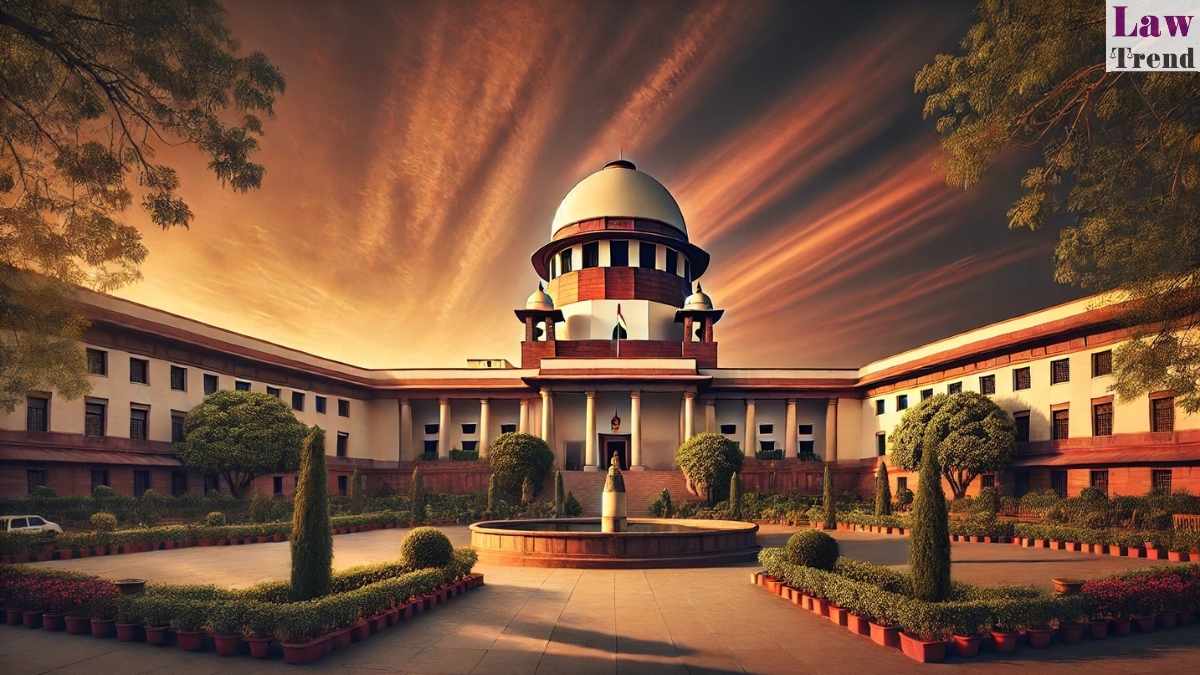
In a stern rebuke of police misconduct, the Supreme Court of India has cancelled the anticipatory bail granted to three police officers accused of extorting a passenger at a Mumbai railway station.
Setting aside a “cryptic” ruling by the Bombay High Court, a bench comprising Justices Sanjay Kumar and K Vinod Chandran warned of the chilling effect of police corruption, stating that citizens are left in a paralyzing dilemma when the law is turned against them.
“When law enforcers turn extortionists, the citizen looks askance and is left in a dilemma,” the bench observed. “To confront, is to invite instant retaliation and the option is only to succumb meekly to the uniformed authority, even when there is patent abuse.”
The Railway Station Shakedown
The case stems from an incident at a Mumbai railway station, where the complainant was preparing to board the Hapa Duronto Express with his daughter. His brother-in-law had accompanied them to the station to see them off.
Before they could depart, the family was detained by police personnel belonging to a sabotage-detection unit. During a search of their baggage, officers discovered a 14-gram gold bar alongside ₹31,900 in cash.
Despite the passenger providing what he described as a satisfactory explanation for the items, the officers allegedly escorted the trio to a nearby room. Once inside, the family was subjected to verbal abuse and intimidation. According to the complaint, the officers forced them to hand over the entire ₹31,900 in cash in exchange for the return of their gold bar.
The Legal Battle: High Court vs. Supreme Court
Following the ordeal, the complainant filed a First Information Report (FIR). While a local sessions court initially denied anticipatory bail to the accused officers, the Bombay High Court subsequently overturned that decision and granted them protection from arrest.
In shielding the officers, the High Court pointed to CCTV footage of the incident, noting that the accused were wearing their official identity cards and that the complainant and his daughter showed “no signs of distress” on camera. The High Court also heavily weighted the delay in lodging the FIR and the officers’ previously unblemished service records.
However, the Supreme Court sharply disagreed with this analysis, expressing surprise at the High Court’s interpretation of the footage.
While acknowledging that individual facial expressions were unclear in the video, the Supreme Court bench identified unmistakable physical indicators of anxiety that the lower court had overlooked.
“We also noticed that the two adults were moving ahead, one of them gesturing frantically with his hands while the child was trailing behind, a definite indication of distress,” the Justices noted.
Furthermore, the apex court rejected the defense’s timeline arguments, ruling that the duration the victims spent inside the closed station room was more than “sufficient for the police men to carry out the complained of actions.” The Supreme Court concluded that these allegations must now be properly tested and proven in a full criminal trial, stripping the officers of their pre-arrest protection.




