

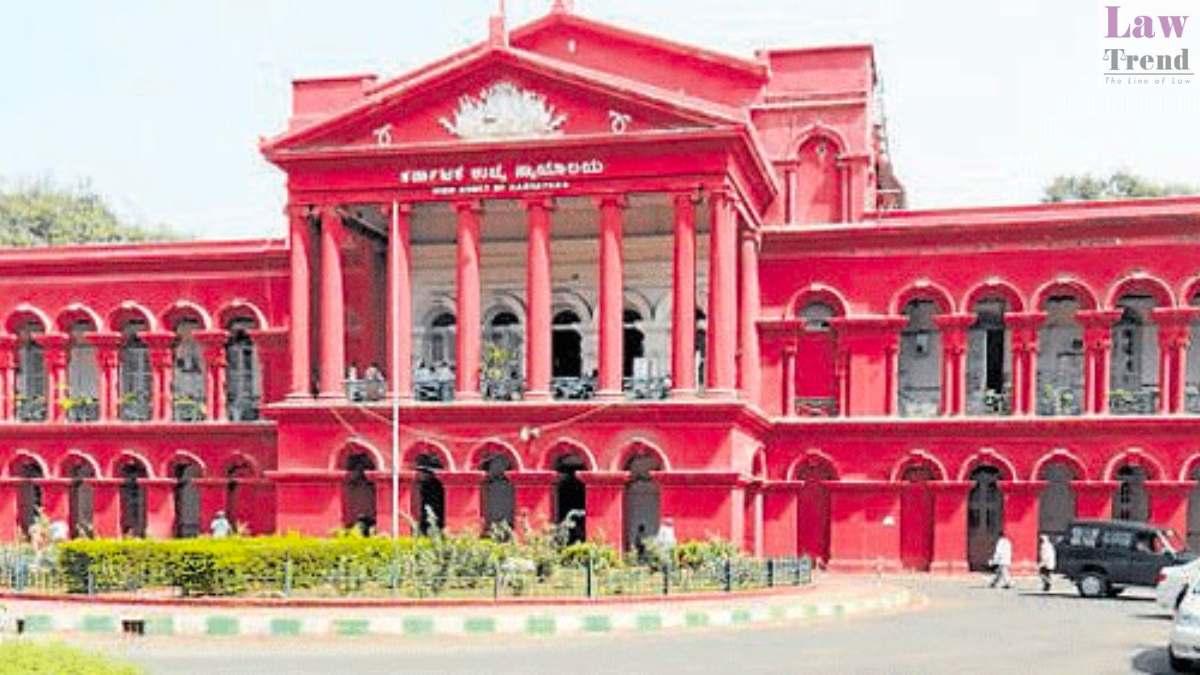
In a major development for digital banking consumers, the Karnataka High Court has stepped in to help a housewife recover ₹3.25 lakh that she accidentally transferred to a dormant bank account due to a simple typographical error.
On Tuesday, Justice Suraj Govindaraj directed Federal Bank to disclose the address and contact details of the dormant account holder, M/s Standard Engineering Works, to the petitioner, Nujaiba Jaleel. This order aims to break a months-long legal deadlock, allowing Jaleel’s legal team to directly serve a notice to the untraceable beneficiary.
A Costly Four-Digit Typo
The ordeal began on December 17, 2025, when Jaleel attempted to send ₹3.25 lakh to her father via Real Time Gross Settlement (RTGS). In a momentary slip, she transposed the last four digits of the destination bank account, entering “1916” instead of the correct “1619”.
The funds were instantly routed into a dormant account held by M/s Standard Engineering Works at Federal Bank.
Upon realizing the error, Jaleel alerted the bank the very next day, on December 18. However, her swift action was met with bureaucratic roadblocks. On December 19, Federal Bank issued a written rejection of her representations, stating they could not reverse the funds because the beneficiary was “untraceable.”
The Regulatory Catch-22
While Federal Bank marked a lien on the mistakenly transferred money—effectively freezing it to prevent the beneficiary from withdrawing it—the bank maintained that it was legally prohibited from returning the funds to Jaleel without the explicit consent of M/s Standard Engineering Works or a direct court order.
Seeking administrative relief, Jaleel approached the Reserve Bank of India’s (RBI) banking ombudsman on January 31, 2026. Her complaint was summarily rejected on February 19. The ombudsman ruled that the bank’s refusal did not constitute a “service failure,” noting that existing regulatory frameworks explicitly mandate beneficiary consent before any transaction reversal can occur.
This left Jaleel in a frustrating catch-22: she could not get her money back without the consent of a business that neither she nor the bank could locate.
Constitutional Rights and High Court Proceedings
Refusing to back down, Jaleel petitioned the Karnataka High Court. Represented by advocate Muhammad Irshad M H, her petition argues that the banking ombudsman failed to recognize the absurdity of requiring “consent” from an untraceable entity.
Furthermore, Jaleel’s plea invokes Article 300 A of the Constitution of India, which mandates that no citizen can be deprived of their property except by the authority of law. The petition highlights that the state cannot legally seize or withhold a citizen’s money to pay off another party’s liabilities.
During Tuesday’s hearing, Justice Suraj Govindaraj observed that the holder of the dormant account had not yet been formally made a party to the legal proceedings. While acknowledging that the bank’s strict adherence to procedure was legally correct, the judge offered reassurance to the petitioner.
“Procedurally, what they (the bank) are saying is right. Your relief will get a bit delayed, but you will get the relief. We will permit you to issue hand summons to the dormant account holder, and if they are not there, they are not there,” Justice Govindaraj noted.
What Lies Ahead
By ordering the bank to hand over the contact details of M/s Standard Engineering Works, the High Court has cleared the path for Jaleel to issue a hand summons. If the firm fails to respond or remains missing, the court will have the formal grounds required to order a unilateral reversal of the funds.
The Karnataka High Court has scheduled the next hearing for June 15, 2026, bringing Jaleel one step closer to recovering her hard-earned money.




