

‘Demolition After 17 Years Not in Public Interest’: Orders Regularisation with Rs 318 Crore Penalty Citing ‘Proportionality’
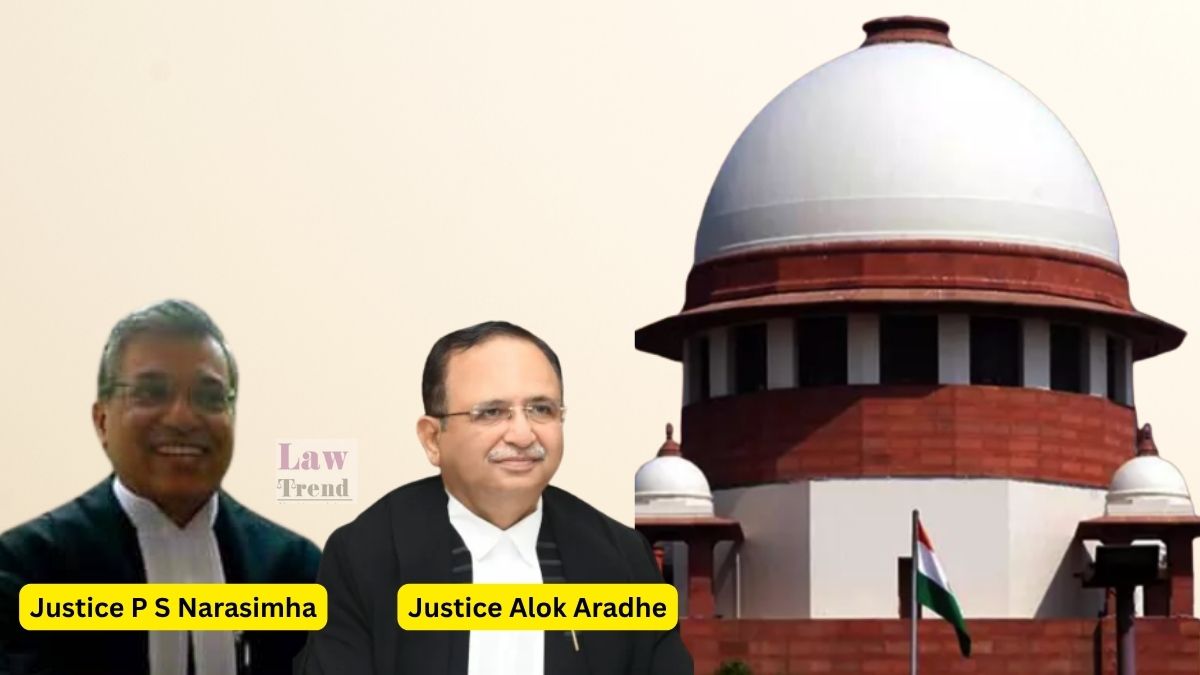

In a significant ruling balancing the rule of law with economic realities, the Supreme Court of India has overturned a Bombay High Court order directing the demolition of a major shopping mall and hotel in Navi Mumbai. The Court held that while the original land allotment to K. Raheja Corp. Private Limited (‘the Developer’) was irregular, the public interest is better served by a heavily penalised regularisation rather than the destruction of a fully operational commercial complex.

The case, K. Raheja Corp. Private Limited v. The State of Maharashtra & Ors., centered on the allotment of a 29,000 sq. metre plot in Sector 30A, Vashi, Navi Mumbai, originally reserved for IT use, but converted for residential, commercial, and office use following a global IT downturn.

Background of the Case

In 2003, the City and Industrial Development Corporation Limited (CIDCO) allotted the subject plot to the Developer at a rate of Rs. 10,250/- per sq. metre, without a competitive tender process. This allotment was challenged through Public Interest Litigations (PILs) before the Bombay High Court.

A subsequent inquiry by the Sankaran Committee in 2005 found that the allotment was made at a substantially lower rate than the market value, causing an estimated loss of Rs. 50 crores to CIDCO. Despite this, the Developer proceeded with construction, investing approximately Rs. 450 crores to build a shopping mall and a hotel, which received an occupancy certificate in 2008 and have been in continuous commercial operation since 2009.

In November 2014, the High Court held the allotment to be completely illegal and arbitrary, directing the Developer to restore the plot to its original condition and hand over vacant possession to CIDCO. Crucially, however, the High Court granted the Developer liberty to apply for regularisation.

READ ALSO  मालदा हिंसा: न्यायिक अधिकारियों को बंधक बनाने के मामले में सुप्रीम कोर्ट सख्त, NIA को जांच पूरी करने के लिए दो महीने का समय

Arguments of the Parties

The Developer argued that CIDCO regulations permitted disposal of plots based on individual applications, especially since previous attempts to auction the plot had failed. The Developer also emphasized that the regularisation policy and the liberty granted by the High Court to apply for it were never challenged by the PIL petitioners. The Developer expressed willingness to pay Rs. 257.87 crores, a figure calculated by CIDCO in February 2026 based on the Sankaran Committee’s findings.

The PIL petitioners and Respondents argued that the Developer was not entitled to regularisation, pointing to alleged encroachment on an adjoining plot (Plot No. 39/16) and the failure to develop a Japanese Garden as required by the allotment conditions. They contended that, at a minimum, the Developer should pay the fair market value prevailing in 2014, as recommended by a later committee (the Banthia Committee).

The Court’s Analysis: Proportionality and Irreversibility

The Supreme Court, comprising Justice Pamidighantam Sri Narasimha and Justice Alok Aradhe, focused on the doctrine of proportionality. The Court noted that the High Court, while finding the allotment illegal, had conspicuously refrained from quashing it and left the door open for regularisation.

The Court reasoned that ordering demolition after seventeen years of operation would be disastrous. “Demolition of a fully operational commercial complex after seventeen years, Rs. 450 crores of investment, 8,000 livelihoods, and Rs. 100 crores of annual tax revenue would not vindicate the public interest,” the judgment noted.

The Court observed: “A Court must weigh not only the wrong that has been committed but also the reality as it now stands. The doctrine of proportionality, deeply embedded in constitutional jurisprudence, demands that the severity of a remedial measure must bear a rational and proportionate relationship to the nature and magnitude of the wrong sought to be remedied. A remedy that causes public harm disproportionate to the public benefit it achieves is not a remedy that law ought to countenance.”

Valuation and the Final Decision

Turning to the cost of regularisation, the Court rejected the Developer’s plea for parity with other allottees and discarded the Sankaran Committee’s 2005 valuation methodology, which it found would allow the Developer to benefit from historically low land values.

READ ALSO  Can Right to Default Bail be Claimed Pending Cognizance of Charge Sheet? Answers Supreme Court

Instead, the Court adopted the reasoning of the Banthia Committee (constituted in 2015), which argued that regularisation must be prospective and based on the market value at the time of the High Court’s 2014 judgment.

“Regularisation is not a continuation of the original transaction; it is a fresh grant of legal legitimacy, prospective in nature, for which the Developer must pay what the land was actually worth at the time of the court’s judgment,” the Court observed.

READ ALSO  Ex-parte Decree Passed Against a Minor, who is not represented by a duly appointed guardian, is Invalid: SC

Using the 2014 ready reckoner rate of Rs. 54,400/- per sq. metre for Sector 30A, Vashi, the Court calculated the 2014 market value of the plot at Rs. 1,66,36,60,800/-. Adding 8% interest from December 1, 2014, to April 30, 2026 (Rs. 1,51,94,76,864/-), the Court determined the total amount payable by the Developer to be Rs. 3,18,31,37,664/-.

Directions Issued

The Supreme Court modified the High Court’s order, quashing the direction for demolition and handing over of vacant possession, and issued the following operative directions:

  1. The Developer must pay an aggregate sum of Rs. 3,18,31,37,664/- for the entire area of the subject plot.
  2. The initial purchase price paid at Rs. 10,250/- per sq. metre shall be deducted from this total amount.
  3. The Developer must pay an additional Rs. 1 crore in lieu of its unfulfilled obligation to develop a garden on the adjoining plot.
  4. The regularisation is subject to the payment of these amounts within four months from the date of the judgment.
  5. The separate dispute regarding Plot No. 39/16 will be decided independently by the High Court in a pending writ petition.

Case Details

  • Case Title: K. Raheja Corp. Private Limited v. The State of Maharashtra & Ors. etc.
  • Case Numbers: Civil Appeal Nos. 13092-13093 of 2025
  • Coram: Justice Pamidighantam Sri Narasimha and Justice Alok Aradhe
  • Date of Judgment: May 26, 2026

Law Trend
Law Trendhttps://lawtrend.in/
Legal News Website Providing Latest Judgments of Supreme Court and High Court

Related Articles

Latest Articles

