

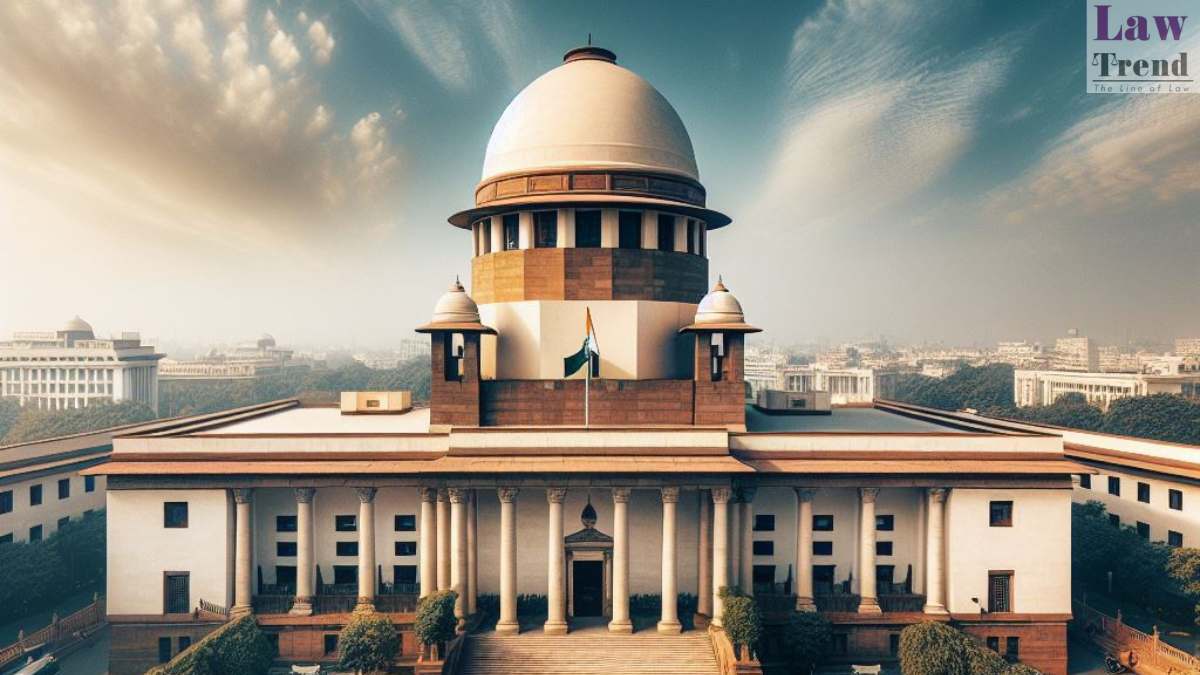
The Supreme Court on Friday indicated it will highly likely grant interim bail to two men accused in the 2020 Delhi riots, while agreeing to examine a plea by the Delhi Police to refer a highly contested legal question on anti-terror bail laws to a larger bench.
A bench of Justices Aravind Kumar and PB Varale reserved its verdict on the bail pleas of Abdul Khalid Saifi and Tasleem Ahmad. The court intimated that the accused would likely receive relief, with an official order expected either later today or on May 25.
While the Delhi Police did not oppose bail for Saifi and Ahmad—acknowledging they were not “main players” in the riots—Additional Solicitor General (ASG) SV Raju strongly urged the court to address deep contradictions in how bail is applied under the Unlawful Activities (Prevention) Act, 1967 (UAPA).
The Police Argument: ‘No Blanket Formula’ for Terror Accused
Representing the Delhi Police, ASG Raju argued that prolonged incarceration and trial delays should not automatically override the strict statutory bail restrictions embedded in UAPA. To illustrate his point, Raju invoked high-profile terror cases, questioning whether delay alone should warrant release.
“Does this mean, the court grants bail to Kasab?” Raju asked, referencing 2008 Mumbai terror attack convict Ajmal Kasab, whose trial was delayed by seven years due to a high volume of witnesses. “We have to look into the role of the accused in the UAPA case. If Hafiz Saeed is brought to India, the case will have a large number of witnesses and if the trial gets delayed, would the court grant him bail? It all depends on facts of each case. There cannot be blanket formula.”
Raju contended that the Supreme Court has previously upheld the denial of bail to hardcore criminals under the UAPA. He argued that courts must evaluate the specific role of each accused rather than applying a generalized standard, noting that some may be hardcore criminals while others are merely minor associates.
Clashing Precedents: ‘Bail is the Rule’ vs. Statutory Restrictions
The push to refer the issue to a larger bench stems from a direct clash between two recent Supreme Court rulings regarding UAPA bail parameters:
- The January 5 Verdict: A two-judge Supreme Court bench, which included Justice Aravind Kumar, denied bail to activists Umar Khalid and Sharjeel Imam in the 2020 Delhi riots conspiracy case. The bench ruled they could only apply for fresh bail after protected witnesses were examined in a year’s time. ASG Raju argued this ruling correctly applied the law by categorizing the main accused separately from minor associates.
- The May 18 Verdict: A separate bench, led by Justice B V Nagarathna, emphatically granted bail to Syed Iftikhar Andrabi in a narco-terror case. In the order, Justice Bhuyan sharply criticized the January 5 ruling, stating it had “serious reservations” about its reasoning. Justice Bhuyan asserted that the landmark 2021 K A Najeeb ruling—which established that long trial delays can override UAPA’s strict bail hurdles—is binding law that cannot be bypassed by other benches. He declared that “bail is the rule and jail is the exception” is “not merely an empty statutory slogan.”
Addressing the May 18 ruling, ASG Raju submitted to the court on Friday that the decision “may not have laid down the correct position in law” because it failed to categorize the roles of the accused and generalized the impact of trial delays.
Court’s Stance and Next Steps
During the exchange, Justice Aravind Kumar observed that in other serious cases carrying life imprisonment or the death penalty, the court has routinely granted bail when trial delays are not the fault of the accused.
Raju countered that courts should not establish a precedent where a two-year delay automatically triggers bail for all UAPA accused, reiterating that a blanket ban on bail for specific categories of hardcore criminals remains constitutionally upheld.
Ultimately, the bench chose to balance immediate relief with long-term legal clarity.
“Most probably we will consider granting relief,” the bench observed to senior advocate Rebecca John, representing Saifi, and advocate Mehmood Pracha, representing Ahmad. “However, we will look into the arguments made on behalf of Delhi Police for reference of the question of law to the larger bench.”




