

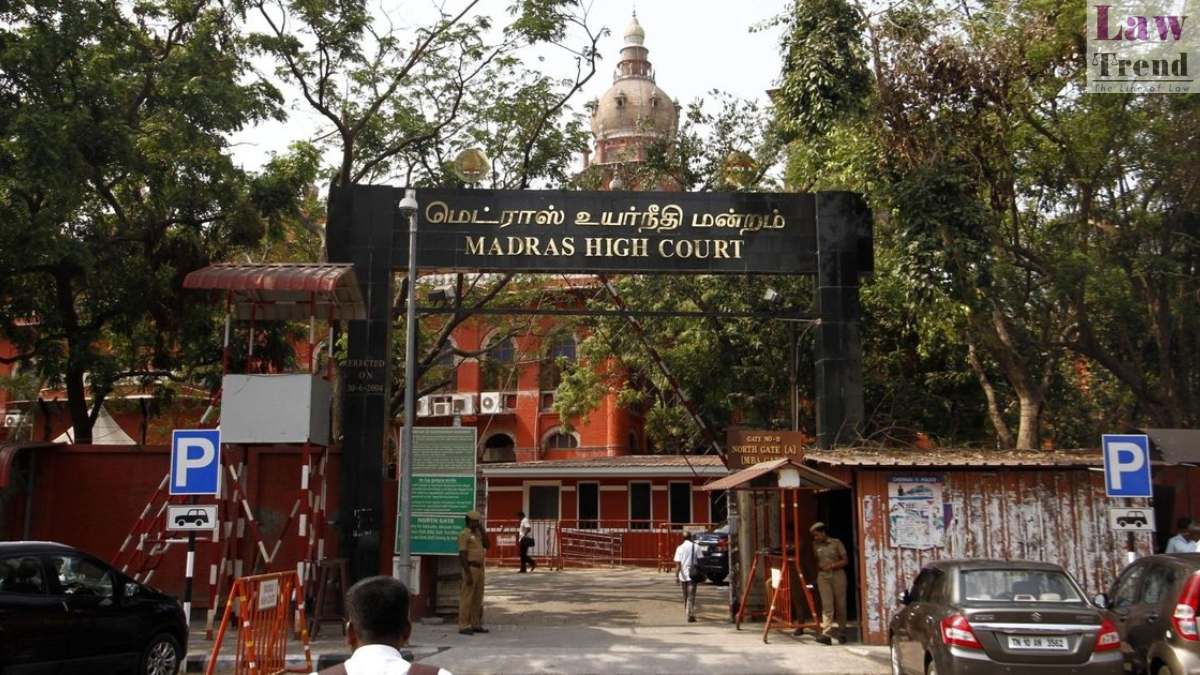
The Madras High Court has intervened in the aftermath of the 2026 Tamil Nadu Legislative Assembly elections, issuing notices to Chief Minister and Tamilaga Vettri Kazhagam (TVK) founder C Joseph Vijay, the Election Commission of India (ECI), and other top political leaders over allegations of corrupt electoral practices.
The notices were issued on Thursday by a vacation bench comprising Justices G R Swaminathan and V Lakshminarayanan during the hearing of a Public Interest Litigation (PIL) petition filed by Advocate L Vasuki of Cuddalore District. The petitioner is seeking a directive to compel the ECI to conduct an immediate and transparent inquiry into widespread allegations of electoral bribery and the controversial deployment of minor children during the election campaign.
Key Highlights of the Case:
- The Respondents: Notices have been dispatched to TVK founder and Chief Minister C Joseph Vijay, the Election Commission of India, the Chief Electoral Officer (CEO) of Tamil Nadu, DMK President M K Stalin, and AIADMK General Secretary Edappadi K Palaniswami.
- The Legal Challenge: The petition alleges systemic violations of the Representation of the People Act, 1951, and constitutional provisions including Articles 14, 19, and 21.
- Next Hearing: The High Court vacation bench has posted the matter for further hearing on May 29, 2026.
Allegations of Minor Children Used as ‘Instruments of Electoral Influence’
A focal point of Advocate Vasuki’s petition is an election campaign speech delivered by the TVK President on April 21, 2026, during a major public meeting at the YMCA Grounds in Chennai.
According to the petitioner, the TVK chief openly appealed to children, calling upon them to emotionally influence or pressure their parents regarding their voting preferences in the 2026 Assembly elections.
The speech was widely disseminated across print, digital, and social media platforms, sparking intense public debate. Following the address, numerous videos and online materials allegedly surfaced showing children attempting to emotionally coerce their parents into choosing specific political parties.
The petition argues that such actions directly fall under the purview of Section 123 of the Representation of the People Act, 1951, which defines and prohibits corrupt practices, including “undue influence” within the democratic electoral process. The plea contends that these campaign activities necessitated immediate intervention and inquiry by the ECI and Tamil Nadu’s Chief Electoral Officer, which has not yet materialized.
Claims of Widespread ‘Cash-for-Votes’ and Voter Bribery
Beyond the allegations of child exploitation, the petitioner highlighted widespread claims of voter bribery across multiple assembly segments in Tamil Nadu.
The petition specifically names several high-profile constituencies—including Mylapore, Alangulam, and Thirumangalam—where serious allegations and media reports surfaced regarding electoral bribery and the distribution of cash to voters. The petitioner also pointed to public protests that erupted in certain regions over the allegedly discriminatory distribution of money.
Advocate Vasuki asserted that because substantial digital evidence, videos, social media materials, and media reports are already in the public domain, the ECI and the Chief Electoral Officer cannot claim ignorance of these developments.
Alleged Constitutional Violations and ‘Inaction’ by Election Watchdogs
The petition strongly criticizes the “inaction” of the ECI and the CEO of Tamil Nadu, claiming that despite the gravity of these allegations, no transparent or effective inquiry has been launched.
The petitioner argues that the failure of the electoral watchdogs to act in the face of such widespread claims undermines the sanctity of free and fair elections. This lack of enforcement, the petitioner submits, violates the fundamental rights guaranteed under Articles 14, 19, and 21 of the Constitution of India and directly threatens the “basic structure doctrine” of the Constitution.
With the High Court now stepping in and seeking responses from all key stakeholders, the ECI and political parties are expected to present their stands when the bench resumes hearing the case on May 29.




