

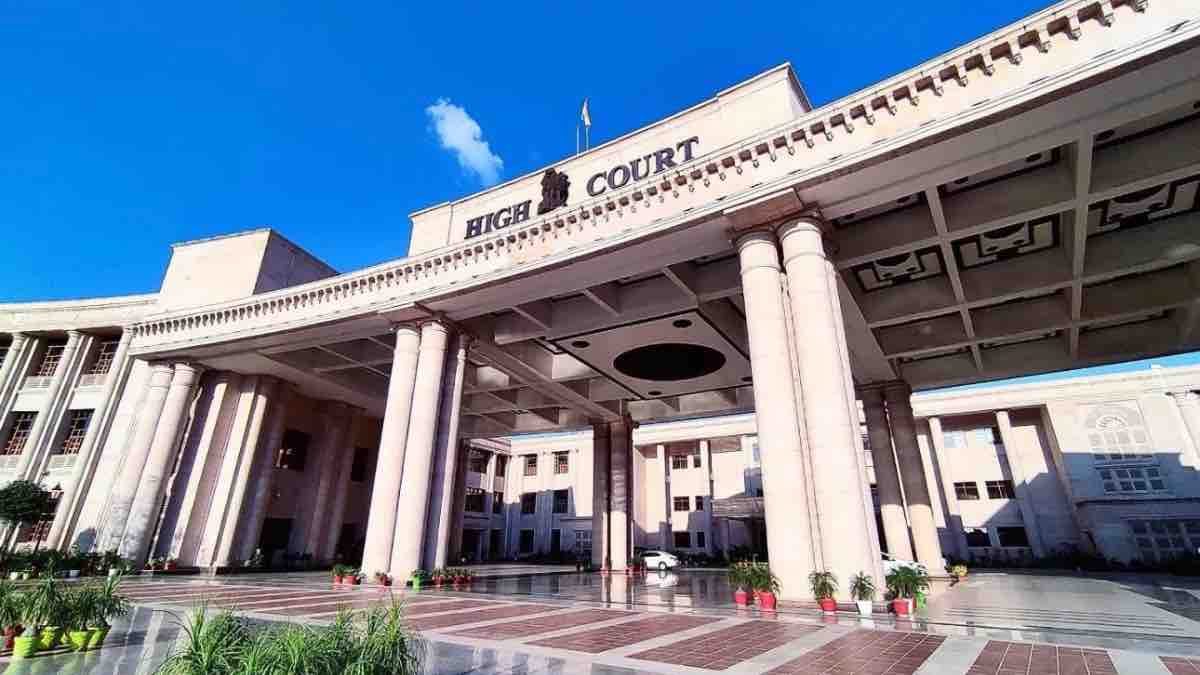
Allahabad HC Suspends Administrative and Financial Powers of Lucknow Mayor Over Failure to Administer Oath to Elected Corporator

In a major constitutional move, the High Court of Judicature at Allahabad (Lucknow Bench) has ordered the immediate suspension and cessation of the administrative and financial powers of the Mayor of Lucknow. The Division Bench, comprising Justice Alok Mathur and Justice Syed Qamar Hasan Rizvi, took this coercive step following the persistent non-administration of the oath of office to a newly elected Corporator, Lalit Tiwari (Alias Lalit Kishore Tiwari), for over five months. The Court clarified that the suspension of the Mayor’s powers is not punitive but is a constitutional measure intended to secure compliance with judicial mandates.

Background of the Case

The legal dispute arose after the petitioner, Lalit Tiwari, was declared the elected Corporator of Ward No. 73, Faizullaganj-III, Lucknow, by the Additional District Judge (Election Tribunal), Lucknow, in a judgment dated December 19, 2025. The Tribunal had set aside the election of the previously returned candidate and declared Tiwari elected.

Despite the Tribunal’s decision, the petitioner was not administered his oath, preventing him from participating in the proceedings of the Municipal Corporation. Consequently, he filed a writ petition (Writ-C No. 2531 of 2026) seeking relief.

During the pendency of the writ petition, the High Court granted multiple opportunities to the respondents and sought explanations. Written instructions dated March 19, 2026, provided by the Mayor of Lucknow, revealed her stand that because the unseated returned candidate had filed an appeal against the Election Tribunal’s order in the High Court, administering the oath to the petitioner would create an “incongruous situation” if the appeal were eventually allowed.

However, the State Government had already directed the Mayor on February 4, 2026, to comply with Sections 85(1) and 85(1A) of the Uttar Pradesh Municipal Corporation Act, 1959 (the Act of 1959). In its order dated March 25, 2026, the High Court noted that the Mayor’s stand was “in the teeth of statutory provisions… such as Section 77 and 85 as also the ‘defacto doctrine’.”

READ ALSO  Failure to Serve a Charge Sheet Disclosing Charges with Material Particulars Constitutes a Grave Violation of Principles of Natural Justice: Allahabad HC

Despite subsequent orders, no steps were taken to administer the oath. On May 11, 2026, the Court directed that if the oath was not administered, the District Magistrate (DM) of Lucknow, the Municipal Commissioner of Lucknow, and the Mayor of Lucknow must appear personally before the court on May 13, 2026. On that date, the DM and the Mayor moved exemption applications. The Court then issued a clear directive on May 13, 2026, ordering the Mayor, failing which the DM or the Commissioner of the Division, to administer the oath to the petitioner “in all circumstances within the next seven days” and submit a compliance affidavit by May 21, 2026.

Arguments and Recent Developments

During the hearing on May 21, 2026, the court was informed that the oath of office had still not been administered to the petitioner.

An exemption application was filed on behalf of the Mayor of Lucknow, stating that she had suffered from heatstroke and was admitted to the Command Hospital on May 20, 2026. The Court, however, noted:

“In the affidavit of Mayor, there is no mention with regard to the compliance of the order of this Court nor any averment as to whether she even intend to comply with the order of this Court.”

When the Court categorically asked Shri Shailendra Singh Chauhan, learned counsel representing the Municipal Corporation, to specify the timeframe within which the oath would be administered, no response was provided. The Court observed that his “stoic silence” clearly indicated that “the respondents have consciously decided not to administer oath to the petitioner, despite clear directions having been passed by this Court.”

The Court was also informed that the Mayor had challenged the High Court’s personal appearance order before the Supreme Court of India via a Special Leave Petition (Civil Diary No. 30127/2026). However, the Supreme Court dismissed the SLP as withdrawn on May 20, 2026.

Court’s Analysis

The High Court analyzed Section 77 of the Act of 1959, which dictates that an order of the District Judge under Section 69 or Section 70 “shall take effect on the day next following the day on which the same is pronounced.” The Court emphasized that there was no interim order staying the Election Tribunal’s order dated December 19, 2025, and therefore no legal impediment existed to halt its execution.

Refusing to remain a silent spectator to the defiance of its orders, the Court made strong observations regarding its constitutional authority under Article 226:

READ ALSO  HCBA Resolves to Boycott Court of Justice Rajendra Kumar-IV of Allahabad HC Over Alleged Indecent Behaviour With Lawyers- Know More

“This Court is of the considered view that constitutional courts are not powerless spectators where their orders are repeatedly ignored by statutory authorities. The power under Article 226 necessarily includes ancillary and consequential powers to ensure effective implementation of judicial directions. Mere issuance of orders without securing compliance would reduce the authority of the Court to a nullity.”

Addressing the suspension of the Mayor’s powers, the Bench noted:

“The order of suspension of the administrative and financial powers of the respondent-Mayor of Lucknow as directed above, is therefore, not punitive in character, but a consequential Constitutional measure intended to secure compliance of judicial orders and prevent continued obstruction of statutory duties.”

The Court relied on the Supreme Court ruling in Priya Gupta v. Ministry of Health and Family Welfare (2013) 11 SCC 404, which held that constitutional courts are empowered to adopt coercive and consequential measures to secure obedience when repeated non-compliance is demonstrated, otherwise judicial directions would be reduced to “mere paper declarations.”

Additionally, the Court cited a Division Bench judgment of the Allahabad High Court in State of U.P. through its Additional Chief Secretary and Others v. Jai Singh and Others (Special Appeal Defective 276 of 2024), which criticized the practice of officials ignoring court orders until contempt notices or personal appearance directions are issued.

The Decision

The High Court directed that:

  1. The administrative and financial powers attached to the office of the Mayor of Lucknow shall remain suspended/ceased, except for the power of administering the oath to the petitioner, until the compliance of the court’s order dated May 13, 2026, is ensured.
  2. The functioning of the Lucknow Municipal Corporation shall not be stalled and must be carried out in accordance with the Municipal Corporation Act, treating the absence of the Mayor of Lucknow as a “casual absence.”
  3. The Learned Additional Advocate General must immediately communicate the order to the State Government to pass appropriate orders ensuring compliance.
  4. The personal appearance of the District Magistrate of Lucknow is exempted until further orders.
  5. The case is listed for further hearing on May 29, 2026, by which date the respondents must file an affidavit of compliance.
  6. If the order is not complied with by the next date, the Mayor of Lucknow must appear personally and show cause as to why contempt proceedings should not be initiated against her for “deliberate and willful disobedience.”
READ ALSO  No Difference Between Judicial Powers And Duties Of Permanent Judges And Additional Judges: Allahabad High Court

Case Details

  • Case Title: Lalit Tiwari Alias Lalit Kishore Tiwari v. State Of U.P. Thru. Its Addl. Chief Secy./Prin. Secy. Deptt. Urban Development Lko. And 3 Others
  • Case No.: WRIT-C No. 2531 of 2026
  • Bench: Justice Alok Mathur and Justice Syed Qamar Hasan Rizvi
  • Date of Order: May 21, 2026
  • Counsel for Petitioner(s): Shri Utsav Mishra, Shri Nadeem Murtaza, Smt. Alina Masoodi, Shri Karuna Shankar Tiwari, Shri Mandeep Kumar Mishra, Shri Utkarsh Vardhan Singh
  • Counsel for Respondent(s): Shri Anuj Kudesia (Learned Additional Advocate General), Shri Shailendra Kumar Singh (Learned Chief Standing Counsel), Shri Yogesh Kumar Awasthi (Learned Standing Counsel for the State of U.P.), Shri Shailendra Singh Chauhan (Learned Counsel for Respondent No. 5 / Lucknow Municipal Corporation), Shri Anurag Kumar Singh, and the Chief Standing Counsel (C.S.C.)

Law Trend
Law Trendhttps://lawtrend.in/
Legal News Website Providing Latest Judgments of Supreme Court and High Court

Related Articles

Latest Articles

