

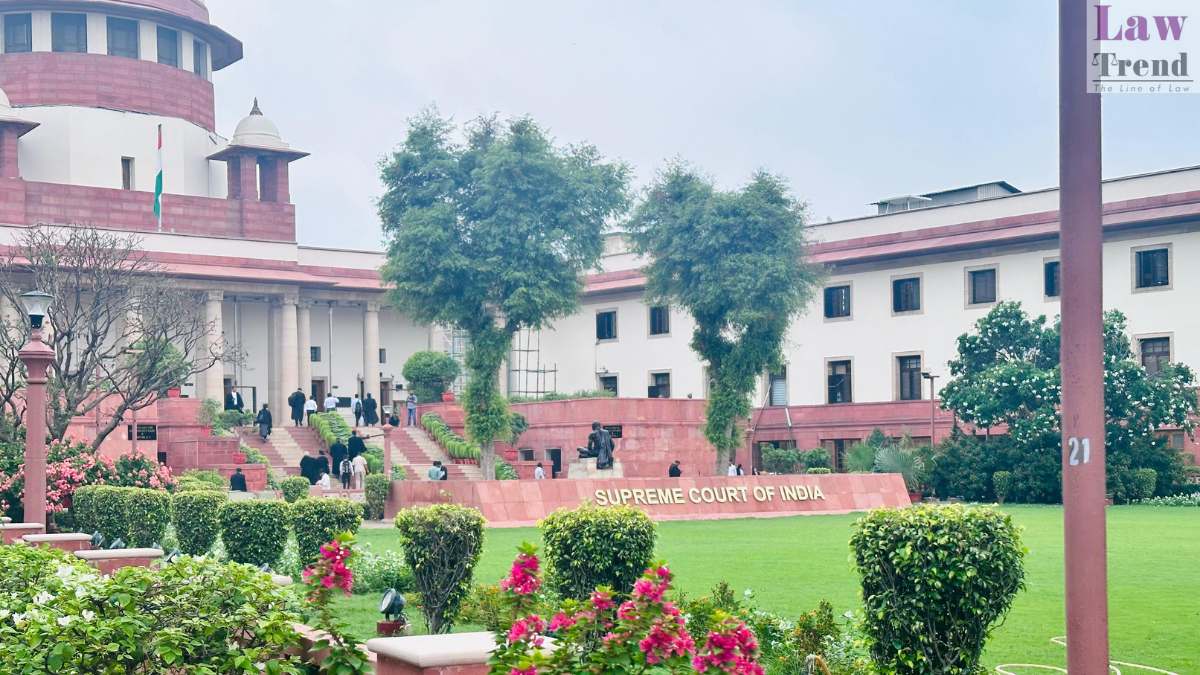
In a significant legal development, the Supreme Court of India on Thursday ruled that courts across the country can proceed with trials, appeals, and other legal proceedings involving the controversial sedition law (Section 124A of the Indian Penal Code), provided the accused consents to it.
The decision offers critical recourse for individuals facing prolonged incarceration under the law, whose cases have been frozen due to the apex court’s previous blanket stay on the colonial-era statute.
The ruling was delivered by a three-judge bench comprising Chief Justice Surya Kant, Justice Joymalya Bagchi, and Justice Vipul M Pancholi.
A 17-Year Wait for Justice Triggers the Clarification
The apex court’s clarification came during the hearing of a petition filed by an accused individual who has been incarcerated in jail for 17 years. The petitioner’s criminal appeal, which includes charges under Section 124A, has been pending before the Madhya Pradesh High Court.
Frustrated by the prolonged delay caused by the nationwide suspension of sedition proceedings, the petitioner approached the Supreme Court, expressing that he had no objection to his appeal being heard and decided in its entirety.
Responding to the plea, the bench cleared the bottleneck, stating:
“The petitioner’s grievance is that he has no objection if his criminal appeal is heard in entirety, including with respect to the charge under Section 124A. That being so, we clarify… that wherever the accused has no objection against proceeding of the trial, appeal, or any other proceeding where he has been chargesheeted under Section 124A IPC also, there shall be no impediment for the courts to decide such matters on merits and in accordance with law.”
Following this directive, the Supreme Court formally requested the Madhya Pradesh High Court to take up the petitioner’s appeal and decide it on its merits.
Context: The 2022 Landmark Stay on Sedition
Thursday’s decision modifies the practical application of a historic interim order passed by the Supreme Court on May 11, 2022.
In that landmark ruling, the top court put the controversial penal provision on hold while the Central government undertook a promised review of the colonial-era law. Under the May 2022 order, the Union and state governments were instructed not to register any fresh cases under Section 124A.
Additionally, the court had ordered that all ongoing investigations, pending trials, and active court proceedings under the sedition law across India be kept in abeyance. It did, however, allow individuals currently in custody under these charges to approach the courts for bail.
While that stay remains active to prevent fresh prosecutions, this new clarification ensures that existing accused individuals who wish to fight and resolve their pending cases are not kept in legal limbo indefinitely.
A Colonial Legacy Under Intense Scrutiny
First introduced into the Indian Penal Code in 1890, the offense of sedition has long been a lightning rod for public controversy in modern India. Critics argue that the law is frequently weaponized to stifle free speech and suppress peaceful dissent, including political criticisms shared on social media.
Historically, the British colonial administration used Section 124A primarily to silence Indian freedom fighters and imprison prominent national leaders, including Mahatma Gandhi and Bal Gangadhar Tilak.
The law’s constitutional validity remains under serious threat in the top court, challenged by a series of petitions filed by prominent civil society members and organizations, including the Editors Guild of India, Major General (Retd) S G Vombatkere, former Union minister Arun Shourie, and the People’s Union for Civil Liberties (PUCL).




