

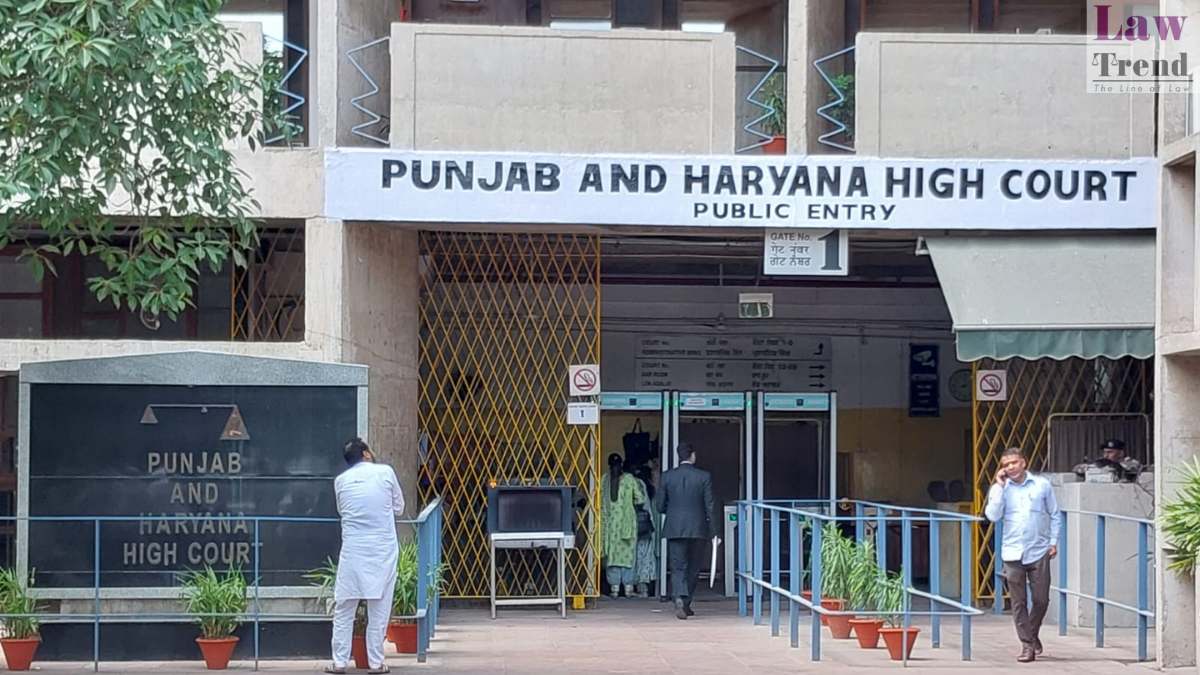
The Punjab and Haryana High Court has directed authorities to clear the remaining Rs 1.86 lakh of a medical reimbursement claim for a retired employee, ruling that shifting his wife to a private hospital during the Covid-19 pandemic was an act of necessity rather than “choice or luxury.”
Justice Kuldeep Tiwari, while presiding over the case, strongly criticized the authorities’ decision to withhold a portion of the funds, labeling the denial of the full medical claim as “preposterous.” The court has ordered that the outstanding balance be released to the petitioner within eight weeks.
A Pandemic-Era Emergency
The case traces back to August 2020, a period when India was heavily gripped by the deadly coronavirus pandemic. Amid a strict nationwide lockdown and immense pressure on the healthcare system, citizens faced severe mobility restrictions, and hospitals struggled to provide timely, life-saving care.
It was during this crisis, on August 22, 2020, that the wife of Vidya Parkash Gupta—a retired superintendent of the Punjab and Haryana High Court—suffered a severe fall in the bathroom. Already battling multiple pre-existing health issues, she sustained an intertrochanteric left femur fracture requiring urgent surgical intervention.
Gupta immediately rushed her to a local hospital for first aid. However, because that facility lacked the specialized equipment required for the complex thigh surgery, she was referred to a higher medical center. With healthcare facilities overwhelmed by the pandemic, Gupta was left with no option but to admit her to a private hospital where she could undergo immediate surgery. She remained hospitalized for 13 days, with total treatment expenses reaching Rs 4.43 lakh.
The Reimbursement Battle
After his wife’s recovery, Gupta submitted a comprehensive medical claim to the government, complete with prescriptions, bills, and medical records. In 2021, authorities cleared only Rs 2.57 lakh, slicing Rs 1.86 lakh from the total under state government medical reimbursement rules.
Aggrieved by the heavy deduction, Gupta, who retired from his high court post in January 1997, filed a petition seeking the release of the remaining amount.
In court, the petitioner’s counsel, advocate Vaneet Soni, argued that the emergency medical treatment was forced by circumstances, not personal preference. Soni asserted that government employees hold a lifetime right to medical reimbursement that cannot be arbitrarily restricted.
Conversely, advocate Munish Kapila, representing the state authorities, defended the deduction. He argued that the government has a structured policy to regulate reimbursement claims and that the high court must sanction bills in strict adherence to these established rules.
“Where There Is a Right, There Is a Remedy”
Ultimately, Justice Tiwari rejected the government’s rigid stance, noting that the state’s medical policy failed to account for the extraordinary, life-threatening circumstances families faced during the height of the pandemic.
The court emphasized that the foundational objective of a medical reimbursement policy is to regulate claims, not to systematically strip away the pre-existing rights of employees.
To reinforce its decision, the High Court invoked the classic legal maxim ‘ubi jus ibi remedium’—where there is a right, there must be a remedy. Justice Tiwari noted that a legal wrong cannot exist without redress, and protecting these rights is vital to maintaining public faith in the rule of law.
“This court has come to the conclusion that the petitioner had shifted his wife to a private hospital under exceptional circumstances and not by choice or for luxury,” the May 13 order stated, resolving the long-standing dispute in favor of the retired superintendent.




