

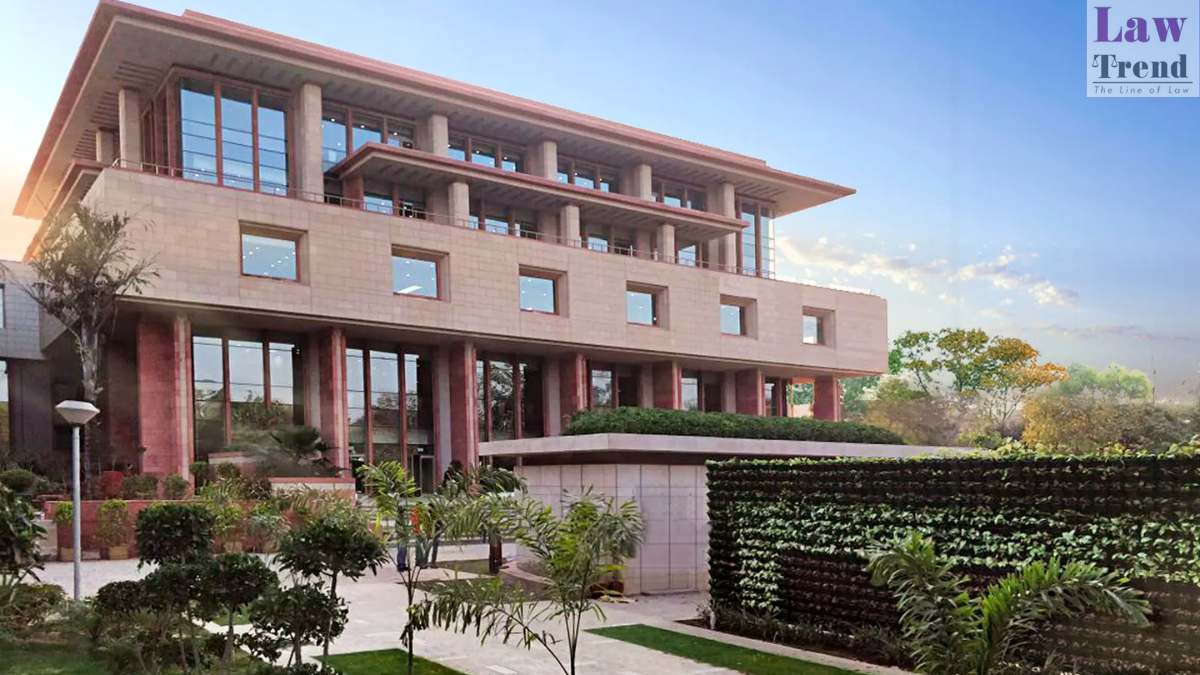
The Delhi High Court on Tuesday refused to halt the impending mass eviction of residents from the ecologically sensitive Yamuna Bazar area, rejecting a petition filed by a local welfare association because it lacked direct authorization from the affected citizens.
Justice Purushaindra Kumar Kaurav ruled that the petition, filed by the Yamuna Bazar Residents Welfare Association, was “not maintainable” in its current form. The court highlighted that the lawsuit lacked “binding affidavits” from actual local residents to prove they authorized the association to act on their behalf and “bear the consequences” of the legal proceedings.
“This court is not inclined to entertain the writ petition. This petition is not a PIL [Public Interest Litigation] and has been filed by the association at the instance of local residents,” Justice Kaurav said while dismissing the plea.
However, the court threw a temporary lifeline to the community, clarifying that the petitioners are at liberty to file a proper, legally authorized petition with the direct backing of the local residents. When the association’s counsel requested an interim directive to defer any demolitions near the historically significant ghats, the court reiterated that a properly authorized petition should have been filed in the first place.
Dual Eviction Deadlines Loom Over Floodplain Residents
The legal setback leaves hundreds of families facing imminent displacement under twin eviction notices issued by Delhi authorities earlier this month:
- The May 5 DDMA Notice: The Delhi Disaster Management Authority (DDMA) targeted approximately 310 residential structures on the Yamuna Bazar ghat. Occupants were given a strict 15-day window to vacate the premises. The DDMA justified the emergency measure by pointing out that Yamuna Bazar is inundated during annual seasonal floods, posing a severe and recurring threat to human life, cattle, and property.
- The May 18 DDA Notice: Following up, the Delhi Development Authority (DDA) issued a fresh notice ordering residents to “voluntarily vacate” government land. The DDA noted that the targeted structures fall squarely within the “O-Zone” category of the protected Yamuna floodplains. The agency warned that non-compliance would result in coercive actions, including demolition of all temporary or permanent structures without further notice, at the occupants’ own risk and cost.
Residents Defend Historic “Panda” Heritage
In their petition, the Yamuna Bazar Residents Welfare Association strongly contested the “mass eviction” directives, arguing that the government’s actions were driven by “generalised assumptions and speculative apprehension.”
The association emphasized that the community’s presence on the ghats is not a “recent encroachment” or a temporary jhuggi settlement. Instead, they pointed to historical records showing “longstanding continuity and recognition of Panda communities residing and performing religious functions at the said ghats.”
While the residents clarified that they do not oppose the ecological rejuvenation or environmental protection of the Yamuna floodplain, they strongly objected to how the clearance is being handled.
The plea condemned the “arbitrary and mechanical invocation of emergency powers,” arguing that the clearances are being executed without:
- A scientific determination of the environmental impact.
- An established rehabilitation framework for displaced families.
- A heritage-sensitive assessment of the historical site.
- Individualized consideration of the historically existing Panda Ghats and their associated religious-cultural structures.
By ignoring these factors, the association contended that the government’s eviction campaign violates key fundamental rights under Articles 14, 19, 21, and 25 of the Constitution of India, and urged the court to quash the notices.
With the High Court leaving the door open for a refiled petition, the legal battle over the future of the Yamuna Bazar ghats and its historic community remains poised for its next critical step.




