

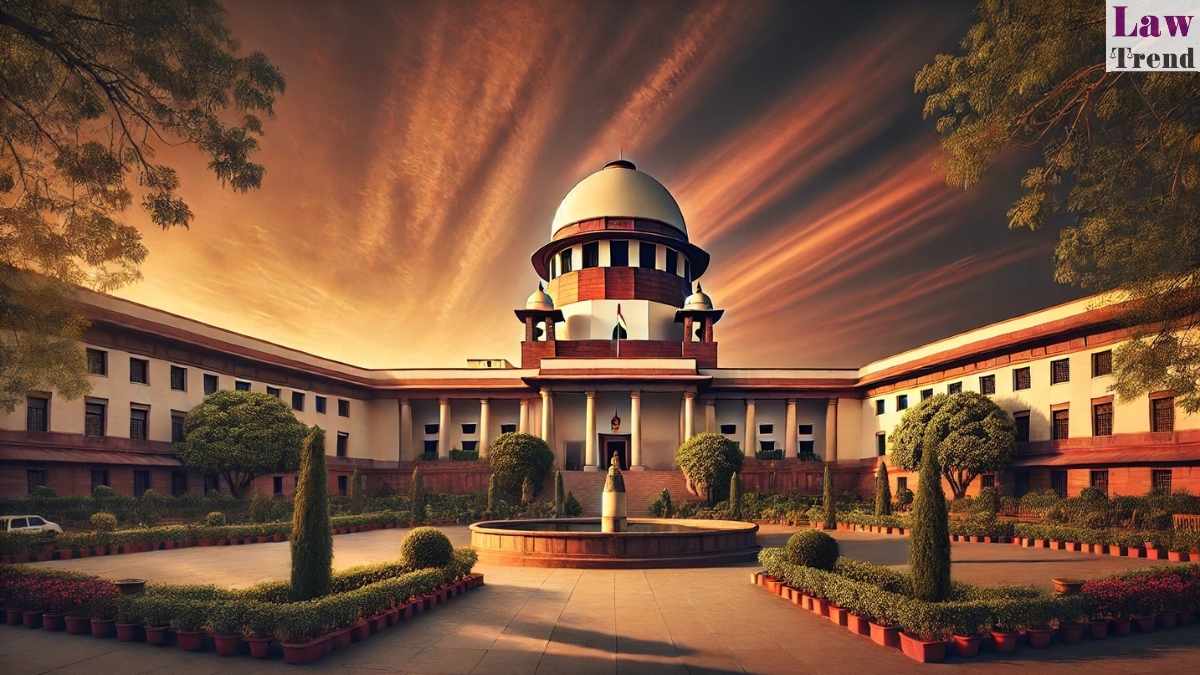
The Supreme Court on Monday refused to entertain a Public Interest Litigation (PIL) seeking the creation of a judicial commission or an expert committee to review the wages, remuneration, and benefits of priests, “sevadars,” and staff working in state-controlled temples across the country.
A bench comprising Justices Vikram Nath and Sandeep Mehta declined to hear the petition under Article 32 of the Constitution, stating that those who are directly aggrieved by the wage structures should approach the court themselves.
During the hearing, the top court advised the petitioner, advocate Ashwini Upadhyay, to refrain from intervening in the administrative affairs of temple priests, noting that he may not be fully aware of the actual earnings of priests and “sevadars.”
The bench ultimately permitted Upadhyay to withdraw the petition, granting him the liberty to pursue other legal remedies available under the law.
The plea, which was filed through advocate Ashwani Dubey, sought explicit directives to both the Central and state governments to set up an expert panel to evaluate the financial compensation of temple staff.
A central argument of the petition was the demand for a formal declaration classifying temple priests and staff as “employees” under Section 2(k) of the Code on Wages, 2019.
According to the petition, once a state government assumes administrative, financial, and economic control over a temple, a formal employer-employee relationship is established. The plea argued that denying these workers a dignified wage violates the right to livelihood guaranteed under Article 21 of the Indian Constitution.
Upadhyay pointed to previous rulings from the Allahabad High Court and other high courts that have called for a reassessment of temple priests’ wages in state-managed institutions to ensure they can maintain a dignified standard of living.
The petitioner noted that the immediate cause of action for the lawsuit occurred on April 4, during his visit to Varanasi for a public program. After performing a “rudrabhishek” ritual at the famous, state-controlled Kashi Vishwanath temple, Upadhyay reportedly learned that the priests and staff there were not receiving the basic minimum wages required to live with dignity.
The petition categorized the situation as “systemic exploitation,” asserting that the state, acting through its endowments departments, is failing to serve as a model employer. It argued that by paying staff less than the state-mandated minimum wage for unskilled and semi-skilled workers, governments are actively violating the Minimum Wages Act and the Directive Principles of State Policy (specifically Article 43).
To demonstrate the urgency of the issue, the petition highlighted escalating labor tensions and policy changes in southern states:
- Mass Protests: The plea cited recent large-scale protests organized by priests and temple staff in Andhra Pradesh and Telangana, who took to the streets to demand basic minimum wage protections.
- Cost of Living Adjustments: The petition argued that a continued refusal to align wages with the 2026 inflation-adjusted cost of living index has further marginalized temple staff.
- The ‘Dakshina’ Ban: The precarious nature of these livelihoods was further compounded on February 7, 2025, when a Tamil Nadu department issued a circular at the Dandayuthapani Swami Temple in Madurai. The directive strictly prohibited priests from accepting dakshina (voluntary monetary offerings) in aarti plates, cutting off a traditional source of supplementary income.
Despite these arguments, the Supreme Court remained firm that any legal challenge regarding these grievances must be brought forward directly by the affected temple employees rather than through third-party public interest litigation.




