

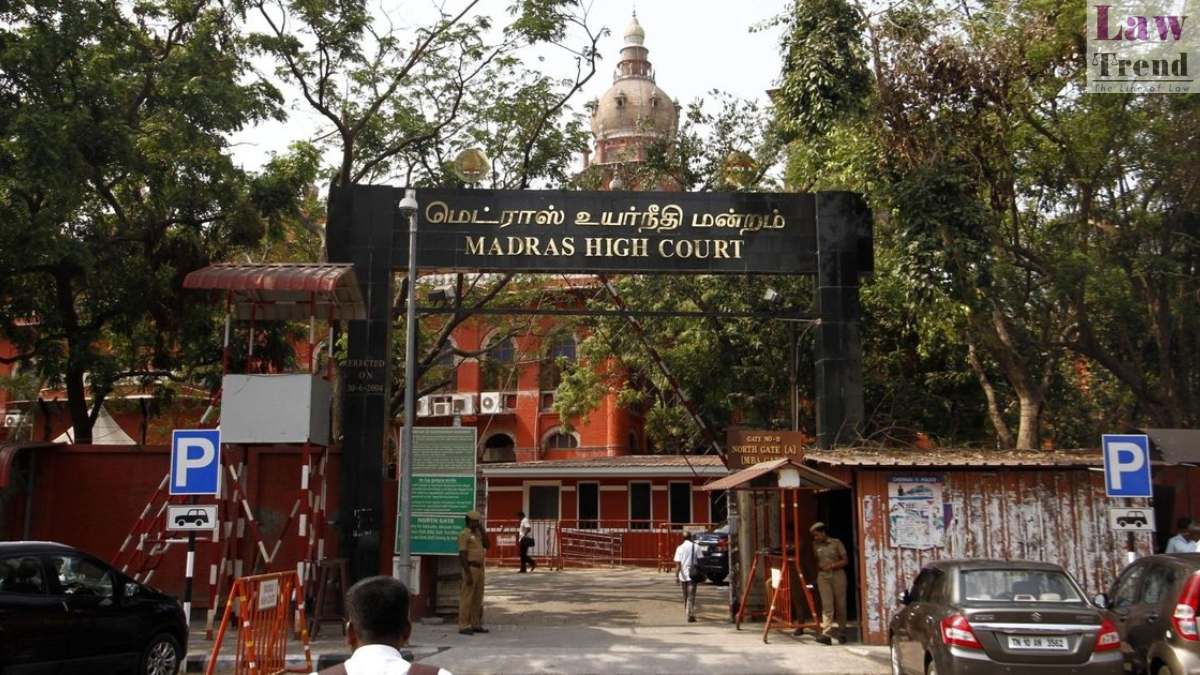
In a significant relief for law students facing academic hurdles due to sudden policy changes, the Madras High Court has directed the Tamil Nadu Dr. Ambedkar Law University to allow a BA LLB student to appear for his pending supplementary examinations. The court’s intervention comes after the university abruptly implemented University Grants Commission (UGC) guidelines that would have barred the student from completing his degree.
The petitioner was a student of the five-year BA LLB course at Central Law College, enrolled from 2017 to 2022. By the end of his regular course duration, he had successfully cleared all but four papers.
At the time of his admission in 2017, neither the college nor the Tamil Nadu Dr. Ambedkar Law University had imposed specific restrictions on the number of attempts or a strict time limit for clearing arrears. Even as late as April 13, 2026, an examination schedule released by the university made no mention of such restrictive conditions.
However, on April 22, 2026, the university issued new instructions stating that students admitted before the 2018-2019 academic year were ineligible for further attempts, citing UGC guidelines. These guidelines typically restrict supplementary attempts to a two-year window following the completion of the regular course.
Representing the petitioner, Advocate S.R. Sundar argued that the sudden imposition of these rules caused “irreparable injury” to the student. With only four papers remaining, the student’s entire career was at stake.
The petitioner further contended that:
- The restrictive conditions were not part of the original regulations when he commenced his studies.
- The online examination portal had rejected his registration number as “invalid” when he attempted to pay the fees.
- Multiple representations sent via email to the university on April 27 and May 4 went unanswered.
- Similarly placed candidates had already been granted relief by the High Court in an order dated April 29, and the petitioner sought parity.
Justice L. Victoria Gowri, presiding over the matter, observed that the student deserved the benefit of writing his examinations, especially considering previous judicial precedents involving similar circumstances.
In its order dated May 12, the Court noted the “demanding condition” was imposed suddenly in the current academic year. Protecting the student’s academic interests, the Court issued a clear directive to the university authorities.
“This Court is of the considered view that the petitioner should also be given the benefit of writing the examinations. Hence, the respondents are directed to open the online portal, facilitating the petitioner to pay the necessary examination fee and permit the petitioner to write the supplementary examinations,” the Court stated.
The examinations are scheduled to take place between May 13, 2026, and June 5, 2026. The Court’s order ensures the student can attempt his pending papers on May 13, May 21, June 2, and June 5 as originally scheduled.
In a related development showcasing the court’s protective stance on educational rights, the Madras High Court also recently addressed the rights of disabled students. Justice D. Bharatha Chakravarthy directed the university to grant a fee waiver to a student with 40% disability.
The university had initially denied the waiver because the student was not admitted under the specific “persons with disabilities” quota. The court rejected this “pedantic” approach, stating:
“Persons with disabilities require both reservation and welfare measures so as to provide them with equal opportunities to complete their education along with other candidates.”




