

‘May’ in Bank Disciplinary Rules Cannot Be Read as ‘Shall’: Supreme Court Upholds Employer’s Discretion on Common Enquiry
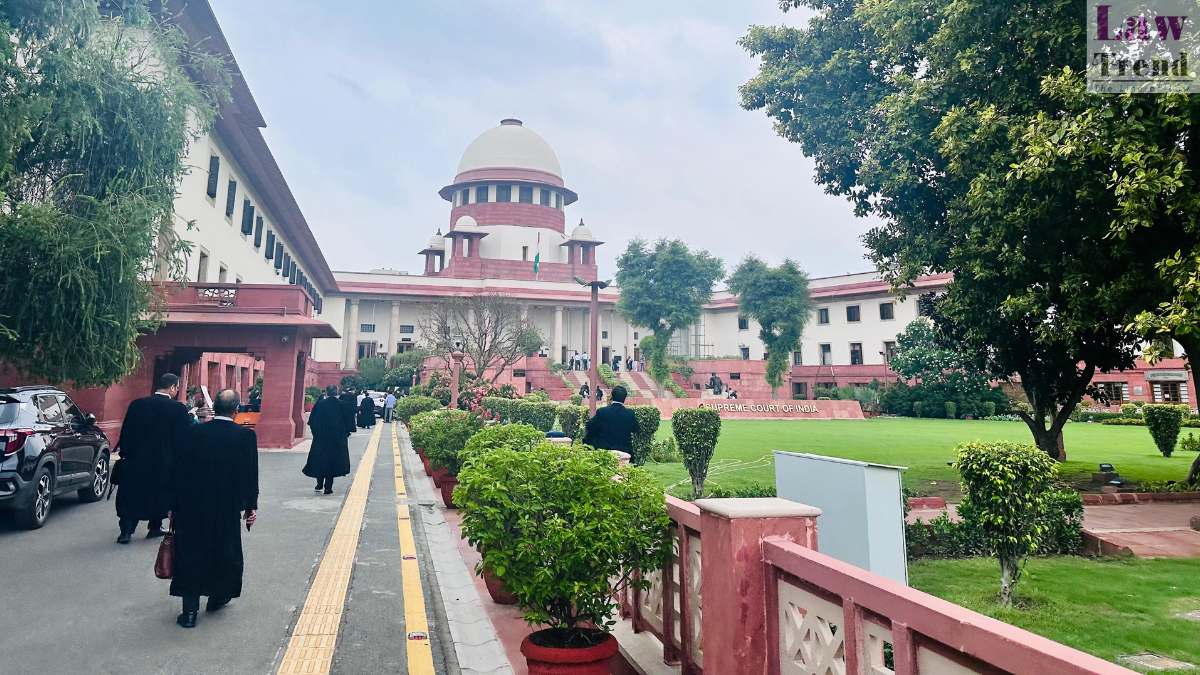

The Supreme Court of India has ruled that Regulation 10 of the Canara Bank Officer Employees’ (Discipline and Appeal) Regulations, 1976, is directory in nature, affirming that management holds the discretion to decide whether multiple employees involved in a common cause of action should face a joint or independent disciplinary proceeding. While the Court set aside the High Court of Karnataka’s interpretation that common proceedings were mandatory, it upheld the quashing of a specific punishment order against a deceased senior manager on the grounds that the inquiry was vitiated by a lack of evidence and violations of natural justice.

Background

The appeal, filed by Canara Bank, arose from a judgment of the High Court of Karnataka involving Prem Latha Uppal (deceased, represented by her legal heirs). Uppal, who served as a Senior Manager at the Bank’s Diplomatic Enclave branch in New Delhi, was punished in 2006 by being reduced from SMG Scale-IV to MMG Scale-III. The disciplinary action followed the sanctioning of financial assistance to $M/s$. Aman Trading Company and $M/s$. Creative Trading Company, which the Bank alleged was vitiated by negligence and collusion.

Specifically, the Bank charged Uppal with failing to verify the existence of the borrowing firms, failing to check the ownership of collateral property, and neglecting to scrutinize discrepancies in financial papers. A Single Judge of the High Court dismissed her challenge in 2013; however, a Division Bench subsequently allowed her appeal, setting aside the punishment order and interpreting Regulation 10 as mandatory.

Arguments of the Parties

Canara Bank (Appellant): The Bank contended that the Division Bench erred by re-appreciating evidence, which exceeded the settled scope of judicial review. On the interpretation of Regulation 10, the Bank argued that the word “may” is permissive and intended to provide management with the flexibility to handle dynamic situations, especially when charge-sheeted employees belong to different cadres or have varying levels of responsibility.

Respondents (Legal Heirs of Prem Latha Uppal): The respondents argued that the inquiry was conducted in violation of the principles of natural justice. They pointed out that the Enquiry Officer relied on preliminary statements from co-accused officers who were never examined as witnesses during the formal proceedings, thereby depriving Uppal of an opportunity to cross-examine them. They maintained that the High Court did not re-appreciate evidence but correctly identified a total absence of evidence to support the charges.

READ ALSO  Schools Cannot Withhold Transfer Certificate Due to Parents’ Matrimonial Dispute: Delhi High Court

Court’s Analysis and Observations

A Bench of Justice S.V.N. Bhatti and Justice Vijay Bishnoi examined the scope of judicial review and the linguistic interpretation of “may” in the context of the 1976 Regulations.

On the Merits of the Inquiry: The Court observed that the Enquiry Officer had indeed relied on the statements of management witnesses (MW2 and MW3) recorded during the preliminary investigation. However, since these individuals were not examined during the departmental enquiry, their statements could not form the basis of a finding of guilt. The Court noted:

READ ALSO  Restoration of Suit Implies Adjudication of All Issues: SC Clarifies Scope of Trial After Plaint Rejection is Set Aside

“The findings of the Enquiry Officer were vitiated for want of a semblance of evidence… the findings recorded in the impugned judgment on the merits of the matter are available, and there is no departure from the settled position of law.”

On Regulation 10 and the ‘May’ vs. ‘Shall’ Debate: The Court addressed the conflict between the High Courts of Karnataka and Andhra Pradesh regarding whether Regulation 10 is mandatory. The Court emphasized that the word “may” should be given its plain meaning:

“‘May’ is not understood as ‘must’, so long as the English language retains its meaning… Enabling words are construed as compulsory whenever the object of the said authority is to effectuate a legal right.”

The Bench held that Regulation 10 does not vest a right in a delinquent officer to insist on a joint enquiry. Affirming the view of the High Court of Andhra Pradesh in T. Baba Prasad v. Andhra Bank, the Court stated:

READ ALSO  Criminal Court Has No Power to Review Its Own Judgments; Only Clerical Errors Can Be Corrected: Supreme Court

“In our view, the word ‘may’ in Regulation 10 of the 1976 Regulations, from any standpoint, is directory. Construing ‘may’ as mandatory would remove the discretion available to the employer in dynamic circumstances.”

Decision

The Supreme Court set aside the High Court’s ruling to the extent that it interpreted Regulation 10 as mandatory. However, on the merits of the case, it confirmed the High Court’s decision to set aside the punishment order due to the procedural and evidentiary flaws in the disciplinary inquiry.

The Bank has been directed to settle the accounts of the deceased respondent within six weeks, taking into account the outcome of this judgment.

Case Details:

  • Case Title: Canara Bank v. Prem Latha Uppal (Dead) Through LRs.
  • Case No.: Civil Appeal No(s). [X] of 2026 (@SLP (C) No. 10226 of 2023)
  • Bench: Justice S.V.N. Bhatti and Justice Vijay Bishnoi
  • Date: May 12, 2026

Law Trend
Law Trendhttps://lawtrend.in/
Legal News Website Providing Latest Judgments of Supreme Court and High Court

Related Articles

Latest Articles

