

Accused Cannot Seek Alteration Of Charge As A Matter Of Right Under Section 216 CrPC: Allahabad High Court
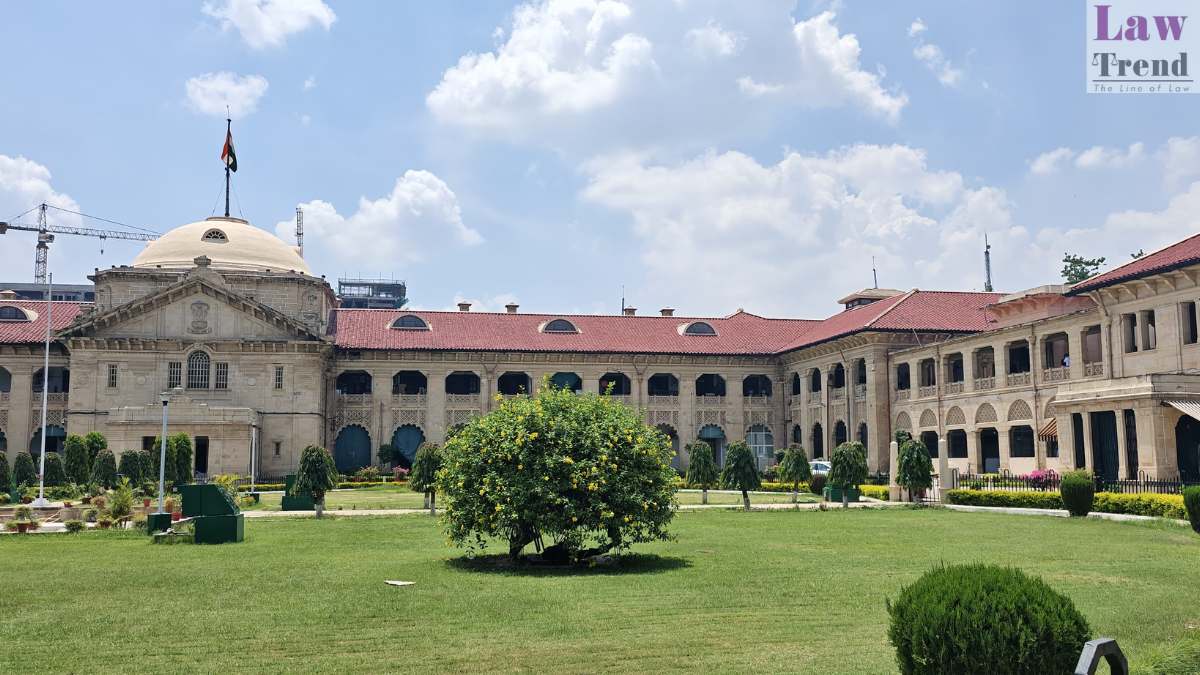

The High Court of Judicature at Allahabad has held that the power to alter or add charges under Section 216 of the Code of Criminal Procedure (CrPC) or Section 239 of the Bharatiya Nagarik Suraksha Sanhita (BNSS) is exclusive to the court. The Court emphasized that no party—whether the accused, the complainant, or the prosecution—has a vested right to seek such alteration by filing an application.

The ruling was delivered by Justice Vivek Kumar Singh, while dismissing an application filed by one Praveen Pal, who sought to quash orders rejecting his plea for the alteration of charges in a case involving allegations of rape under the IPC and the POCSO Act.

Background of the Case

The matter originated from an FIR lodged on February 15, 2022, under Sections 376, 313, 354, 452, 323, 506 of the IPC and Section 3/4 of the POCSO Act. The victim alleged that the applicant had subjected her to rape 6-7 years prior and blackmailed her using obscene videos. She also alleged that she suffered a miscarriage after the applicant administered medicine to her.

While the victim claimed in the FIR to be 16 years old at the time of the incident, her statements under Section 164 CrPC and subsequent medical reports suggested she was between 22 and 25 years old. The applicant’s discharge application under Section 227 CrPC was rejected on March 27, 2023, and charges were framed under Sections 376(3), 506 IPC, and Section 3/4(2) of the POCSO Act.

Subsequently, the applicant moved an application under Section 216 CrPC/239 BNSS for the alteration of charges, arguing that as per the victim’s high school certificate (Date of Birth: 17.7.1997), she was a major at the time of the alleged incident (March 13, 2016). The trial court rejected this application on May 19, 2025.

READ ALSO  Allahabad HC Delivers Split Verdict in Criminal Appeal Against Acquittal of MLA Abhay Singh

Arguments of the Parties

Counsel for the Applicant: The applicant’s counsel argued that the victim was over 18 years of age at the time of the incident. It was contended that the provisions of the POCSO Act were inapplicable and the charge under Section 376(3) IPC should be altered. Reliance was placed on the Supreme Court judgment in P. Yuvaprakash vs. State Rep. By Inspector of Police.

Counsel for the Opposite Party & State: The learned A.G.A. and counsel for the informant opposed the prayer, stating that the applicant was raising the same plea previously taken during the discharge stage. They argued that the application was not maintainable as the power under Section 216 CrPC is suo moto and not a right of the parties. They cited P. Kartikalakshmi vs. Sri Ganesh and another to support their stance.

READ ALSO  Allahabad HC Dismisses Plea Alleging Bribe Demand by PMLA Court Judge, Terms Transfer Application Baseless

Court’s Analysis and Observations

The High Court examined the scope of Section 216 CrPC (corresponding to Section 239 BNSS) and referred to several landmark Supreme Court precedents.

Exclusive Power of the Court: The Court noted that Section 216 is an “enabling provision” and observed:

“The power vested in the Court is exclusive to the Court and there is no right in any party to seek for such addition or alteration by filing any application as a matter of right.”

On the Practice of Filing Vexatious Applications: Referring to K. Ravi vs. State of Tamil Nadu, the Court highlighted a “deplorable” trend where accused persons file applications for alteration of charges after discharge pleas are dismissed. The Court quoted the Apex Court:

“Section 216 does not give any right to the accused to file a fresh application seeking his discharge after the charge is framed by the court, more particularly when his application seeking discharge under Section 227 has already been dismissed.”

Criteria for Alteration: The Court clarified that while a court can alter a charge at any time before judgment if it discovers an omission or defect, such an exercise must be “founded on the material available on record.” The Court emphasized that the trial court must satisfy itself that such an exercise is necessary to ensure a “fair and full trial.”

READ ALSO  Order Passed U/Sec 125 CrPC May Be Final or Interim and Can Be Recalled or Altered Under Section 127 CrPC, Bar of Section 362 CrPC Is Not Applicable in Such Cases: Allahabad HC

Conclusion and Decision

The High Court found that the trial court committed no illegality in rejecting the applicant’s request. It held that since the power under Section 216 CrPC is exclusive to the court, it was not incumbent upon the trial court to pass an order based on an application moved by the accused.

Finding the application “misconceived and devoid of merits,” the Court dismissed the plea.

Case Details

Case Title: Praveen Pal v. State of U.P. and 3 Others
Case No.: APPLICATION U/S 528 BNSS No. 25601 of 2025
Bench: Justice Vivek Kumar Singh
Date: May 8, 2026

Law Trend
Law Trendhttps://lawtrend.in/
Legal News Website Providing Latest Judgments of Supreme Court and High Court

Related Articles

Latest Articles

