

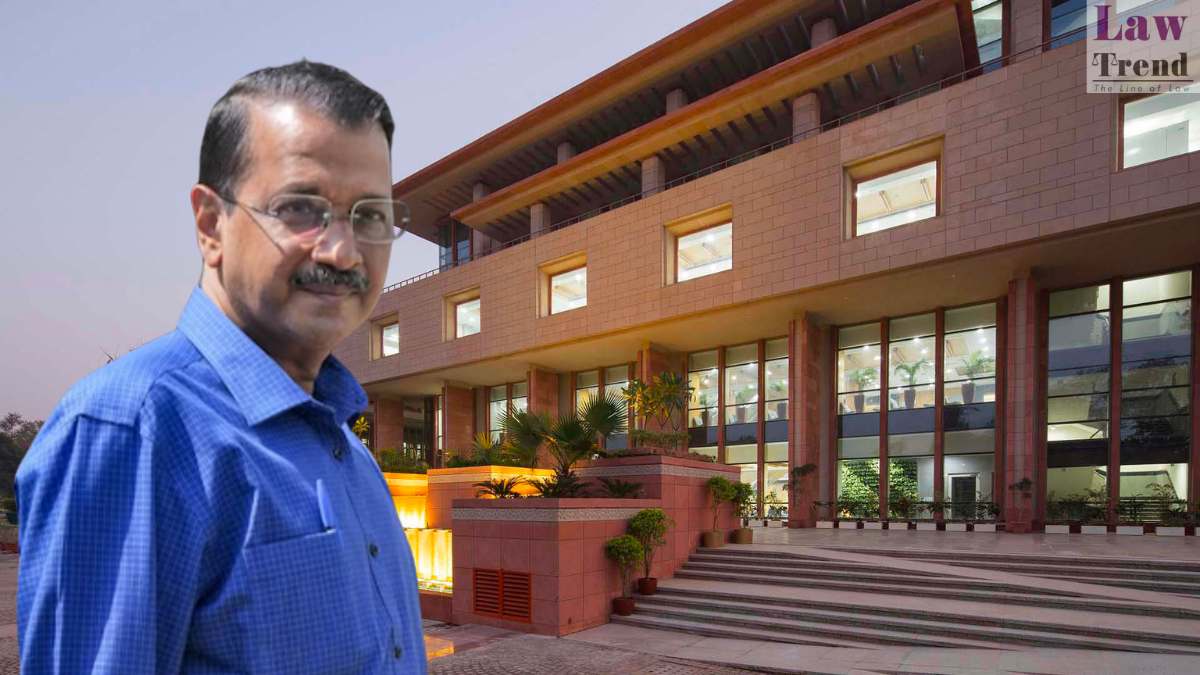
The Delhi High Court on Wednesday issued a fresh notice to Aam Aadmi Party (AAP) chief and former Chief Minister Arvind Kejriwal regarding petitions filed by the Enforcement Directorate (ED). The federal agency is challenging a lower court’s decision to acquit Kejriwal in two separate cases concerning his alleged failure to comply with summonses issued during the excise policy investigation.
Justice Swarana Kanta Sharma directed the issuance of the new notice after the court registry reported that an earlier notice, issued on April 1, had not been served to the respondent. Counsel representing the ED informed the court that despite the initial notice, no appearance had been entered on behalf of the AAP leader.
The matter has now been scheduled for a further hearing on July 22.
The legal battle stems from complaints filed by the ED in a trial court, alleging that Kejriwal intentionally disobeyed multiple summonses to join the investigation into the now-scrapped Delhi excise policy. The agency contended that Kejriwal raised “frivolous objections” and “deliberately created grounds” to avoid appearing for questioning.
In its appeal to the High Court, the ED argued that the trial court committed a “grave error” in acquitting the former Chief Minister. The agency maintains there was no dispute regarding the fact that the summonses were duly issued and received, yet Kejriwal failed to present himself before the investigating officers.
The ED further alleges that other accused individuals were in contact with Kejriwal during the formulation of the excise policy, which the agency claims resulted in undue benefits to private parties and kickbacks to the Aam Aadmi Party.
On January 22, the trial court ruled in favor of Kejriwal, stating that the ED failed to prove intentional disobedience. A critical point in the trial court’s judgment was the lack of legal verification regarding the service of summons via email.
“Neither the service of summons through emails has been proved by the ED nor the process of issuing summons to any person under Section 50(2) of the Prevention of Money Laundering Act (PMLA) via email has been proved to be in accordance with the law,” the trial court had observed.
Separately, on February 27, the trial court discharged Kejriwal, former Deputy CM Manish Sisodia, and 21 others in a related CBI case, remarking that the central agency’s case was “wholly unable to survive judicial scrutiny.” A plea by the CBI against this discharge is also currently pending before the High Court.
Arvind Kejriwal is currently on interim bail in the money laundering case. The Supreme Court has referred specific legal questions regarding the “need and necessity of arrest” under the PMLA to a larger bench for deeper consideration.




