

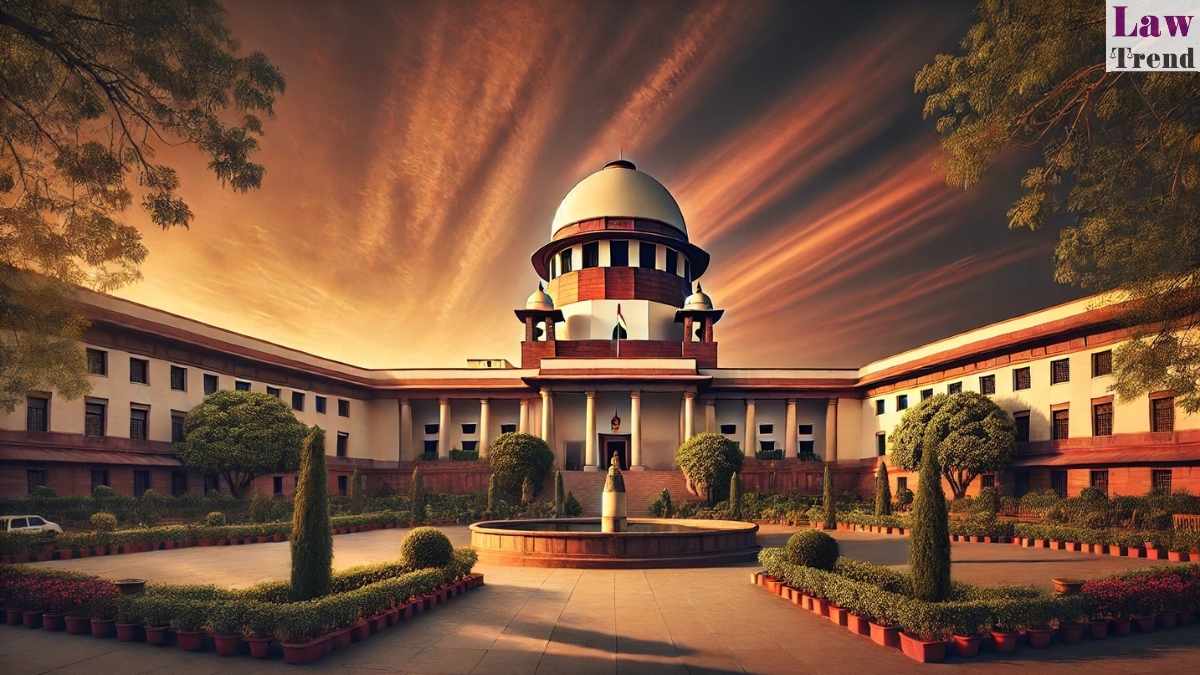
The Supreme Court on Thursday dismissed a Public Interest Litigation (PIL) seeking to make voting mandatory across the country. The Court held that such a mandate falls strictly within the “policy domain” and cannot be issued by the judiciary. A three-judge bench, led by Chief Justice Surya Kant, emphasized that in a democratic society governed by the rule of law, participation should stem from public awareness rather than legal compulsion.
The petitioner, Ajay Goel, approached the Supreme Court through a PIL seeking directions to enforce mandatory voting. The petition argued that wilful non-voters should face penal consequences and suggested that the government should restrict benefits and amenities for those who abstain from exercising their franchise. The petitioner further requested the Court to direct the Election Commission of India to form a committee to propose specific restrictions on citizens who fail to vote.
The petitioner contended that compulsory voting is necessary to strengthen democracy. Specifically, the petitioner sought:
- The issuance of guidelines to restrict government benefits for those who wilfully abstain from voting.
- Penal consequences for non-participation in the electoral process.
- A directive to the Election Commission to study and implement policy measures that would penalize non-voters by limiting access to government amenities.
During the proceedings, the bench expressed significant reservations regarding the feasibility and philosophy of the prayer. Chief Justice Surya Kant observed that for 75 years, India has demonstrated a deep-seated belief in democracy, which relies on the voluntary participation of its citizens.
“In a country which is governed by the rule of law and believes in democracy, and where we have shown for 75 years how we trust and believe in it, everyone is expected to go (and vote). If they don’t go, they don’t go. What is needed is awareness, but we cannot compel,” the Chief Justice remarked.
The bench questioned the logical and legal basis for criminalizing the choice to stay home on election day. Addressing the petitioner’s suggestion to impose restrictions, the CJI asked, “Should we direct their arrest? If a citizen doesn’t go for voting, what can we do?”
The Court highlighted several practical and socio-economic hurdles to mandatory voting:
- Working Professionals: The bench noted that many citizens, including those in the judiciary, are required to work on election days. “If we accept this, then my brother Justice Bagchi would have to go to West Bengal to vote even though it is a working day,” the CJI noted. Justice Bagchi added, “Judicial work is also important.”
- Marginalised Sections: The bench expressed concern for the poor who rely on daily wages. “If a person who is poor says, ‘I need to earn my wages, how do I vote?’ what should we say to them?” the bench asked.
- Separation of Powers: The Court repeatedly emphasized that these issues lie within the “policy domain,” meaning they are matters for the legislature and the executive to decide, not the courts.
The Supreme Court refused to entertain the PIL, stating that the judiciary cannot issue mandates on matters of policy. The bench directed the petitioner to instead approach the relevant stakeholders with his grievances.
“We are afraid these issues lie in the policy domain,” the Court concluded, reiterating that democracy thrives on awareness rather than coercion.


