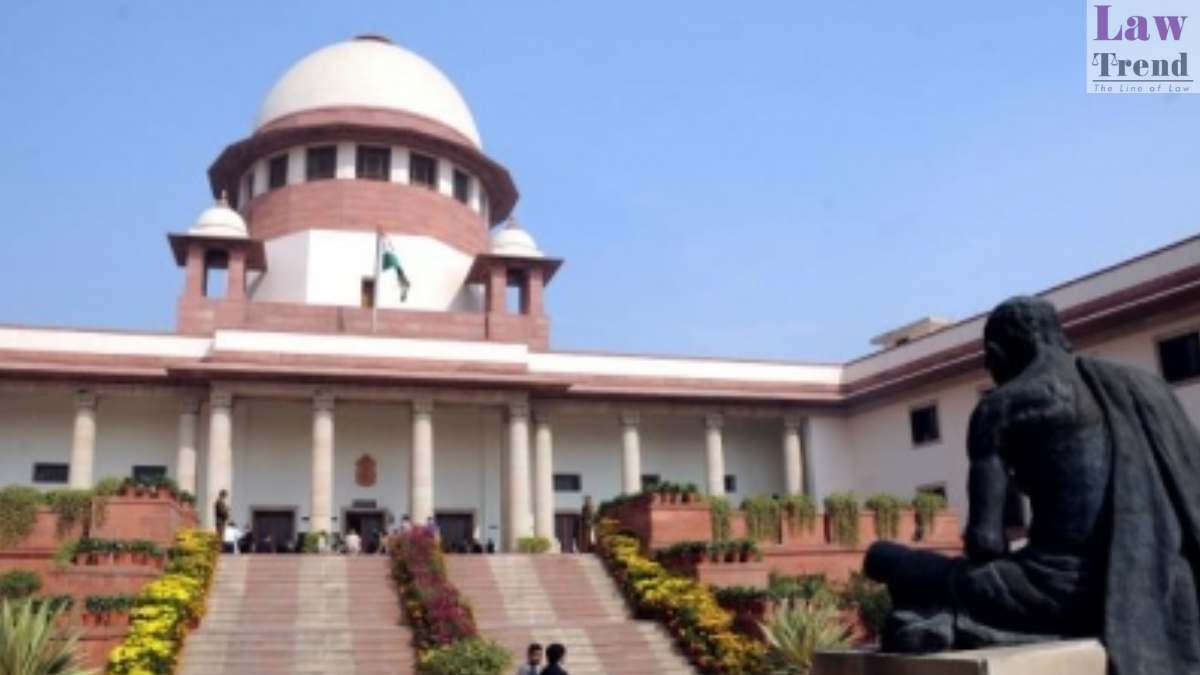
The Supreme Court of India has disposed of a decade-long writ petition concerning the unpaid dues of thousands of workmen of Jaipur Udyog Ltd (JUL). In a significant reportable judgment, a Bench comprising Justice Rajesh Bindal and Justice Vijay Bishnoi appointed a former Chief Justice as a Court Administrator to oversee the verification of worker dues and the valuation of company assets. The Court also declared the allotment of shares in JUL’s subsidiary, Jai Agro Industries Ltd (JAIL), to group companies of Gannon Dunkerley & Co. Ltd. (GDCL) as illegal, finding that GDCL had acted beyond its mandate as a mere management custodian.
Background
The legal saga of Jaipur Udyog Ltd (JUL) dates back to September 17, 1987, when the company was declared a ‘sick industry’ under the Sick Industrial Companies (Special Provisions) Act, 1985 (SICA). In 1992, the Board for Industrial and Financial Reconstruction (BIFR) sanctioned a rehabilitation scheme (SS-92) submitted by Gannon Dunkerley & Co. Ltd. (GDCL), handing over management to the new promoters.
However, the rehabilitation failed. Despite several opportunities and court interventions, the unit remained closed, and dues of thousands of workers at the Sawai Madhopur (Rajasthan) and Kanpur (Uttar Pradesh) units remained unpaid. On November 24, 2000, the BIFR recommended the winding up of JUL. Following the repeal of SICA in 2016 and the enactment of the Insolvency and Bankruptcy Code (IBC), the appeals pending before the AAIFR abated as no reference was made to the NCLT within the statutory 180-day window. Consequently, the winding-up recommendation stood revived, and a company petition remains pending before the Rajasthan High Court.
Arguments of the Parties
For the Labour Unions: Senior Counsel representing various unions argued that GDCL had no right to deal with JUL’s properties as the 1992 scheme had long since collapsed. They highlighted that GDCL had “clandestinely” changed the shareholding pattern of JAIL (a subsidiary of JUL) and sold assets like the Kanpur Jute Unit and agricultural lands without court permission to square off its own financial liabilities. They supported new investors (M/s Frost Realty and M/s Dickey Asset Management) who proposed to pay worker dues in exchange for the assets.
For GDCL/JUL: Dr. Abhishek Manu Singhvi and Mr. Dhruv Mehta, Senior Counsel for the promoters, argued that GDCL had infused approximately ₹266 crores to keep the company alive and settle debts. They contended that since GDCL had cleared most secured creditors, it had a “legitimate expectation” of ownership. They admitted to selling the Kanpur Jute Unit without permission but termed it an “error” for which an apology was tendered. They further argued that the subsidiary JAIL was an independent entity and not part of the BIFR scheme.
Court’s Analysis
The Court conducted a thorough review of the “checkered history” of the case and the conduct of GDCL. It observed that GDCL was merely handed over the “management” of JUL, which did not confer ownership or the right to sell properties.
On the Conduct of GDCL: The Bench noted that GDCL failed to implement the 1992 scheme and defaulted on financial commitments. Most critically, the Court found that GDCL had sold assets during the pendency of the writ petition without seeking permission. The Court remarked:
“Such an illegality cannot be condoned by any stretch of imagination… Even the conduct of the labour unions before this Court is also fishy as neither of them pointed out complete facts of the case or the status of GDCL nor did they object to the sale.”
On the Subsidiary JAIL: The Court found it “strange” that JAIL, a 99.99% owned subsidiary of JUL, was not factored into the rehabilitation scheme. It held that the allotment of fresh shares to GDCL’s group companies, which reduced JUL’s stake to 33%, was “bad” and “illegal.”
On Article 142 and Legitimate Expectation: The Court rejected GDCL’s plea to invoke Article 142 to condone its lapses.
“In our view, power under Article 142 of the Constitution of India cannot be invoked to condone the illegalities committed… Legitimate expectation cannot override the illegalities committed by a party.”
The Decision
The Supreme Court issued the following directions:
- Appointment of Administrator: Justice Manindra Mohan Shrivastava, former Chief Justice of the Madras High Court, is appointed as Administrator to oversee the verification of worker dues and coordinate with PF authorities.
- Worker Dues: Verification and payment of dues, including interest at 5% p.a. as determined by the Justice Aftab Alam report, must be completed by August 31, 2026.
- Illegal Sales: The sale of the Kanpur Jute Mill and JAIL properties was not set aside to avoid a “new pandora’s box” involving third-party buyers, but the sale of scrap at the Sawai Madhopur unit was explicitly set aside.
- Share Allotment: All allotments of shares in JAIL to GDCL group companies are declared illegal.
- Company Assets: An inventory of all remaining assets of JUL and JAIL will be prepared for valuation. The Court will later decide how surplus assets will be used for “good public use.”
- Housing: Workers in possession of company flats will not be charged rent for the past period but must vacate within six months of receiving their final dues.
- Rejection of Bidders: Applications by M/s Frost Realty and M/s Dickey Asset Management were rejected as their proposals could not be accepted without a formal valuation of JUL’s assets.
The Court concluded that since JUL is no longer in debt to secured creditors, the winding-up petition before the Rajasthan High Court stands disposed of as infructuous, and the process will now be governed by the Court-appointed Administrator.
Case Details:
Case Title: Bhartiya Mazdoor Sangh, U.P. & Anr. v. State of U.P. & Others
Case No.: Writ Petition (Civil) No. 392 of 2015
Bench: Justice Rajesh Bindal and Justice Vijay Bishnoi
Date: April 15, 2026