

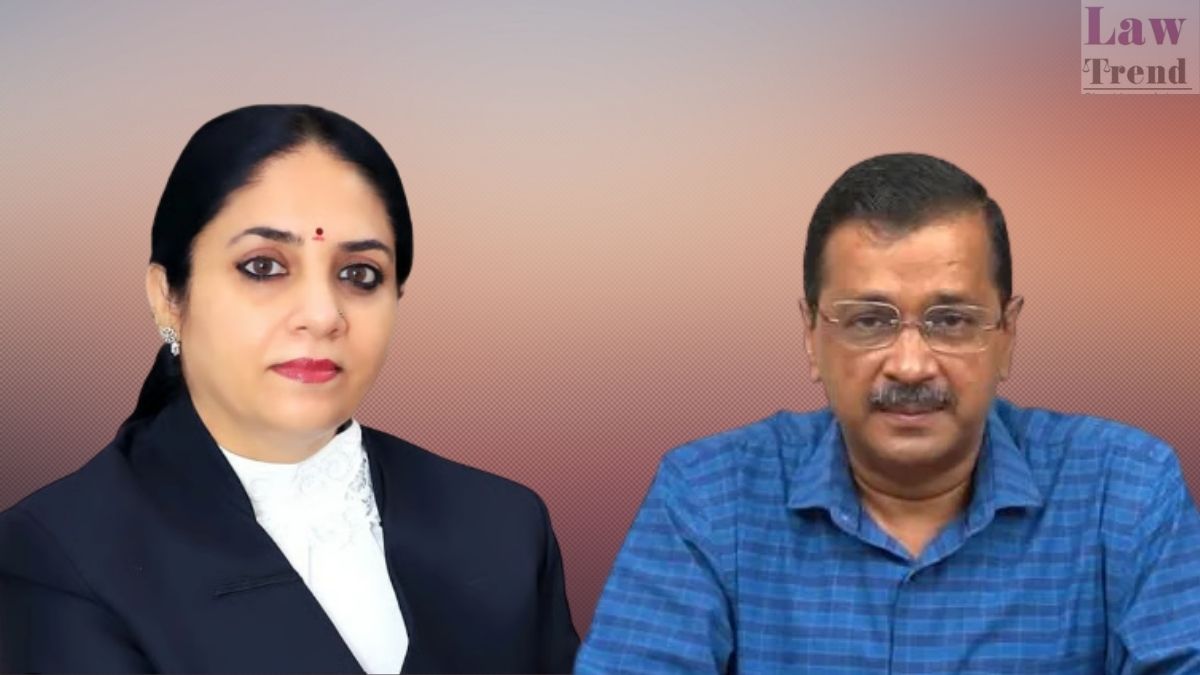
Former Delhi Chief Minister and Aam Aadmi Party (AAP) convenor Arvind Kejriwal on Monday personally argued for the recusal of Justice Swarana Kanta Sharma from hearing the Central Bureau of Investigation’s (CBI) plea against his discharge in the excise policy case. Kejriwal told the court that he apprehended he would not receive a fair trial, claiming that the judge’s previous orders had effectively “declared” him corrupt.
Appearing before Justice Sharma to argue his application for her withdrawal from the case, Kejriwal contended that the legal standard for recusal is not a question of a judge’s personal integrity, but rather the existence of a “reasonable bias” in the mind of the litigant.
The AAP leader alleged a disparity in how cases are handled, claiming that except for the CBI’s petition and one other case involving a political opponent of the BJP, no other matters before Justice Sharma were being heard at such “speed.” He further suggested there was a “trend” of the court “endorsing” arguments presented by investigative agencies.
Kejriwal specifically took issue with the court’s actions on March 9, the first day of the hearing regarding the CBI’s challenge to his discharge. He argued that the court “neutralised” a detailed discharge order—passed by a trial judge after three months of day-to-day arguments—by issuing a “sweeping, ex parte order” in haste, which he claimed violated the principles of natural justice.
“I was shocked and I had some apprehension about whether the court is biased and will I get justice. What was the urgency for this? What was the need for this?” Kejriwal stated during the hearing.
The former Chief Minister highlighted that Justice Sharma had previously denied him relief in his petition challenging his arrest, as well as dismissing bail pleas from co-accused individuals, including Manish Sisodia and K Kavitha. He argued that those orders contained “strong and conclusive” findings against him.
“I was almost declared guilty. I was almost declared corrupt. Kewal saza sunani baaki reh gayi thi (Only sentence was left to be pronounced),” Kejriwal told the bench. He added that in the bail order for Manish Sisodia, the court had essentially concluded that the accused were “maha corrupt” after only three hearings.
Kejriwal emphasized that the trial court’s discharge order contained findings in “stark contrast” to the High Court’s earlier rulings on critical issues, such as the admissibility of statements from approvers. He questioned whether Justice Sharma would be able to objectively reconsider her previously held views.
Beyond the legal rulings, Kejriwal raised objections regarding Justice Sharma’s attendance at four functions organized by the Akhil Bharatiya Adhivakta Parishad. Contending that he is an ideological opponent of the BJP and RSS, Kejriwal expressed apprehension that the judge “sympathised” with their ideology, further fueling his fear that justice would not be served.
When Justice Sharma asked if she had made any political or ideological statements at those events, Kejriwal responded that her mere attendance was sufficient to create an apprehension of bias.
The AAP chief also referenced public comments made by Home Minister Amit Shah, who suggested that Kejriwal would need to approach the Supreme Court against the High Court’s decisions. To this, Justice Sharma remarked, “What control do I have over what he says?”
Kejriwal concluded his arguments by alleging a conflict of interest and reiterating that his application was based on the perception of bias rather than a direct challenge to the judge’s uprightness.




