

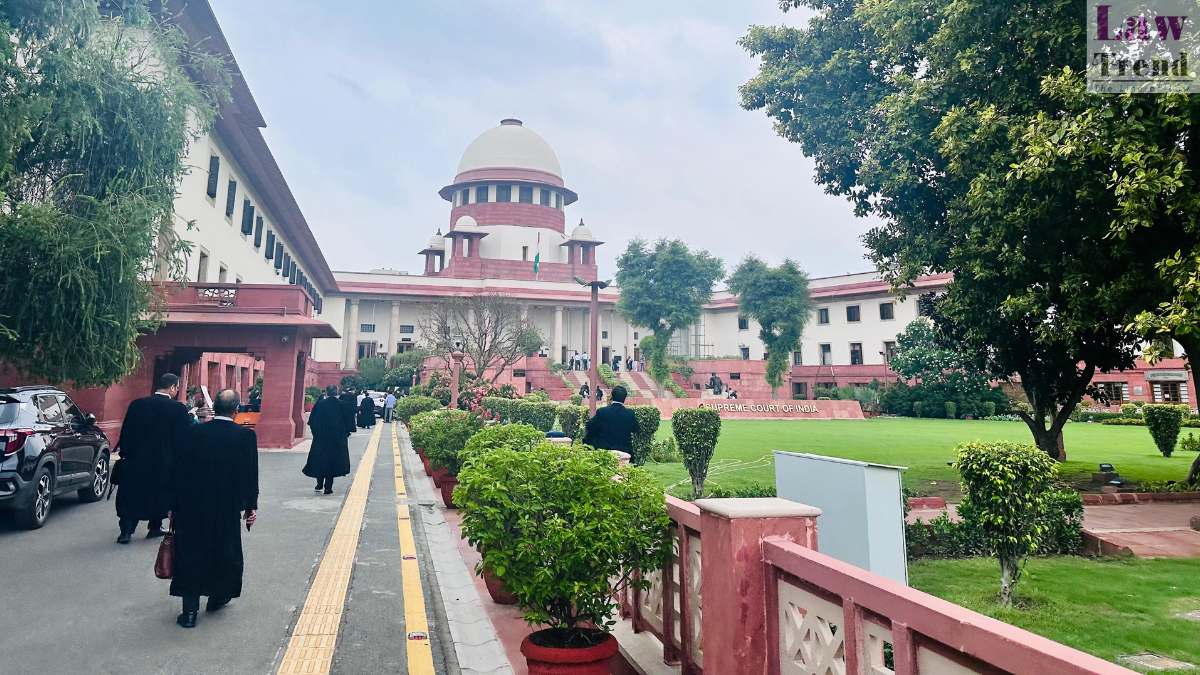
The Supreme Court on Monday took a significant step toward addressing the gaps in India’s primary education system, issuing notices to the Central government, all states, and Union Territories regarding the full implementation of the Right to Education (RTE) Act and the National Education Policy (NEP) 2020.
A bench comprising Chief Justice Surya Kant and Justice Joymalya Bagchi presided over the matter, acting on a Public Interest Litigation (PIL) filed by Haripriya Patel. The petition argues for the uniform enforcement of free and compulsory education for children aged 6 to 14, as well as the nationwide rollout of the transformative NEP 2020 framework.
During the proceedings, the counsel representing the petitioner highlighted the enforceability of pre-primary education as a critical concern. While the RTE Act currently focuses on children between the ages of 6 and 14, the petitioner emphasized that the foundational years are equally vital and require a standardized legal framework across the country.
The PIL further seeks the comprehensive implementation of the National Education Policy (NEP) 2020. This policy, which replaced the decades-old 10+2 system, introduces a 5+3+3+4 structure covering ages 3 to 18. The petitioner urged the court to ensure that the benefits of this policy—ranging from vocational training starting in Grade 6 to an emphasis on AI, coding, and multi-lingualism—reach students in every state and Union Territory.
The bench expressed its intent to scrutinize the current status of these educational mandates. “We are issuing notices. We would like to examine the issue,” observed Chief Justice Surya Kant.
The petition underscores two major legal pillars:
- The RTE Act, 2009: This landmark law mandates free and compulsory foundational education in neighborhood schools. It also requires private educational institutions to reserve 25 percent of their seats for children from economically weaker sections (EWS).
- The NEP 2020: A holistic framework aimed at turning India into a “knowledge superpower” through skill development, flexibility, and modernized curricula.
By making the Centre and all regional governments parties to the PIL, the Supreme Court aims to gather a comprehensive view of why certain provisions of these laws and policies remain inconsistent or unfulfilled across different parts of the country.




