

Courts Cannot Grant Extraordinary Pension Where Statute Vests Discretion in Governor: Supreme Court
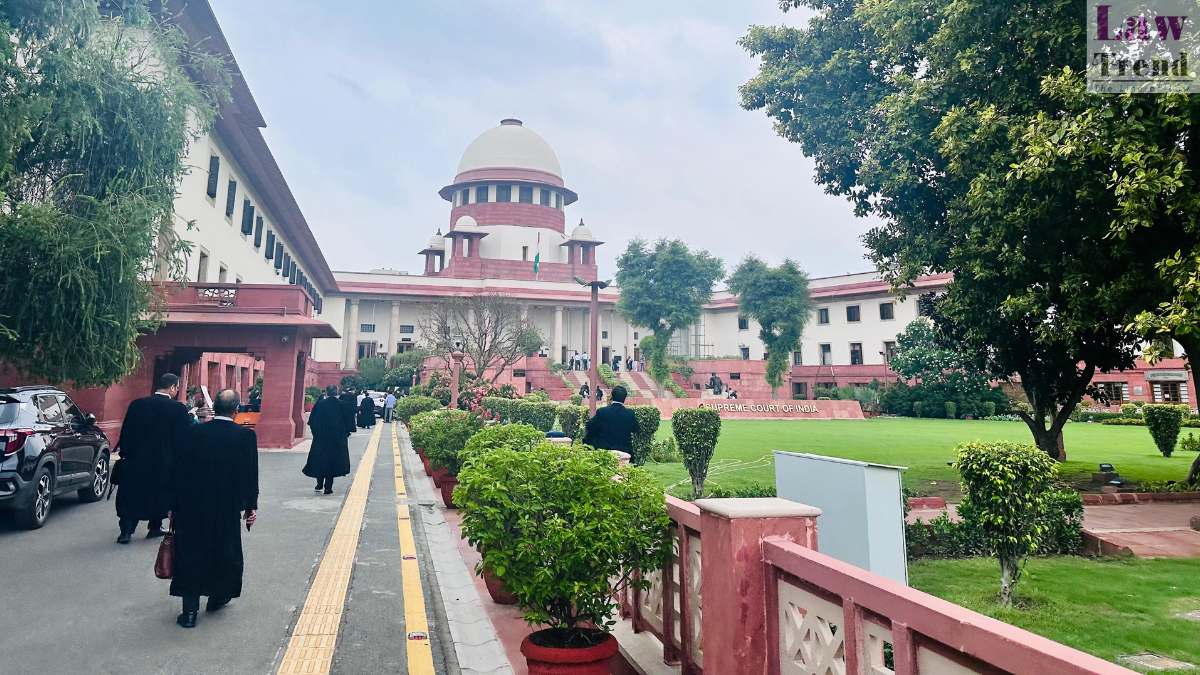

The Supreme Court of India has held that the power to grant extraordinary pension is an administrative discretion vested in the Governor under the relevant service rules, and courts should not substitute their own decisions for that of the statutory authority. A Bench comprising Justice J.K. Maheshwari and Justice Atul S. Chandurkar modified a Uttarakhand High Court judgment that had directly ordered the state to pay extraordinary pension to the widow of a doctor killed in the line of duty.

Background

The case involves Dr. Sunil Kumar Singh, a Pediatrician who was shot dead on April 20, 2016, while performing his duties at CHC Jaspur. His widow, Sarita Singh (the first respondent), sought extraordinary pension under the Uttar Pradesh Civil Services (Extraordinary Pension) Rules, 1981 (as adopted by Uttarakhand).

While the State provided an initial ex gratia payment of ₹1,00,000, arrears of salary, and compassionate appointment for her son, the widow approached the High Court seeking higher compensation and the grant of extraordinary pension. On September 12, 2018, the High Court directed the State to pay ₹1,99,09,000 in compensation and granted extraordinary pension with 8.5% interest on arrears. The State of Uttarakhand appealed this direction to the Supreme Court.

Arguments of the Parties

Mr. Gaurav Bhatia, Additional Advocate General for the State of Uttarakhand, argued that the High Court erred in bypasssing the procedural and substantive requirements of the 1981 Rules. He emphasized that under Rule 4, the sanction of the Governor is mandatory. He further contended that the High Court failed to indicate how the doctor’s death fell under a “post of risk” as defined by the rules.

Mr. Vijay Hansaria, Senior Advocate for the respondent, supported the High Court’s findings, stating that the death occurred during the discharge of official duties, qualifying as “special risk” or “violence” under Rule 3. He argued that the family should not be deprived of the pension due to technicalities regarding the application format.

READ ALSO  धारा 112 की वैधता की धारणा को चुनौती दिए बिना डीएनए टेस्ट का आदेश नहीं; धोखाधड़ी’ आरोपों से पितृत्व का कोई सीधा संबंध नहीं: सुप्रीम कोर्ट

Court’s Analysis

The Supreme Court observed that the 1981 Rules serve as a complete code governing extraordinary pension. The Court highlighted Rule 4, which states: “No award shall be made under these rules except with the sanction of the Governor.”

The Bench emphasized that where a statute confers discretionary power upon an authority, the Court must exercise judicial restraint. The Court noted:

“It would be a different matter if such authority has either refused to take any decision for a reasonable period of time or the decision taken is found to be wholly arbitrary or suffering from non-application of mind… Ordinarily, the Court would not substitute its decision in place of the decision required to be taken by the concerned authority in exercise of its discretion.”

Citing the decisions in State of West Bengal Vs. Nuruddin Mallik and Union of India Vs. S.B. Vohra, the Court reiterated:

READ ALSO  Supreme Court Rebukes Centre for Seeking Adjournment in Tribunal Reforms Case, Calls It ‘Unfair to the Court’

“It is, however, trite that ordinarily the Court will not exercise the power of the statutory authorities. It will at the first instance allow the statutory authorities to perform their own functions and would not usurp the said jurisdiction itself.”

The Court found that since the Governor had not yet had the occasion to examine the widow’s request or exercise administrative discretion, the High Court’s issuance of a writ of mandamus was “unwarranted.”

The Decision

The Supreme Court partly allowed the appeals and issued the following directions:

  1. Pension Order Set Aside: The High Court’s direction to pay extraordinary pension was set aside as it lacked the Governor’s sanction.
  2. Fresh Application: The respondent is permitted to apply for extraordinary pension under the 1981 Rules within four weeks. The Competent Authority must decide this application on its merits within twelve weeks.
  3. Compensation Upheld: The Court noted that during the pendency of the case, the respondent received ₹1,00,00,000 in compensation via interim orders. The Court affirmed that this amount is final and “shall not be recovered from her.”
  4. Independent Review: The Court clarified that the Governor must decide the claim “on its own merits without being influenced by any observations” made in previous judgments.
READ ALSO  आपराधिक मुकदमे से संबंधित टीवी चैनलों पर बहस न्याय में हस्तक्षेप के बराबर है- जानिए सुप्रीम कोर्ट का निर्णय

Case Details:

  • Case Title: The State of Uttarakhand vs. Sarita Singh and Ors.
  • Case Number: Civil Appeal arising out of SLP (C) Nos. 19840-19841 of 2021
  • Bench: Justice J.K. Maheshwari and Justice Atul S. Chandurkar
  • Date: April 9, 2026

Law Trend
Law Trendhttps://lawtrend.in/
Legal News Website Providing Latest Judgments of Supreme Court and High Court

Related Articles

Latest Articles

