

Rejection of Employment Claim Under Rehabilitation Policy Based on Unnotified Cut-Off Date is Legally Unsustainable: Chhattisgarh High Court
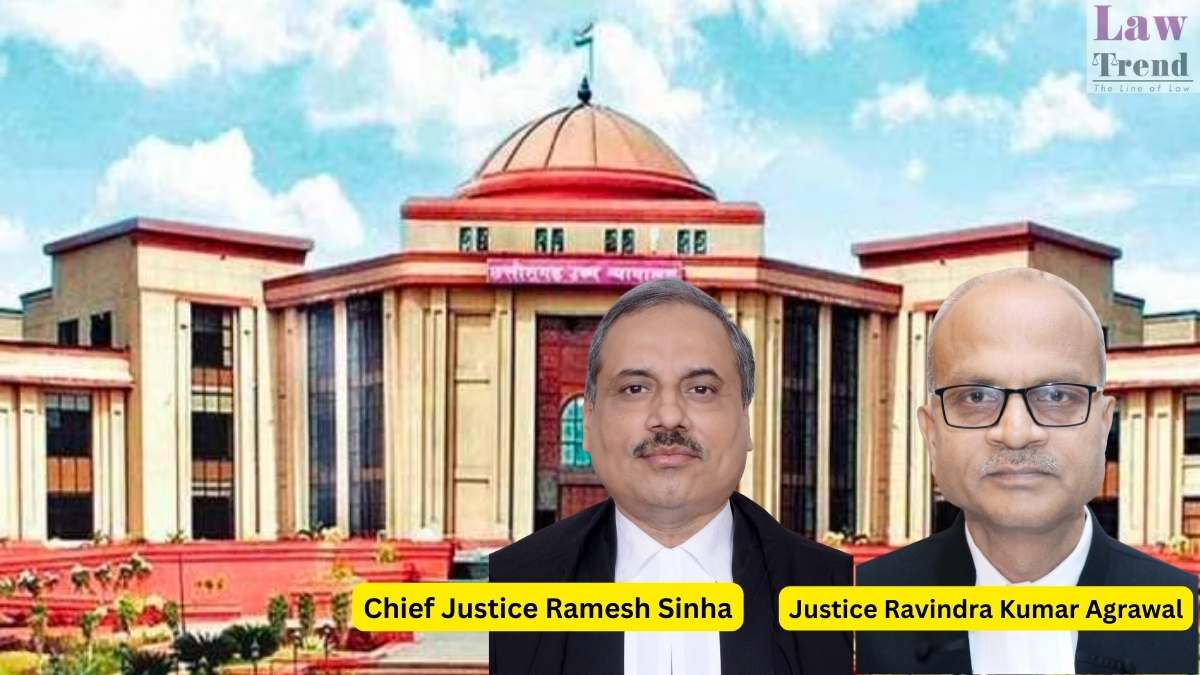

The High Court of Chhattisgarh has ruled that administrative decisions restricting rehabilitation benefits, such as employment for land oustees, cannot be enforced if they arise from internal communications that were never brought into the public domain. A Division Bench comprising Chief Justice Ramesh Sinha and Justice Ravindra Kumar Agrawal modified a previous order to grant monetary compensation to a land oustee in lieu of employment, noting that the rejection of his claim based on an unnotified “cut-off date” was arbitrary.

Background

The case originated when the respondent, Mahendra Kumar Sahu, purchased 1.21 acres of land in Village Govindpur via a registered sale deed on January 5, 1993. The surface rights to this land were subsequently acquired by South Eastern Coalfields Ltd. (SECL). While an award was passed in 2002 and compensation of ₹31,291 was paid, Sahu’s application for employment under the 1991 Rehabilitation Policy was rejected.

The SECL authorities and the District Collector justified the rejection on the grounds that Sahu had purchased the land after a “cut-off date” of September 30, 1991. Sahu challenged this in a writ petition, which a Single Judge allowed on November 6, 2025, quashing the rejection and directing SECL to consider him for employment and pay ₹10,00,000 in compensation. SECL then preferred the present writ appeal (WA No. 272 of 2026).

Arguments of the Parties

Appellants (SECL): Senior Advocate Manoj Paranjpe argued that the Rehabilitation Policy eligibility was determined by a meeting held on July 19, 2002, where it was resolved that purchasers who acquired land after the initiation of acquisition proceedings (September 30, 1991) would not be entitled to employment. Citing Supreme Court precedents like Union of India vs. Shiv Kumar Bhargava and Government of NCT of Delhi vs. Sunil Jain, the appellants contended that subsequent purchasers have no locus to claim rehabilitation benefits. They further argued the ₹10,00,000 compensation was “exorbitant” and lacked specific legal findings of mala fides.

Respondent No. 1 (Mahendra Kumar Sahu): Appearing in person, Sahu argued that the 1991 Rehabilitation Policy itself did not contain the restrictive cut-off date. He contended that the 2002 decision was an “internal communication” between SECL and the Collector that was never notified or made known to the public. He alleged “hostile discrimination,” stating that other similarly situated persons who purchased land after the cut-off date had been granted employment.

READ ALSO  हत्या और गैर इरादतन हत्या के बीच का अकादमिक अंतर अदालतों के लिए हमेशा एक जटिल प्रश्न रहा है: छत्तीसगढ़ हाईकोर्ट

Court’s Analysis

The Court observed that the fact of land acquisition and Sahu’s title were undisputed, established by revenue records and a subsequent enquiry report by the Sub-Divisional Officer (Revenue).

Regarding the cut-off date, the Court held:

“It is a settled principle of law that any administrative decision having civil consequences must be transparent and made known to the persons likely to be affected. An internal administrative arrangement, which has neither been published nor communicated, cannot be enforced to the detriment of an individual.”

The Bench found that the 1991 Rehabilitation Policy did not whisper of such a restriction and the 2002 decision was taken after the award had already been passed. The Court remarked that the actions of SECL and the Collector were “illegal, arbitrary and discriminatory” as they deprived individuals of legal rights based on undisclosed internal communications.

READ ALSO  A Clause of Any Notification Cannot be Declared as Ultra Vires Merely Because it is Not Beneficial to a Party or an Individual: Chhattisgarh HC

Final Decision

During the proceedings, Sahu (now a practicing advocate) informed the Court he would be satisfied with “just and reasonable compensation” in lieu of employment. The appellants agreed to abide by such a direction.

Balancing the equities, the Court held:

  1. The direction for SECL to consider Sahu for employment was set aside in light of the parties’ revised stand.
  2. The compensation awarded by the Single Judge was reduced from ₹10,00,000 to ₹5,00,000, which the Court deemed a “fair and reasonable recompense” for the prolonged litigation since 2012.
  3. The amount must be paid within 30 days, failing which legal consequences would follow.
READ ALSO  Failure to Submit Original Documents on Scheduled Date Justifies Rejection of Candidature: AP High Court

Case Details:

  • Caste Title: South Eastern Coalfields Ltd. & Anr. vs. Mahendra Kumar Sahu & Ors.
  • Case No.: WA No. 272 of 2026
  • Bench: Chief Justice Ramesh Sinha & Justice Ravindra Kumar Agrawal
  • Date: April 7, 2026

Law Trend
Law Trendhttps://lawtrend.in/
Legal News Website Providing Latest Judgments of Supreme Court and High Court

Related Articles

Latest Articles

