

State Bears Heavy Burden to Prove ‘Ostensible’ Land Holding Under Ceiling Act; Lekhpal’s Report Alone Insufficient: Allahabad High Court
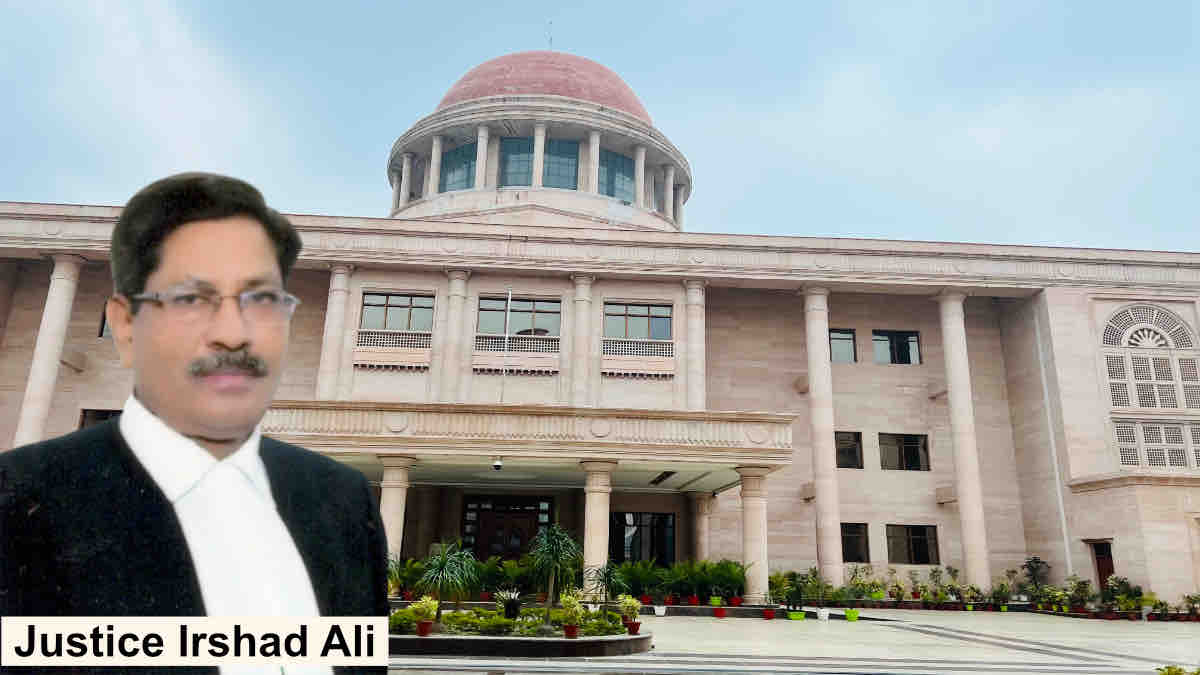

The High Court of Judicature at Allahabad, Lucknow Bench, has allowed a writ petition, quashing orders that clubbed the land of several independent tenure holders with another individual for ceiling limit purposes. The Court ruled that the State had failed to discharge its “heavy burden” of proving that the land was held ostensibly or in a benami capacity, noting that a Lekhpal’s report without corroborative evidence is insufficient to strip a tenure holder of their property rights.

Background

The petitioners, Kulwant Singh and others, were recorded tenure holders of various land plots in revenue records. In proceedings under the U.P. Imposition of Ceiling on Land Holdings Act, 1961, the State issued notices under Section 10(2) to one Sri Sobaran Singh (Respondent No. 4). Subsequently, the land belonging to the petitioners was clubbed with that of Sri Sobaran Singh.

Despite objections from both the petitioners—who claimed independent ownership and cultivatory possession—and Sri Sobaran Singh—who stated he had no concern with their land—the Prescribed Authority (Ceiling), Kheri, declared 33.913 hectares of irrigated land as surplus on March 30, 1994. The Appellate Authority dismissed the subsequent appeals on December 28, 1998, though it directed the Prescribed Authority to verify certain records independently.

Arguments of the Parties

The petitioners’ counsel argued that the authorities failed to exercise their jurisdiction properly. They contended that since the names of the petitioners were recorded in revenue records, the “bald statement of the Lekhpal” asserting that Respondent No. 4 was in possession was “totally false and misleading.” They further argued that the State relied solely on the Lekhpal’s statement to claim Respondent No. 4 was the ostensible owner, which was legally insufficient.

The State respondents defended the orders, arguing that Respondent No. 4 was the “real tenure holder” and the petitioners were merely “name-lenders.” They pointed to the fact that Respondent No. 4 had received the notices and was in possession of the petitioners’ sale receipts for agricultural produce. They maintained that Section 5 of the Ceiling Act regarding “ostensible” holdings is distinct from “benami transactions” under the 1988 Act and that these were concurrent findings of fact that the High Court should not disturb.

READ ALSO  Delhi High Court Issues Notice to Lawyer Who Wrote ‘This Court Is Slow to Hear My Cases’ on VC Hearing Chat Box

Court’s Analysis

Justice Irshad Ali examined the evidence and settled legal positions. The Court emphasized that the petitioners being recorded in revenue records carries a “presumption of correctness under law.”

Regarding the State’s claim of ostensible holding, the Court observed:

“The entire findings recorded by the Prescribed Authority as well as the Appellate Authority rests upon the statement/report of the Lekhpal. It is trite law that such a report, in absence of corroborative evidence, cannot by itself discharge the heavy burden cast upon the State to establish that a transaction or holding is benami or ostensible.”

The Court relied on several precedents, including Pritam Singh Vs. State of U.P. and Shishu Pal Singh Vs. Prescribed Authority, noting that the Ceiling Act is “expropriatory in nature” and must be strictly construed. The Court held:

READ ALSO  ED’s Power To Issue Summons Under Section 50 PMLA Does Not Include Power To Arrest: Delhi High Court

“In case if the land of any record tenure holder is to be taken by the State in exercise of powers under the Act 1960, then it would be State who has to establish that the condition prescribed in the Act are clearly met.”

The Court specifically criticized the authorities for shifting the burden of proof onto the petitioners:

“The authorities have proceeded on an erroneous premise that once an allegation is made in the notice, the burden shifts upon the petitioners to disprove the same. Such an approach is clearly contrary to the settled legal position.”

Furthermore, the Court found that the Appellate Authority abdicated its jurisdiction by not setting aside the order despite noticing discrepancies, instead directing the Prescribed Authority to modify its own order.

READ ALSO  Newspaper Reports are Hearsay Evidence and are not Admissible Unless the Person Reporting it is Examined: Allahabad HC 

The Decision

The Court concluded that the findings were “wholly perverse and legally untenable” due to the absence of cogent evidence regarding the source of consideration, the nature of possession, or the conduct of the parties.

“The findings recorded by the authorities below are thus vitiated on the ground of absence of cogent evidence, misapplication of burden of proof, reliance on inadmissible/insufficient material, and failure to exercise jurisdiction in accordance with law,” the Court held.

The Writ Petition was allowed, and the orders dated December 28, 1998, and April 21, 1994 (as finalized on March 30, 1994), were set aside. No order as to costs was made.

Case Details:

  • Case Title: Kulwant Singh and others Versus State of U.P. and others
  • Case Number: WRIT-C No. – 3000033 of 1999
  • Bench: Justice Irshad Ali
  • Date: April 3, 2026

Law Trend
Law Trendhttps://lawtrend.in/
Legal News Website Providing Latest Judgments of Supreme Court and High Court

Related Articles

Latest Articles

