

Civil Courts Can Adjudicate Sajjadanashin Succession; Office Distinct from Mutawalli: Supreme Court
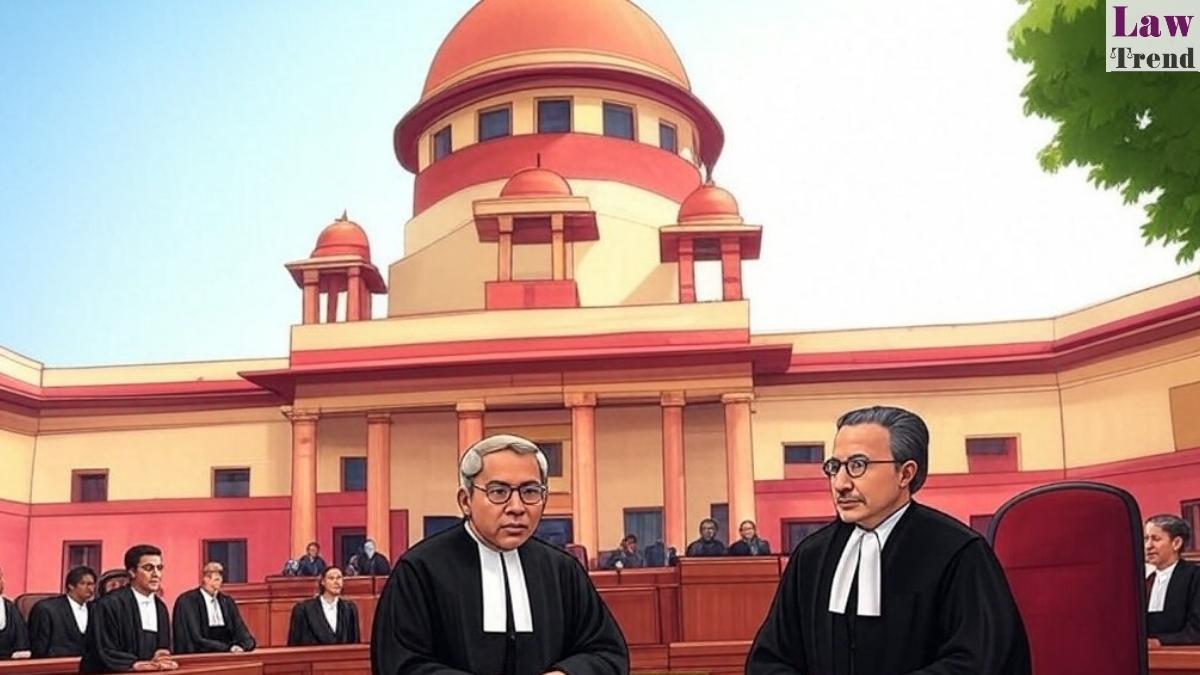

The Supreme Court of India has held that Civil Courts have the inherent jurisdiction to determine disputes concerning the spiritual hereditary office of a Sajjadanashin. A Bench comprising Justice M.M. Sundresh and Justice Vipul M. Pancholi set aside a Karnataka High Court judgment that had characterized such disputes as falling within the exclusive domain of the Waqf Board. The Court emphasized that the office of a Sajjadanashin is fundamentally spiritual and religious, distinguishing it from the secular administrative office of a Mutawalli.

Background of the Case

The litigation involved two separate sets of appeals concerning succession to the office of Sajjadanashin at two prominent Dargahs in Karnataka: the Hazarath Mardane-e-Gaib Dargah at Shivasamudram and the Hazarath Akhil Shah Quadri Dargah (Big Makan) at Channapatna.

In the first case (Civil Appeal Nos. 13345-13346 of 2015), the dispute was between Syed Mohammed Ghouse Pasha Khadri (the appellant) and his nephew, Syed Mohammed Adil Pasha Khadri (the respondent). Following the death of the original Sajjadanashin, Peer Pasha Khadri, in 1988, the respondent claimed succession based on a 1981 nomination (Khilafatnama). The appellant challenged this, asserting his own claim as the son of the predecessor.

In the second case (SLP (C) Nos. 10706-10709 of 2025), the High Court of Karnataka had set aside 37 years of Civil Court proceedings, ruling that under Section 3(i) of the Waqf Act, 1995, a “Mutawalli” includes a “Sajjadanashin,” and therefore only the Waqf Board could appoint or recognize such an official. This prompted the appeal to the Supreme Court.

Arguments of the Parties

For the Appellants: The counsel argued that a Sajjadanashin is a spiritual head and religious teacher, a status recognized under Mahomedan Law as superior to a Mutawalli. They contended that the High Court erred in conflating the two offices. It was further argued that Section 85 of the Waqf Act does not bar Civil Court jurisdiction over spiritual successions, especially since the Waqf Tribunal itself had previously returned the matter to the Civil Court, citing a lack of jurisdiction.

READ ALSO  Surrendering of an Accused is Not Necessary Before Preferring a Criminal Revision Application Under Section 397 CrPC: MP HC

For the Respondents: The respondents maintained that once an institution is notified as a Waqf, all matters of appointment fall under the Waqf Board’s superintendence per Section 32(2)(g) of the Act. They argued that the inclusive definition of “Mutawalli” in the statute meant the Civil Court’s jurisdiction was impliedly barred.

Court’s Analysis and Observations

The Supreme Court undertook a detailed analysis of the Waqf Act, 1995, and the Karnataka Waqf Rules, 2017. The Court identified three primary questions: whether the offices are identical, whether Civil Courts have jurisdiction, and whether the High Court’s quashing of the trial decrees was justified.

READ ALSO  Supreme Court's 2023 Order on Gyanvapi Spurs Multiple Survey Requests on Disputed Religious Sites

1. Distinction Between Sajjadanashin and Mutawalli The Court noted that while Section 3(i) of the Act includes “Sajjadanashin” in the definition of “Mutawalli” for administrative purposes, the two roles are legally distinct. Quoting Mulla’s Principles of Mahomedan Law, the Court observed:

“The office of a mutawalli is a secular office; that of a sajjadanashin is a spiritual office, and he has certain spiritual functions to perform… The sajjadanashin of a khankhah enjoys the unique position of being a spiritual preceptor and a mutawalli.”

The Court further referenced Section 64(2) of the Act, which stipulates that the removal of a person from the office of Mutawalli “shall not affect his personal rights… as a sajjadanashin.”

2. Jurisdiction of the Civil Court The Court held that the Waqf Board’s power is limited to “superintendence” and “administration,” such as protecting property and managing income. However, the appointment of a spiritual head based on custom and nomination is a religious matter. The Court noted:

“Sajjadanashin is the spiritual head of Waqf and declaration of Sajjadanashin is a religious affair, over which the Waqf Board would have no jurisdiction.”

3. Finality of Proceedings The Court criticized the High Court for upsetting decades of litigation on a jurisdictional point that had not been raised by the parties in the lower courts. Invoking the maxim actus curiae neminem gravabit (an act of the court shall prejudice no man), the Bench ruled that after 37 years, it would be improper to relegate the parties back to the Waqf Board.

READ ALSO  पोर्न फिल्म मामले में सुप्रीम कोर्ट ने शर्लिन चोपड़ा की गिरफ्तारी पर लगाई रोक- जानिए विस्तार से

The Decision

The Supreme Court dismissed the appeals in the Shivasamudram Dargah case, affirming the respondent’s status as the rightful Sajjadanashin based on valid nomination.

In the Channapatna Dargah case, the Court quashed the High Court’s order and restored the decrees of the Trial Court and First Appellate Court. The Bench concluded:

“The High Court has committed grave error in quashing and setting aside the decree… by holding that the same are nullity as the Civil Court has no jurisdiction… Civil Court has jurisdiction to decide the issue involved in the present matter.”

The matter was remitted back to the High Court to decide the remaining issues on merit within nine months.

Case Details:

  • Case Title: Syed Mohammed Adil Pasha Quadri v. Syed Hasnal Mussanna Sha Khadri & Ors.
  • Case Number: Civil Appeal Nos. 13345-13346 of 2015 and SLP (C) Nos. 10706-10709 of 2025
  • Bench: Justice M.M. Sundresh and Justice Vipul M. Pancholi
  • Date: April 02, 2026

Law Trend
Law Trendhttps://lawtrend.in/
Legal News Website Providing Latest Judgments of Supreme Court and High Court

Related Articles

Latest Articles

