

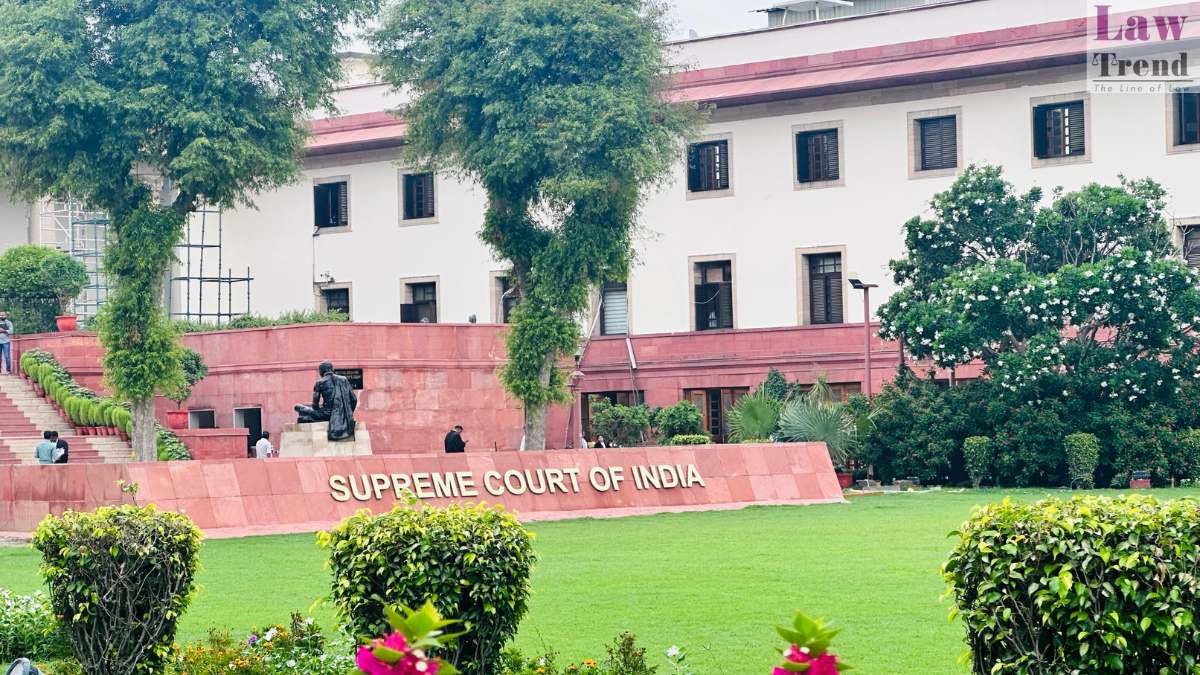
In a stinging rebuke to the Rajasthan government, the Supreme Court of India on Thursday stayed a state notification that sought to de-notify 732 hectares of the National Chambal Sanctuary. The bench, led by Justices Vikram Nath and Sandeep Mehta, characterized the state’s actions as “facilitating” illegal sand mining and warned that the fragile ecosystem of the sanctuary—home to the critically endangered gharial—is on the verge of collapse.
The National Chambal Sanctuary is a unique 5,400 sq km tri-state protected area spanning Rajasthan, Madhya Pradesh, and Uttar Pradesh. It serves as a vital habitat for the long-snouted gharial, the red-crowned roof turtle, and the endangered Ganges river dolphin.
During the hearing of a suo motu case titled ‘In Re: Illegal sand mining in the National Chambal Sanctuary and threat to endangered aquatic wildlife’, the bench expressed grave concern over the dwindling population of these species.
“Gharials are now virtually on the verge of extinction. Not only gharials, so many aquatic animals,” the bench observed. “We will not allow de-notification of any reserve land for protected species. There is no question.”
Justice Sandeep Mehta was particularly vocal about the state’s failure to protect the eco-reserve. He noted that the December 2025 notification (notified in March 2026) to de-notify the land had not met statutory requirements.
“The state could not have done it on their own. That is illegal,” Justice Mehta remarked, adding, “The state is in hot waters.”
The court also highlighted a pattern where states avoid declaring Eco-Sensitive Zones (ESZ) to allow land to revert to “revenue land,” which can then be exploited. The bench noted that similar issues had been observed in other protected areas like Ranthambore and Sariska.
The proceedings took a dark turn as the court discussed the violent influence of the “mining mafia” in the region. Justice Mehta compared them to “dacoits,” noting that the traditional mode of dacoity has been replaced by organized illegal mining.
Referring to “terrifying” video evidence, Justice Mehta described earth movers extracting sand and passing directly by police stations and mining outposts with impunity. The court noted with alarm that several government officials, including Sub-Divisional Magistrates (SDMs), police officers, and forest department personnel, have been killed by these groups.
“If the state government says we can’t defend our natural resources, then what happens? Absolute anarchy,” the bench said, reacting to affidavits suggesting that illegal miners are often better armed than state authorities.
The Supreme Court has now:
- Stayed the notification dated December 23, 2025, which sought to de-notify the 732 hectares.
- Transferred related proceedings from the National Green Tribunal (NGT) to the apex court to ensure a consolidated hearing.
- Directed Rajasthan, Madhya Pradesh, and Uttar Pradesh to respond to reports filed by the Amicus Curiae and the Central Empowered Committee (CEC) within four weeks.
- Requested the Ministry of Environment, Forest and Climate Change to file an affidavit regarding the conservation status of the sanctuary.
The matter is scheduled for its next hearing on May 11.




