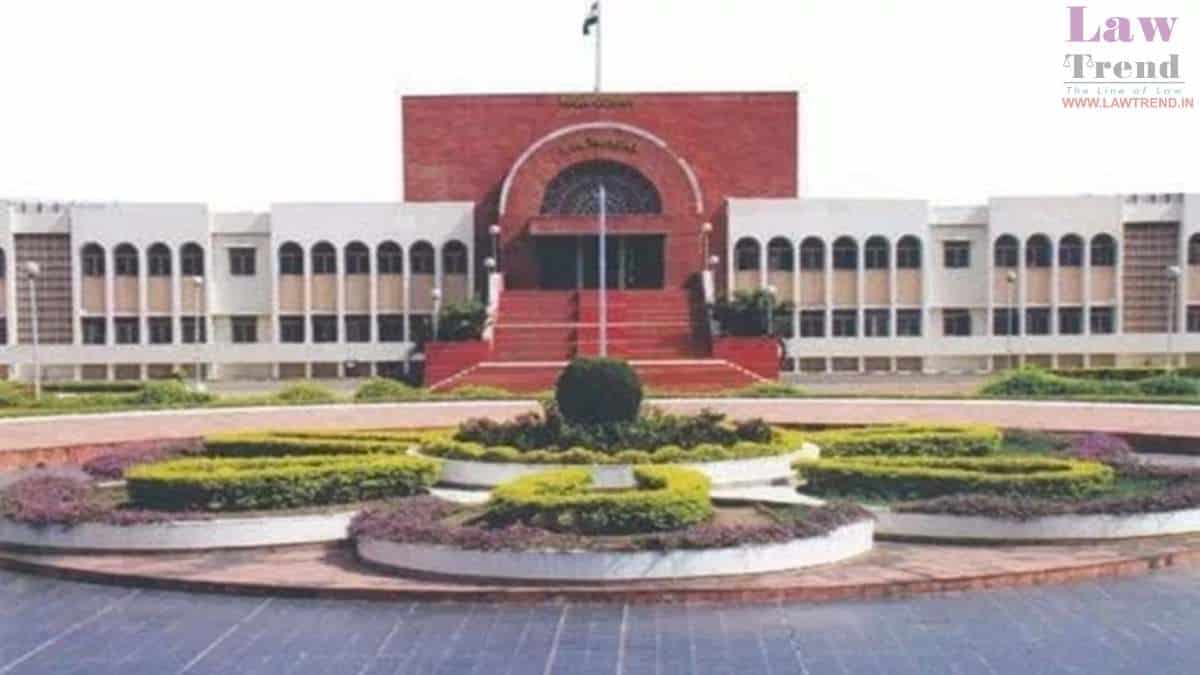
The Bombay High Court (Bench at Aurangabad) has dismissed a series of Arbitration Appeals filed by the National Highways Authority of India (NHAI), upholding the enhanced compensation awarded to landowners. Presided over by Justice Arun R. Pedneker, the Court held that there is no absolute bar on relying upon sale deeds executed shortly after a Section 3A notification to determine market value, provided the transactions are genuine and proximate in time.
Background
The dispute arose from land acquisition proceedings initiated by the NHAI for the widening of National Highway No. 6 from Jalgaon to the Gujarat boundary. A notification under Section 3A of the National Highways Act, 1956, was issued on November 11, 2011. The Competent Authority for Land Acquisition (CALA) initially determined compensation at ₹340 per square meter, plus 10% for easementary rights.
Dissatisfied, the claimants initiated arbitration under Section 3G(5) of the Act. The Arbitrator enhanced the compensation to ₹2,800 per square meter, primarily relying on a sale deed dated February 13, 2012 (executed approximately three weeks after the public notice of the notification). The NHAI challenged this award before the Principal District Judge under Section 34 of the Arbitration and Conciliation Act, 1996, but the challenge was rejected.
Arguments of the Parties
For the Appellant (NHAI): Advocate Mr. D. S. Manorkar contended that the Arbitrator committed a “patent illegality” by:
- Relying on Post-Notification Sale Deeds: Arguing that Section 3G(7)(a) requires market value to be determined as of the date of the Section 3A notification (11/11/2011).
- Comparing Dissimilar Properties: Claiming the Arbitrator compared agricultural lands in village Kothali with commercial plots in Muktainagar and failed to account for the “size factor.”
- Illegal Interest: Asserting interest should only be payable from the date of physical possession, citing R. L. Jain vs. Delhi Development Authority.
- Lack of Evidence: Arguing that compensation for “severance” and “loss of easementary rights” was awarded without documentary evidence like panchanamas.
For the Respondents (Claimants): Advocate Mr. A. P. Bhandari (holding for Mr. K. M. More) argued that:
- Legal Precedent: Under Chimanlal Hargovinddas v. Special Land Acquisition Officer, post-notification instances are valid if proximate and genuine.
- Consistency: The NHAI had already satisfied similar awards for neighboring lands based on the same 2012 sale deed.
- Severance: Claimants provided affidavits regarding losses due to partial acquisition, which the NHAI did not controvert.
Court’s Analysis
The High Court focused on the legality of using a sale deed dated three weeks after the notification. Citing the Supreme Court’s decision in Chimanlal Hargovinddas, the Court noted that post-notification instances can be considered if they are genuine and the acquisition itself has not motivated an inflated price.
The Court observed:
“The sale deed relied upon by the Arbitrator is executed merely about three weeks after the notification. There is no evidence on record to indicate that the sale price mentioned therein is inflated and the transaction itself has not been challenged as not being genuine.”
Regarding the comparison of properties, the Court found that even if other pre-notification sale deeds were adjusted for yearly escalation, the resulting price would “broadly correspond” with the Arbitrator’s determination.
On the issue of Severance and Easementary Rights, the Court referenced Krishna Balchandra Hadfadkar vs. Special Land Acquisition Officer, noting that the question of severance must be considered if facts justify it, even if not explicitly framed as an issue. The Court highlighted that the NHAI only partially acquired the lands for road widening, which inherently affects the “usability and economic utility of the remaining land.”
Scope of Judicial Intervention
Justice Pedneker emphasized the restricted scope of Sections 34 and 37 of the Arbitration Act. Referring to PSA Sical Terminals Pvt. Ltd. vs. Board of Trustees and MMTC Limited vs. Vedanta Limited, the Court stated:
“A judicial intervention on account of interfering on the merits of the award would not be permissible… An award would be set aside on the ground of patent illegality appearing on the face of the award and as such, which goes to the roots of the matter. However, an illegality with regard to a mere erroneous application of law would not be a ground for interference.”
Decision
The High Court concluded that the Arbitrator’s assessment was based on relevant material and did not suffer from perversity or patent illegality. Consequently, the Court dismissed the NHAI’s appeals and allowed the claimants to withdraw the deposited amounts, subject to an undertaking to redeposit should a higher court rule otherwise.
Case Details
- Case Title: National Highways Authority of India vs. Sangita Sunil Patil and Others (and connected matters)
- Case Number: Arbitration Appeal No. 103 of 2025
- Bench: Justice Arun R. Pedneker
- Date: April 01, 2026