

Plaint Can Be Rejected On Limitation Grounds Under Order 7 Rule 11(d) If Bar Is Evident From Pleadings: High Court Of Chhattisgarh
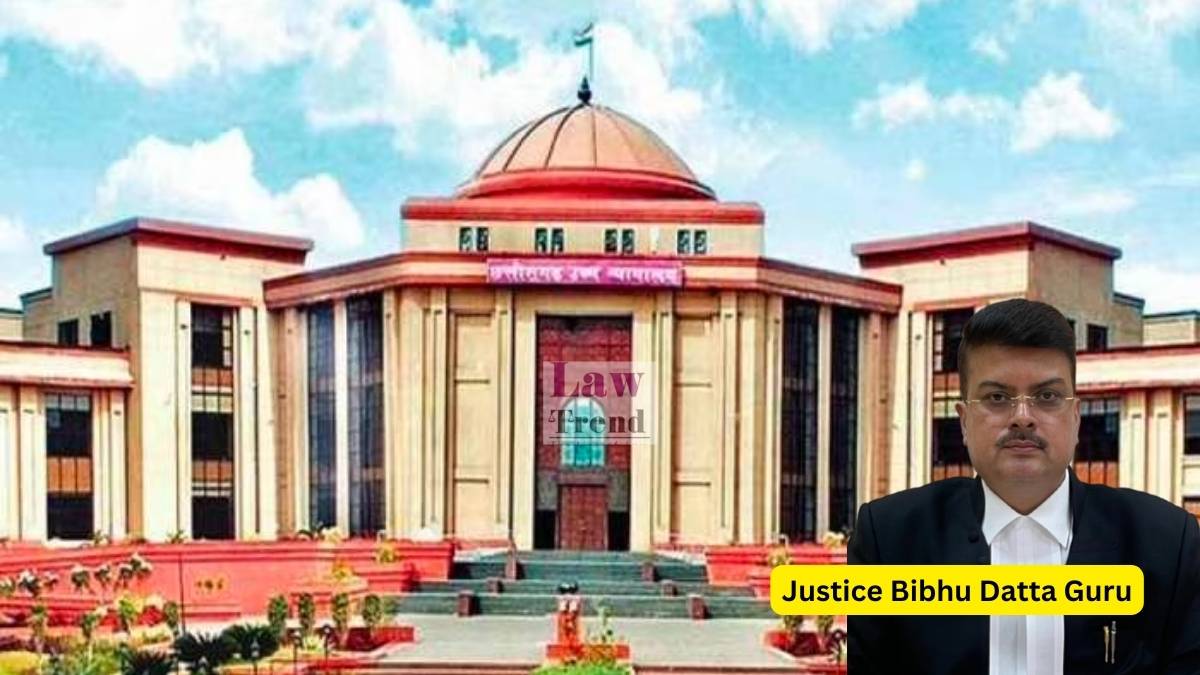

The High Court of Chhattisgarh has affirmed that a plaint can be rejected on the ground of limitation under Order 7 Rule 11(d) of the Code of Civil Procedure (CPC) if the suit appears to be barred by law based on the statements made within the plaint itself. The Court clarified that the term ‘Law’ within the meaning of Order 7 Rule 11(d) includes the law of limitation.

Justice Bibhu Datta Guru delivered this judgment while dismissing a Second Appeal (SA No. 502 of 2023) filed by Bhojram, who sought to challenge concurrent findings of the Trial Court and the First Appellate Court.

Background of the Case

The appellant/plaintiff, Bhojram, instituted a civil suit seeking a declaration that a sale deed dated April 13, 1977, regarding Khasra No. 789 (50 decimals), was illegal, void, and not binding. He also sought possession and a permanent injunction.

The plaintiff’s core contention was that the land originally belonged to his late father, Sonuram, who had only executed a lease agreement for 20 years in favor of defendant No. 1 (General Manager, Associated Cement Company) for Rs. 1,100, rather than an outright sale. The plaintiff alleged that the defendants unlawfully executed a sale deed without the knowledge of the landholders. He claimed he discovered the alleged sale deed through an RTI application and argued that upon the expiry of the lease, the land should have been restored.

READ ALSO  Blacklisting a Party Is a ‘Civil Death’ and ‘Commercial Exile’; Allowed Only for Egregious Breaches: Chhattisgarh HC

Arguments of the Parties

For the Respondents: Defendant No. 1 (Associated Cement Company) denied the allegations, asserting absolute ownership following a valid sale. It was argued that the sale deed had been fully executed for decades and that the plaintiff’s claim was fraudulent and “grossly time-barred.” An application under Order 7 Rule 11 CPC was filed by the defendant, contending that the suit was legally untenable and lacked sufficient court fees.

Defendants No. 2 and 3 (State of Chhattisgarh and Mining Officer) submitted that the company’s name was already in the revenue records and the mineral lease had been renewed based on those records. They argued they were not necessary parties to the suit.

For the Appellant: The plaintiff contended that the suit was maintainable and that proper court fees were paid. In the Second Appeal, the counsel for the appellant argued that both the Trial Court and First Appellate Court erred by dismissing the suit under Order 7 Rule 11 without framing issues on limitation or conducting a trial. He placed reliance on the judgment Mehul Kumar Patel & Others v. Rishikesh Guptas & Others.

Court’s Analysis and Observations

The Court observed that both the Trial Court and the First Appellate Court concurrently found the suit to be barred by limitation. The High Court noted that the plaintiff raised the challenge to the 1977 sale deed only on July 19, 2018—several decades after its execution.

READ ALSO  सौर स्ट्रीट लाइट खरीद: छत्तीसगढ़ हाईकोर्ट ने बस्तर और सुकमा में 'धन के दुरुपयोग' को चिन्हित किया, स्वतः संज्ञान लिया

Regarding the scope of Order 7 Rule 11(d), Justice Bibhu Datta Guru observed:

“Order 7 Rule 11(d) empowers courts to reject a plaint if it appears to be barred by any law. This can include situations where the suit lacks a valid cause of action, is time-barred, or other legal prohibitions apply. The key principle is that the rejection should be based solely on the statements within the plaint without delving into external evidence or disputed facts.”

The Court further noted:

“The underlying object of Order 7 Rule 11(d) is that where the if the suit is barred by limitation under this provision, the Court would not permit the plaintiff to unnecessarily protract the proceedings in the suit. In such a case, it would be necessary to put an end to the sham litigation, so that further judicial time is not wasted.”

Citing the Supreme Court in Hardesh Ores (P) Ltd. vs. Hede and Company (2007) 5 SCC 614, the High Court reiterated that “‘Law’ within the meaning of Order 7 Rule 11(d) must include the law of limitation as well.”

READ ALSO  Can Insurance Company Take a Defence Which Was Not Basis of Repudiation of Claim? SC Says No

The Decision

The High Court held that the appellant failed to raise any “substantial question of law” as required under Section 100 of the CPC. The Court emphasized that concurrent findings of fact should not be interfered with unless found to be perverse or contrary to settled principles.

The Court concluded:

“I find absolutely no merit in this appeal, involving no question of law much less substantial question of law… and further the fact that the suit is barred by limitation, which is based solely on the averments made in the plaint itself.”

The Second Appeal was dismissed, and the judgments of the Trial Court and the First Appellate Court were upheld.

Case Details Block:

  • Case Title: Bhojram vs. General Manager Associated Cement Company & Others
  • Case Number: SA No. 502 of 2023
  • Bench: Justice Bibhu Datta Guru
  • Date: March 27, 2026

Law Trend
Law Trendhttps://lawtrend.in/
Legal News Website Providing Latest Judgments of Supreme Court and High Court

Related Articles

Latest Articles

