

Prosecution Must Establish ‘Meeting Of Minds’ To Prove Conspiracy; Subordinates Not Liable For Mere Compliance With Superior’s Orders: Chhattisgarh High Court
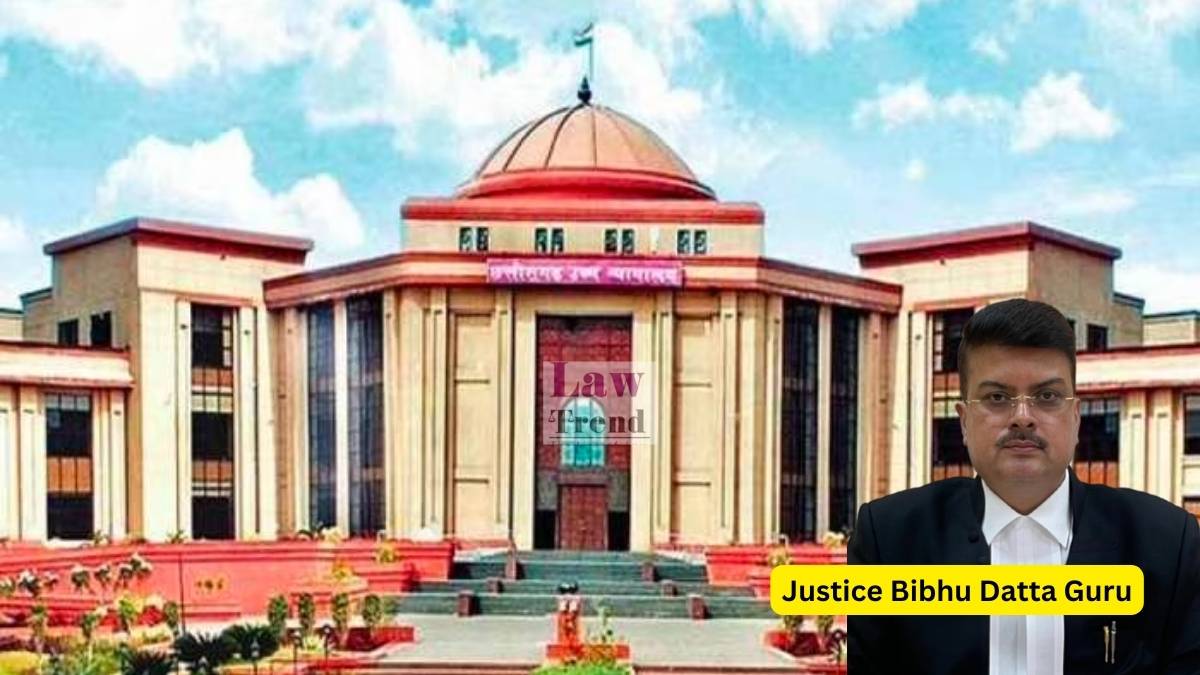

The High Court of Chhattisgarh has set aside the conviction of nine subordinate officials in a 40-year-old corruption and forgery case, emphasizing that a charge of conspiracy cannot be sustained without solid evidence of a shared criminal design.

Justice Bibhu Datta Guru allowed the appeal (CRA No. 130 of 2002) filed by several accountants and clerks from the office of the Chief Medical and Health Officer (CMHO), Jagdalpur. The Court held that the prosecution failed to establish a criminal conspiracy or independent culpable involvement by the subordinate staff in the alleged fraudulent withdrawal of salaries.

Background of the Case

The case dates back to the period between July 1979 and May 1985. It was alleged that Dr. R.K. Sen, the then CMHO (Accused No. 1), in conspiracy with nine other staff members (Accused Nos. 2 to 10), continued to prepare false salary bills for three sweepers—Jaysingh, Lalmani, and Mayaram—long after they had left their temporary positions.

The prosecution alleged that these sweepers were engaged as domestic servants at Dr. Sen’s residence and that after their departure, the accused persons fraudulently withdrew a total of ₹42,040.35 by affixing forged thumb impressions on salary bills. On January 28, 2002, a Special Judge in Jagdalpur convicted the appellants under Sections 420, 467, 468, 471 read with 120-B of the IPC and Section 13(1)(d) of the Prevention of Corruption Act, 1988.

READ ALSO  Mere Messaging or Chats Without Prima Facie Sexual Intent with Minor Does Not Constitute Offence Under POCSO: Kerala HC

Several appellants, including M.R. Malik, B.S. Mourya, T.K.C. Bose, K.R.C. Pillai, and G.R. Sambhalkar, passed away during the pendency of the appeal and were represented by their legal heirs.

Arguments of the Parties

The appellants’ senior counsel argued that the conviction was based on “conjectures and surmises.” He contended that there was no evidence of forgery as defined under Section 463 IPC, and that as subordinate officials, the appellants merely acted under the mandatory directions of the CMHO (A1). It was further argued that for certain periods, the alleged beneficiaries had actually worked, and that the charge of conspiracy under Section 120-B required a “meeting of minds,” which the prosecution failed to prove.

The State countered that the material on record sufficiently established that the appellants facilitated the preparation of false bills and withdrawal of government funds, causing loss to the state exchequer.

READ ALSO  Chhattisgarh HC Takes Suo Motu Cognizance of Party in Railway Boxing Ring During Holiday Sitting, Directs SECR GM to File Personal Affidavit

The Court’s Analysis

The Court observed that the primary evidence came from PW-17 (Accountant) and PW-18 (LDC), who both testified that salary disbursement and bill processing were undertaken strictly under the instructions of Dr. Sen.

Regarding the charges of forgery and cheating, the Court noted the lack of foundational proof. The Court observed:

“In the present case, the prosecution has failed to adduce any expert evidence or other reliable material to demonstrate that the signatures or thumb impressions appearing on the documents were forged or fabricated. There is also no evidence to show that the appellants were involved in the preparation of any such false document.”

Addressing the headnote’s central theme of conspiracy under Section 120-B IPC, the Court emphasized:

“To establish a charge of conspiracy, the prosecution must prove the existence of an agreement or meeting of minds between two or more persons to commit an illegal act or a legal act by illegal means. Such an agreement must be established either by direct evidence or by circumstances which unerringly point towards a common design.”

READ ALSO  धारा 307 सीआरपीसी / 344 बीएनएसएस के तहत कोर्ट सच्ची गवाही के लिए सहअभियुक्त को माफ़ी दे सकता है: छत्तीसगढ़ हाईकोर्ट

The Court further noted that PW-29 (the Investigating Officer) admitted that the appellants were duty-bound to comply with Dr. Sen’s directions.

Decision

Acquitting the appellants, the Court held that suspicion, however strong, cannot take the place of legal proof. The Court stated:

“Mere participation in routine official work, carried out under the directions of a superior officer, cannot by itself be construed as criminal misconduct within the meaning of the Act, particularly in the absence of proof of dishonest intention or abuse of position.”

The High Court set aside the trial court’s judgment dated January 28, 2002, and acquitted the appellants of all charges.

Case Details:

  • Case Title: M. R. Malik (Dead) Through LRs. & Others v. State of Chhattisgarh
  • Case No.: CRA No. 130 of 2002
  • Bench: Justice Bibhu Datta Guru
  • Date: March 30, 2026

Law Trend
Law Trendhttps://lawtrend.in/
Legal News Website Providing Latest Judgments of Supreme Court and High Court

Related Articles

Latest Articles

